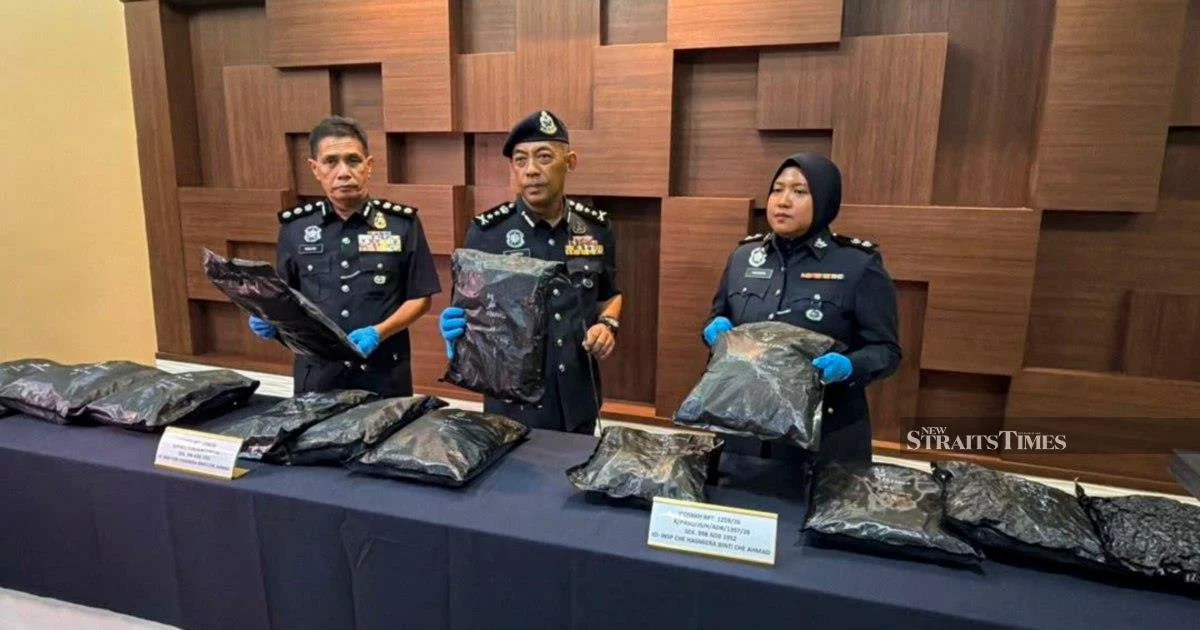
A private higher education institution student has been detained following an attempt to transport 14.63 kilograms of cannabis buds with an estimated street value of RM1.17 million across the Bukit Kayu Hitam checkpoint in Kedah. The arrest, made on Monday, marks another significant drug seizure at the northern border post that serves as a critical control point between Malaysia and Thailand.
The interdiction at Bukit Kayu Hitam represents a consistent pattern of trafficking attempts through this strategically important checkpoint. Located at the gateway to Thailand, the border crossing has long been identified as a high-risk area for narcotics smuggling due to its substantial passenger and vehicle traffic. The sheer volume of movement across the frontier makes detection operations challenging, yet border authorities continue to employ intelligence-led enforcement strategies.
The student's involvement in the smuggling operation highlights an emerging concern regarding the recruitment of younger individuals, particularly those with legitimate access to education institutions and the relative freedom of movement that comes with student status. Young smugglers often face significant pressure from organised trafficking networks that exploit their vulnerability and limited economic prospects. The use of students as carriers has become a documented trend across the region, with criminal syndicates deliberately targeting this demographic for their lower perceived risk profile.
The quantity seized—14.63 kilograms—represents a substantial trafficking amount far exceeding personal consumption thresholds. Under Malaysian law, possessing cannabis in quantities of this magnitude triggers mandatory presumptions of trafficking intent, exposing the offender to severe penalties. The calculated street value of RM1.17 million underscores the lucrative nature of regional drug trafficking, where margins for distributors remain extraordinarily high despite increasing enforcement efforts.
Canabis trafficking networks operating in Southeast Asia have become increasingly sophisticated in recent years. The drug is typically cultivated in Thailand and Laos, then smuggled southward through Malaysia toward distribution markets in Singapore and other destinations. The cross-border routes have become well-established criminal highways, with trafficking organisations deploying multiple methods including concealment in vehicle compartments, luggage concealment, and body-carried contraband. Border enforcement agencies across the region have correspondingly upgraded their detection capabilities, introducing advanced scanning technology and K-9 units.
The Bukit Kayu Hitam checkpoint handles thousands of vehicles daily, creating an inherent tension between security screening and traffic flow management. Customs and enforcement personnel must balance thorough inspection protocols with the practical necessity of maintaining reasonable border crossing times. Intelligence-driven interdictions like this one represent the most efficient approach, where officers focus resources on high-risk vehicles and individuals identified through intelligence channels or behavioural indicators.
This seizure arrives amid broader regional drug enforcement coordination efforts under frameworks such as the Asean Cooperation on Drug Control. Thailand's own domestic crackdowns on methamphetamine production have prompted traffickers to shift focus toward cannabis and other substances with lower enforcement visibility. This geographical displacement effect means Malaysian authorities face emerging pressures from previously secondary drug markets becoming primary smuggling targets.
The implications for the student's future are severe. Beyond criminal prosecution, conviction for drug trafficking of this magnitude will result in lengthy imprisonment and carry profound consequences for educational and career prospects. Family circumstances often deteriorate as well, particularly where students face coerced recruitment through debt or threats.
From a law enforcement perspective, this arrest reinforces the necessity of sustained intelligence gathering and inter-agency coordination. Customs, police narcotics units, and immigration authorities must share real-time information to identify suspicious travel patterns and individuals involved in suspected trafficking operations. The successful interdiction demonstrates that despite the challenges of maintaining a porous 644-kilometre border with Thailand, strategic checkpoint operations continue yielding results.
Looking forward, authorities indicate that ongoing investigations are examining the wider smuggling network, including potential upstream suppliers in Thailand and downstream distributors within Malaysia. Such investigations typically reveal complex organisational structures with compartmentalised roles, making it difficult to dismantle operations completely. The student suspect may become a critical informant, potentially leading to higher-level operatives.

%22%2F%3E%3C%2Fpattern%3E%3C%2Fdefs%3E%3Crect%20width%3D%22100%25%22%20height%3D%22100%25%22%20fill%3D%22url(%23ph21o2sg)%22%2F%3E%3Crect%20width%3D%22100%25%22%20height%3D%22100%25%22%20fill%3D%22url(%23ph21o2sp)%22%2F%3E%3Ctext%20x%3D%2250%25%22%20y%3D%2250%25%22%20text-anchor%3D%22middle%22%20dominant-baseline%3D%22central%22%20fill%3D%22rgba(255%2C255%2C255%2C0.95)%22%20font-family%3D%22Georgia%2C%20'Times%20New%20Roman'%2C%20serif%22%20font-weight%3D%22700%22%20font-size%3D%22170%22%20letter-spacing%3D%22-0.02em%22%3EGabungan%3C%2Ftext%3E%3C%2Fsvg%3E)