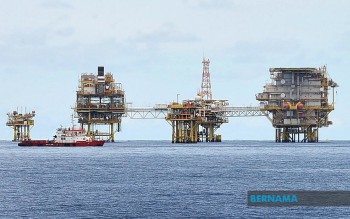
Southeast Asia's offshore energy sector is demonstrating remarkable resilience, with greenfield capital expenditure projected to exceed US$100 billion—a 12 per cent increase that underscores growing investor appetite for new subsea developments across the region. This expansion comes amid a broader stabilisation across the Asia Pacific's energy markets following recent geopolitical turbulence, suggesting that regional economies are successfully navigating the complex intersection of global energy security concerns and local development priorities.
The investment trajectory reflects a deliberate strategic shift towards greenfield projects, which require exploration and infrastructure development in previously untapped offshore zones. Hong Leong Investment Bank's analysis indicates this reflects operators' confidence in the region's long-term energy demand and their willingness to commit substantial capital to multi-year development cycles. For Malaysia, Indonesia, Vietnam, and Thailand—major energy producers in Southeast Asia—this represents an opportunity to attract continued foreign investment and strengthen their positions as reliable energy suppliers to Asia's growing economies.
Brownfield investment, which focuses on enhancing and sustaining existing assets, is also gaining momentum. South Asia is expected to lead this segment with a 23 per cent increase, while Southeast Asia itself should see a more modest 3 per cent expansion. This two-track investment approach suggests operators are balancing aggressive expansion with prudent maintenance of mature fields, a necessary calculus in an industry where production interruptions can have cascading regional impacts. The emphasis on existing infrastructure reflects lessons learned from recent supply chain disruptions and the premium now placed on operational continuity.
The geopolitical context remains crucial to understanding this investment climate. While the United States-Iran ceasefire agreement that resulted in a 14-point memorandum of understanding offers hope for de-escalation in West Asia, analyst assessments remain cautiously optimistic rather than celebratory. The fragility of the ceasefire means energy markets continue pricing in risk premiums, and unexpected flare-ups could quickly alter investment calculations. For Southeast Asian nations that depend on stable global energy markets for their own development, this volatility in a distant region remains an unavoidable concern.
Shipping patterns through the Strait of Hormuz, one of the world's most critical oil chokepoints, suggest cautious recovery is underway. However, satellite imagery reveals an intriguing anomaly: vessel traffic appears higher than official data suggests, with many ships operating with automatic identification system transponders disabled. This discrepancy points to lingering market anxiety and the possibility that some trading activity remains obscured by deliberate operational security measures. For Malaysia and other regional economies dependent on energy security, such opacity in global shipping data underscores the complexity of assessing true market conditions.
Petronas, Malaysia's national energy company, stands to benefit significantly from anticipated investment cycles. Hong Leong Investment Bank identifies a potential Petronas capex upcycle beginning in 2027, which should generate substantial demand for local and regional oil and gas services and equipment providers. Companies offering upstream development, fabrication, pipeline installation, and maintenance services across Malaysia and neighbouring jurisdictions could experience renewed order books. This domestic multiplier effect would strengthen employment and economic activity throughout the regional supply chain.
Price forecasts from major institutions reveal expectations of elevated crude oil levels over the medium term, though not at recently observed peaks. Hong Leong has revised its 2026 Brent forecast downward to US$80 per barrel from US$90, while projecting US$75 for 2027. These levels, while lower than peaks reached during recent geopolitical escalation, remain substantially above pre-conflict baselines. The underlying analysis points to tight global inventory levels, with OECD commercial reserves projected to fall to just 50 days of supply by late 2026—significantly below the pre-crisis benchmark of 60 days or more.
This inventory drawdown creates a structural floor beneath prices, according to analyst commentary. As long as global stockpiles remain depressed relative to historical norms, energy security considerations will support prices around the US$75-80 per barrel range. Recovery to pre-crisis inventory levels could extend well into 2027, particularly if production recovery in disrupted regions proceeds slower than expected. The Strait of Hormuz region's shut-in volumes tell this story: production losses that stood at 35 per cent of regional capacity in March 2026 had climbed to 45 per cent by May, indicating extended supply disruptions.
Beyond the energy sector specifically, stabilised crude prices within the US$70-75 per barrel range offer broader economic benefits for Malaysia and Southeast Asia. Energy economist Mohd Sedek Jantan of IPPFA Sdn Bhd emphasises that this price level would lower input costs for energy-intensive industries, improving competitiveness for manufacturers and exporters. Petrochemical producers, fertiliser manufacturers, and transportation-dependent businesses would benefit from more predictable energy expense management, supporting operational planning and investment decisions.
The macroeconomic spillovers extend to inflation dynamics and monetary policy. Sustained oil prices at moderate levels would reduce cost-push inflationary pressures that central banks have struggled to manage in recent years. By moderating energy price contributions to inflation, policymakers across Southeast Asia would gain greater flexibility in calibrating interest rate policies. This flexibility supports consumer purchasing power and business investment capacity, creating conditions more conducive to sustained economic expansion across the region.
Current market pricing, with Brent crude trading around US$69 per barrel and West Texas Intermediate near US$72 per barrel at recent transactions, sits comfortably within the forecast ranges that analysts expect to persist through 2027. This convergence between current prices and medium-term forecasts suggests that energy markets have largely priced in anticipated supply conditions and geopolitical scenarios. For Southeast Asian policymakers and energy companies, this relative stability offers an opportunity to plan capital investments and economic policies on foundations that appear relatively stable, at least in the near to medium term.
The regional energy investment boom ultimately reflects sophisticated market participants' assessment that underlying energy demand—particularly from rapidly industrialising Asian economies—justifies continued capital commitments despite geopolitical risks. Southeast Asia's positioning as a growing energy centre, combined with its geographic advantages and established infrastructure, positions the region to capture disproportionate shares of this investment activity. The convergence of stable offshore spending patterns, anticipated domestic capital expenditure cycles, and moderately elevated commodity prices creates conditions for sustained growth in the region's energy sector and related industries throughout 2026 and beyond.

