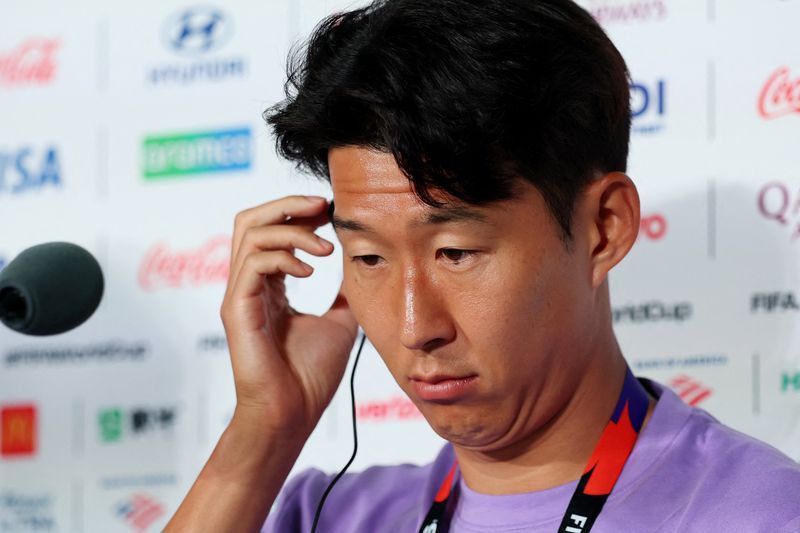
The South Korean national football team has suspended its voluntary media engagement at the World Cup following an incident in which journalists allegedly ridiculed captain Son Heung-min's mandatory military service. The matter surfaced when remarks from media personnel were inadvertently captured on an open microphone during the squad's training session at the Guadalajara base camp, creating considerable friction between the players and the sporting press corps.
Son, the 33-year-old Tottenham Hotspur forward, was conducting a separate training routine from his teammates when the incident occurred. The Taegeuk Warriors' response underscores the profound sensitivity surrounding military obligations within South Korean society, where the topic extends far beyond sporting concerns into broader questions of national identity and patriotic duty. The decision to boycott non-mandatory media interactions represents an unusually coordinated response from a professional sports organisation, reflecting the depth of frustration within the camp.
Military conscription remains one of South Korea's most culturally and politically significant practices. Every able-bodied male citizen faces an obligation to serve approximately 21 months in uniform, a requirement rooted in the ongoing division of the Korean Peninsula and the strategic need to maintain military preparedness against North Korea. This conscription system has shaped generations of South Korean men and remains woven into the nation's social fabric, making any trivialisation of service deeply offensive to both serving personnel and the broader population.
However, the South Korean government provides carefully defined pathways for athletes to circumvent or defer these obligations through exceptional sporting achievement. Competitors who capture gold medals at the Asian Games or secure Olympic podium finishes earn exemptions from full conscription, though mandatory basic training typically remains required. Son and his teammates qualified for this exemption after clinching the gold medal at the 2018 Asian Games in Jakarta, a triumph that allowed them to pursue their international careers without the burden of extended military service.
The Korea Football Association released a statement expressing formal regret regarding what it characterised as inappropriate conduct by certain members of the media contingent covering the national team. The federation emphasised that the players, known collectively as the Taegeuk Warriors, have committed themselves to representing their nation with distinction on football's grandest stage whilst honouring the faith and aspirations of the South Korean public. The association framed the boycott as a necessary protective measure, highlighting the emotional toll that such incidents inflict on athletes already operating under considerable pressure.
The federation's statement pointed to the psychological impact of the leaked conversation, describing it as causing substantial shock and disappointment throughout the squad. Rather than simply demanding apologies, the KFA appealed to media organisations to exercise greater discretion and adopt a more conscientious approach when covering the national team. The association pledged to prioritise the wellbeing and dignity of its players whilst working to foster constructive relationships with sports journalists going forward.
Despite the boycott of voluntary media appearances, the South Korean contingent remains bound by FIFA's mandatory media obligations. World Cup regulations require participating nations to provide access to designated officials and players during specified periods, creating a situation where the squad must balance its protest against contractual and competitive responsibilities. This constraint means the boycott, while symbolically significant, operates within narrower boundaries than a complete media blackout would permit.
Son himself completed a three-week intensive military training programme in South Korea in 2020, capitalising on the suspension of Premier League operations due to the COVID-19 pandemic. This period subjected him to the physically and psychologically demanding elements of military conditioning, including exposure to tear gas, live-fire exercises, and extended forced marches covering up to 30 kilometres. His successful completion of this training represented a meaningful sacrifice and commitment to his national obligations, making the subsequent mockery of his service particularly galling to both the player and his teammates.
The incident illustrates broader tensions that periodically surface between South Korean athletes and domestic media institutions. While sports journalism plays an essential role in holding professional organisations accountable and informing the public, incidents of perceived disrespect or inappropriate conduct can rapidly escalate into larger controversies, particularly when they touch upon matters of national significance. For Malaysian and Southeast Asian observers, the situation underscores how deeply sports and national identity intertwine within Northeast Asian societies, shaping player conduct and team dynamics in ways distinct from Western sporting contexts.
The South Korean team's response also reflects evolving athlete activism and player empowerment within international football. Rather than accepting critical coverage passively, the squad has organised a coordinated response that uses its platform to challenge what it views as unacceptable journalistic conduct. This assertiveness, whilst controversial, demonstrates the growing willingness of national teams to establish boundaries around how they and their service obligations are portrayed in the media.
Moving forward, the situation raises important questions about the responsibilities of sports journalists covering high-pressure international tournaments. The balance between legitimate scrutiny and respectful coverage remains contested terrain, particularly when sensitive cultural or patriotic issues feature prominently in player circumstances. The Korea Football Association's formal statement signals that South Korean football intends to enforce stricter standards regarding commentary about its players' military service and related matters.
The boycott also serves as a reminder of the distinct pressures facing South Korean athletes, who operate within a national sporting culture where public expectations, military obligations, and international representation often converge in complex ways. For the players gathered in Qatar, the incident has added an additional layer of emotional complexity to their World Cup campaign, one that extends well beyond the tactical and technical dimensions of the sport itself.

%22%2F%3E%3C%2Fpattern%3E%3C%2Fdefs%3E%3Crect%20width%3D%22100%25%22%20height%3D%22100%25%22%20fill%3D%22url(%23ph21o2sg)%22%2F%3E%3Crect%20width%3D%22100%25%22%20height%3D%22100%25%22%20fill%3D%22url(%23ph21o2sp)%22%2F%3E%3Ctext%20x%3D%2250%25%22%20y%3D%2250%25%22%20text-anchor%3D%22middle%22%20dominant-baseline%3D%22central%22%20fill%3D%22rgba(255%2C255%2C255%2C0.95)%22%20font-family%3D%22Georgia%2C%20'Times%20New%20Roman'%2C%20serif%22%20font-weight%3D%22700%22%20font-size%3D%22170%22%20letter-spacing%3D%22-0.02em%22%3EGabungan%3C%2Ftext%3E%3C%2Fsvg%3E)