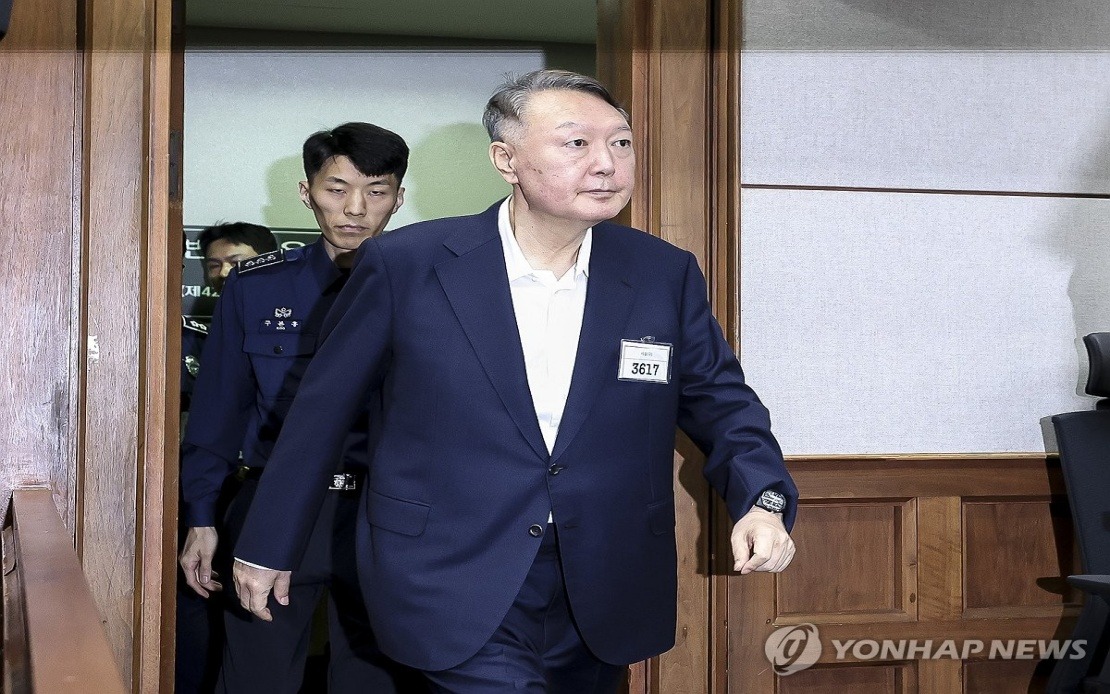
South Korea's Supreme Court has announced it will permit live television coverage of its verdict in the obstruction of justice case against former President Yoon Suk Yeol, a landmark decision that underscores the extraordinary political pressures and public interest surrounding the embattled leader's legal proceedings. The ruling, scheduled for delivery at 2 pm on Thursday, represents the nation's top judicial body's first verdict on charges stemming directly from Yoon's shocking declaration of martial law on December 3, 2024, an extraordinary moment that fundamentally shook South Korea's democratic institutions and exposed deep political fractures within the country.
The decision to permit broadcasting follows a formal request submitted last Friday by special counsel Cho Eun-suk's investigation team, who sought to ensure maximum transparency and public access to proceedings that have captivated national attention. This move reflects mounting pressure for openness in high-profile cases involving political figures, particularly given widespread public concern about potential judicial bias or closed-door dealings that might shelter powerful individuals from accountability. Broadcasters will utilise camera equipment provided by the court itself, ensuring standardised coverage and preventing the chaotic media circus that often accompanies such high-stakes trials in other democracies.
Yoon's legal representatives vigorously contested the broadcasting proposal, submitting arguments that public televising would inflict irreparable damage to his constitutional right to receive a fair trial, as well as undermine his personal privacy and harm his reputation irreversibly. These concerns, while serious, ultimately failed to persuade the court that confidentiality outweighed the compelling democratic principle of judicial transparency. The Supreme Court's rejection of the defence team's objections signals judicial confidence that live coverage strengthens rather than compromises the integrity of proceedings, a position increasingly adopted by courts worldwide confronting questions of media access and democratic accountability.
The specific obstruction of justice charges stem from January 2025 incidents when investigators attempted to execute a lawful detention warrant against Yoon, only to be blocked by his security personnel apparently acting on presidential orders. This charge exemplifies the unprecedented legal jeopardy facing Yoon, who faces multiple simultaneous proceedings across different courts for various alleged offences connected to his martial law declaration. The obstruction allegation is particularly serious because it suggests the former leader actively undermined legitimate law enforcement operations designed to investigate his own conduct, thereby potentially obstructing the machinery of justice itself.
Beyond obstruction, Yoon confronts additional accusations of violating the constitutional and administrative rights of nine Cabinet members by failing to convene a preparatory meeting where they could review and presumably object to the martial law proclamation before its implementation. These officials, occupying positions of significant governmental authority, were allegedly excluded from advance consultation on a decision that would fundamentally alter the nation's constitutional order. Prosecutors have further alleged that Yoon falsified official documents by retrospectively modifying the martial law proclamation after it was formally lifted, ostensibly to obscure procedural irregularities that might expose his decision-making process to legal scrutiny.
The destruction or disposal of the modified document compounds these allegations, suggesting deliberate concealment of evidence. Taken collectively, these charges paint a picture of systematic efforts to circumvent institutional checks, manipulate governmental processes, and conceal incriminating documentation—the precise activities that democratic legal systems regard as fundamentally corrosive to rule of law principles. For Malaysian observers, the case offers sobering lessons about how political polarisation and institutional fragility can threaten even established democracies, particularly when executive power holders view constitutional constraints as obstacles rather than legitimating mechanisms.
An appellate court previously sentenced Yoon to seven years imprisonment after finding him guilty on the obstruction and related charges, representing a substantial increase from the trial court's initial five-year determination but falling considerably short of the ten-year imprisonment recommended by special counsel investigators. This intermediate sentencing position reflected the appellate panel's view that while the charges merited serious punishment, the mitigating circumstances or legal ambiguities prevented the most severe sanction prosecutors advocated. The Supreme Court's forthcoming verdict will definitively resolve this particular dimension of Yoon's sprawling legal troubles, though separate appellate proceedings continue addressing the far more serious insurrection charges arising from the martial law declaration itself.
Those insurrection proceedings represent the most existentially threatening legal challenge Yoon faces, with a trial court having already imposed a life sentence after determining that the martial law order constituted an unconstitutional attempt to seize power. The insurrection charge carries the heaviest potential penalties under South Korean law and addresses the fundamental character of Yoon's actions rather than merely peripheral administrative violations. The obstruction verdict coming Thursday will therefore represent merely one chapter in an extraordinarily complex legal saga that will likely preoccupy South Korean courts, media attention, and political discourse for several years yet.
For Southeast Asian observers watching from Malaysia and neighbouring democracies, the Yoon case illuminates critical questions about judicial independence, executive accountability, and the resilience of institutional checks against concentration of power. South Korea's constitutional framework, despite being written relatively recently and substantially informed by democratic reform movements, has now faced its most serious test in the form of a sitting president's unprecedented quasi-military power grab. That the country's courts appear willing to prosecute, convict, and potentially imprison a former head of state—regardless of eventual Supreme Court sentencing—contrasts sharply with patterns in some neighbouring jurisdictions where political elites historically escape meaningful legal consequences.
The decision to broadcast the Supreme Court verdict live reflects democratic societies' increasing recognition that judicial legitimacy depends substantially on public confidence, which is most effectively generated through transparency rather than secrecy. When high court verdicts in sensitive political cases occur behind closed doors, suspicion inevitably flourishes regarding judicial impartiality or political compromise. By contrast, televised proceedings allow millions of citizens to observe judicial reasoning directly, scrutinise the evidence presented, and form independent judgments about whether justice has been fairly administered. This transparency serves not only Yoon's interests by permitting observation that the court treated him fairly, but also the broader public interest in confirming that no individual, regardless of prior status or remaining political influence, receives preferential treatment within South Korea's judicial system.
The Thursday afternoon verdict will thus represent far more than a mere sentencing decision on obstruction charges; it will constitute a defining moment for South Korean democracy's institutional capacity to hold powerful figures accountable through legal rather than revolutionary means. The live broadcast ensures that this moment belongs to the South Korean people and international observers alike, rather than remaining confined within courtroom walls. As emerging democracies throughout Southeast Asia continue navigating the perpetual tension between executive efficiency and democratic accountability, the South Korean experience—particularly how its courts address the Yoon prosecution—will likely influence how other regional legal systems approach similar political crises involving allegations of constitutional overreach by sitting or former leaders.

