South Korean President Lee Jae Myung has sought to chart a middle course on the nation's escalating election controversy, acknowledging legitimate public grievances over voting irregularities while drawing a firm line against what he characterises as baseless allegations of electoral fraud. Speaking from the Vatican on June 15, Lee addressed mounting tensions surrounding the June 3 local elections, which were marred by widespread reports of ballot paper shortages and administrative failures that disrupted voting at numerous polling stations across the country. His intervention reflects growing concern within government circles that ongoing demonstrations could spiral into broader institutional challenges to electoral legitimacy.
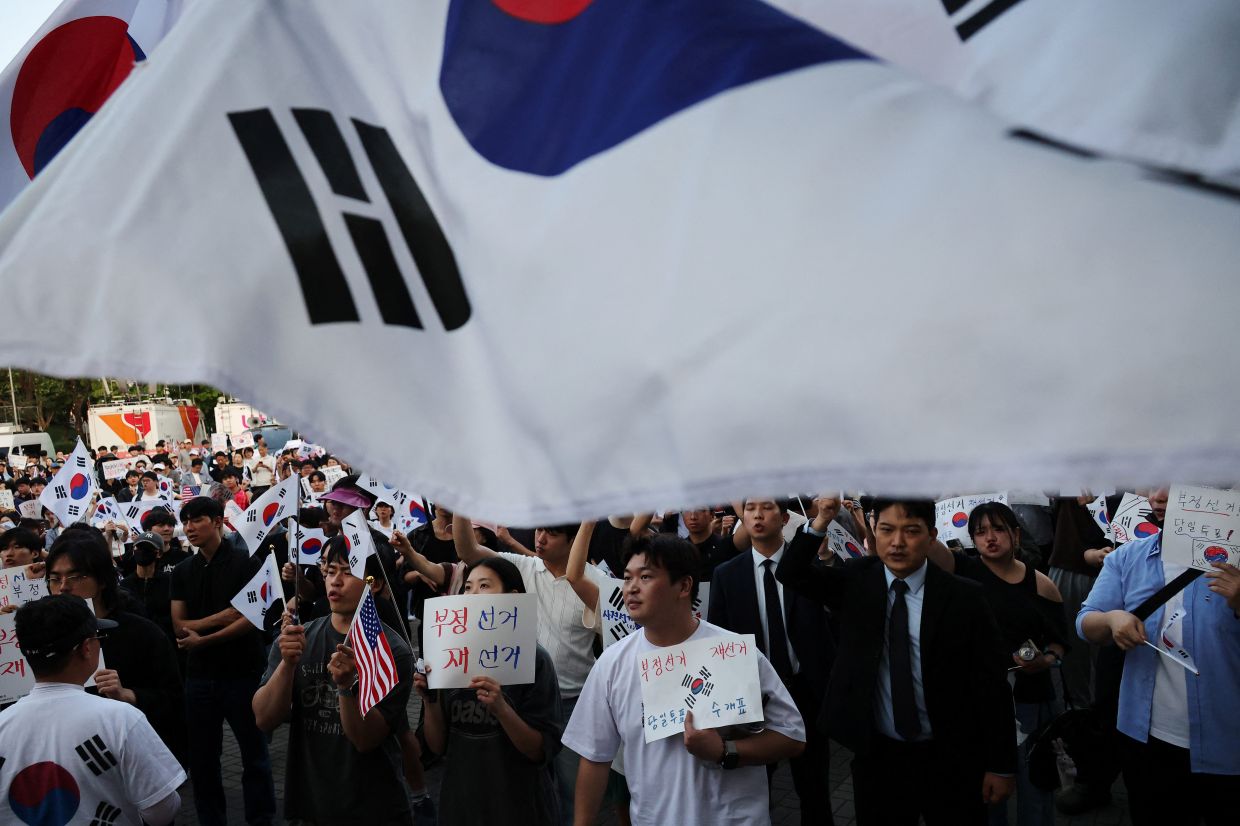
The immediate flashpoint for protests has centred on Seoul's Olympic Park, where the handball arena functioned as a vote-counting facility and temporary storage site for ballot boxes following the June 3 elections. Demonstrators have maintained a sustained presence there, determined to draw attention to what they view as systemic management failures that compromised voter participation rights. However, these demonstrations have inadvertently created collateral disruptions, with sports organisations housed within the Olympic Park complex reporting significant operational interruptions. Several bodies responsible for preparing South Korean athletes for international competitions found their administrative functions severely hampered by restricted facility access, highlighting the tension between legitimate protest activity and broader public interests.
On social media platform X, Lee articulated a position that separates accountability for electoral mismanagement from acceptance of conspiracy narratives. While he explicitly acknowledged that voting irregularities constituted a "serious failure" and genuine infringement of democratic rights, he emphasised that this recognition must not be weaponised to promote unfounded theories about deliberate electoral manipulation. This distinction proves crucial for understanding the South Korean government's response strategy: accepting fault where administrative systems failed while resisting what officials characterise as opportunistic exploitation of legitimate grievances to undermine public confidence in democratic institutions themselves.
Lee's remarks represented a tacit acknowledgment that the National Election Commission's performance on election day fell short of acceptable standards. Voting suspensions and delays at multiple polling locations created legitimate frustrations among citizens seeking to exercise fundamental democratic rights. By publicly validating these concerns, Lee sought to demonstrate governmental responsiveness to public anger while simultaneously constraining the boundaries of acceptable protest behaviour. His emphasis on the need for transparent investigation and constructive alternatives suggested a preference for channelling discontent through institutional mechanisms rather than allowing street-level demonstrations to escalate further.
The president's invocation of legal and institutional frameworks reflected concern about protest tactics that had crossed into confrontational territory. He specifically referenced incidents where demonstrators had allegedly threatened police officers, conducted unauthorised inspections and searches, and obstructed official duties—actions that, while perhaps motivated by legitimate frustration, transgressed boundaries that officials deemed essential for maintaining civic order. By linking these transgressions to explicit legal accountability mechanisms, Lee signalled that while the government acknowledged its own institutional failures, it would not tolerate vigilante approaches to securing answers or preventing future occurrences.
Lee's call for "responsible action" from society at large revealed an attempt to reframe the election controversy as a shared challenge requiring collective institutional response rather than adversarial confrontation. He urged the National Election Commission to cooperate fully with the parliamentary investigation set to commence within the week, while simultaneously pressing prosecutors and a joint investigation team of police to accelerate their fact-finding efforts. This multi-track investigative approach suggested a recognition that public trust required demonstrable momentum toward accountability, achieved through visible action from various institutional actors rather than through opaque bureaucratic processes.
The context of these remarks proves particularly significant for Southeast Asian observers, as South Korea's experience illustrates how electoral administration failures can rapidly metastasise into broader challenges to institutional legitimacy. The rapid escalation from legitimate complaints about ballot shortages to sustained demonstrations reflects a democratic polity where citizens feel empowered to demand answers, yet where the line between justified accountability-seeking and destabilising institutional challenge remains contested and fragile. For regional governments grappling with their own electoral integrity concerns, South Korea's experience demonstrates both the inevitability of public pressure following administrative failures and the challenges of channelling that pressure toward constructive institutional reform.
Lee's positioning also reflected implicit acknowledgment that controlling the protest narrative required more than dismissing demonstrators as bad-faith actors. By accepting the legitimacy of public concerns while simultaneously establishing clear boundaries for acceptable expression, he attempted to split the protest movement—presumably hoping to retain support from citizens motivated primarily by electoral accountability while isolating more radical elements. This strategy hinges on the government's demonstrated capacity to deliver tangible results through its promised investigations, suggesting that the coming weeks will prove decisive in determining whether institutional mechanisms can adequately address public frustration before more destructive forms of protest materialise.
The international dimension adds another layer of complexity to Lee's measured response. With South Korean athletes preparing for international competitions dependent on administrative coordination potentially disrupted by Olympic Park protests, the government faced genuine pressure to restore facility access and normalcy. Lee's reference to this collateral damage served multiple rhetorical purposes: demonstrating that extended protests imposed costs beyond symbolic political messaging, appealing to sports constituencies as witnesses to protest consequences, and framing government action to clear facilities as defence of national athletic interests rather than suppression of legitimate dissent.
Moving forward, the success of Lee's attempt to navigate between accountability and institutional defence will depend heavily on whether parliamentary and prosecutorial investigations produce substantive findings and meaningful reforms addressing the June 3 election failures. If investigations appear cursory or conclusions seem predetermined, public suspicion will likely intensify, potentially validating the more conspiratorial narratives that Lee explicitly rejected. Conversely, if thorough investigations identify systemic weaknesses and procedural improvements are implemented transparently, the government may successfully establish that institutional mechanisms can absorb and respond constructively to democratic pressures without requiring sustained confrontational protest.
For the broader East Asian region, the South Korean election controversy and presidential response offer instructive lessons in the relationship between electoral credibility and institutional resilience. The episode demonstrates that even in established democracies with sophisticated bureaucratic capacity, election administration failures can rapidly trigger existential questions about system legitimacy. Lee's challenge now involves transforming what many citizens view as a categorical institutional failure into an opportunity for demonstrated reform, thereby preserving public confidence in both specific electoral systems and broader democratic governance structures. The outcome will likely influence how other regional governments approach similar challenges to electoral legitimacy in coming years.

%22%2F%3E%3C%2Fpattern%3E%3C%2Fdefs%3E%3Crect%20width%3D%22100%25%22%20height%3D%22100%25%22%20fill%3D%22url(%23ph21o2sg)%22%2F%3E%3Crect%20width%3D%22100%25%22%20height%3D%22100%25%22%20fill%3D%22url(%23ph21o2sp)%22%2F%3E%3Ctext%20x%3D%2250%25%22%20y%3D%2250%25%22%20text-anchor%3D%22middle%22%20dominant-baseline%3D%22central%22%20fill%3D%22rgba(255%2C255%2C255%2C0.95)%22%20font-family%3D%22Georgia%2C%20'Times%20New%20Roman'%2C%20serif%22%20font-weight%3D%22700%22%20font-size%3D%22170%22%20letter-spacing%3D%22-0.02em%22%3EGabungan%3C%2Ftext%3E%3C%2Fsvg%3E)