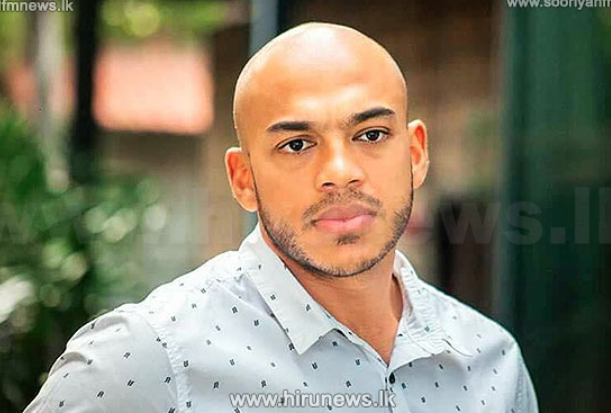
The arrest of Yoshitha Rajapaksa on Wednesday represents a significant development in Sri Lanka's ongoing effort to hold the Rajapaksa family accountable for alleged financial misconduct during their years in power. The 38-year-old naval officer was taken into custody by the Bribery Commission on charges relating to the improper use of government resources for his professional advancement, a case that reflects the broader judicial reckoning now consuming one of South Asia's most influential political clans.
The specific allegations against Yoshitha centre on his rapid ascent through naval ranks despite lacking the standard qualifications required for promotion. Investigators allege that his advancement was facilitated through political patronage while his father, Mahinda Rajapaksa, served as president. The government subsequently funded his attendance at Dartmouth, Britain's prestigious naval training college—a placement that civil society critics at the time argued should have gone to a more deserving candidate selected through merit-based competition.
This arrest comes as Yoshitha Rajapaksa was already embroiled in multiple legal complications. He faced restrictions on leaving the country and remained subject to investigation in two separate money-laundering cases. His detention marks an intensification of scrutiny, transitioning from bail conditions to formal custodial questioning by authorities determined to build a comprehensive case against him.
The detention highlights a fundamental shift in Sri Lanka's political environment following the 2024 presidential election victory of Anura Kumara Dissanayake, whose campaign platform explicitly prioritised holding the Rajapaksa family accountable for decades of alleged systemic corruption. The anti-graft establishment, previously constrained by the family's political dominance, now operates with significantly greater independence and public backing to pursue these investigations vigorously.
Beyond the immediate charges relating to his military career, Yoshitha faces additional criminal prosecution concerning the acquisition of substantial property during the period when his father exercised executive authority from 2005 to 2015. Investigators have questioned the origins of funds used for this real estate purchase. His explanations to law enforcement—that he obtained money by selling gemstones allegedly gifted by his grand-aunt—have not satisfied prosecutors, particularly given the grand-aunt's inability to account for how she originally obtained the precious stones.
The network acquisition case constitutes yet another legal exposure, suggesting authorities are pursuing a strategy of comprehensive prosecution across multiple areas of alleged financial wrongdoing rather than concentrating on single charges. This approach maximises potential convictions and demonstrates the scope of alleged misconduct spanning his career.
The broader Rajapaksa family faces unprecedented legal jeopardy. Mahinda Rajapaksa himself, who governed Sri Lanka during the family's period of greatest political influence, now confronts a fundamentally transformed judicial landscape. His younger brother Gotabaya, who briefly assumed the presidency in 2019, was compelled to abandon office in 2022 following a devastating economic crisis that sparked public uprising and mass protest. Gotabaya currently operates under a foreign travel ban and has sought court protection against potential arrest proceedings related to the 2019 Easter Sunday bombings, which claimed 279 lives in coordinated attacks against churches and hotels.
The succession of charges and detentions demonstrates that the family's once-unassailable political position has collapsed entirely. Multiple family members and close associates face charges encompassing corruption, money laundering, and allegations far graver in nature. These cases remain pending throughout the judicial system, suggesting years of protracted litigation ahead.
For regional observers, the Rajapaksa prosecutions offer important lessons regarding the vulnerabilities of concentrated political power in South Asian democracies. When dominant families control state institutions, accountability mechanisms become dormant. However, significant electoral realignment can rapidly reverse this dynamic, exposing decades of alleged misconduct to legal scrutiny. The thoroughness with which Sri Lankan authorities are now pursuing these cases signals determination to prevent similar patterns from recurring.
Malaysian and Southeast Asian readers should note the parallels with their own political landscapes, where family-dominated power structures and questions of asset origins similarly generate public concern. Sri Lanka's willingness to pursue high-profile prosecution of former leaders suggests that despite political risk, accountability mechanisms can function when popular mandate shifts decisively.
The Yoshitha Rajapaksa arrest also underscores the complications inherent in investigating wealth accumulation by political families. The difficulty of establishing clear paper trails for suspicious property acquisitions, the role of intermediaries in asset transfers, and the burden of proving criminal intent rather than mere political nepotism all present genuine prosecutorial challenges that Sri Lankan courts must now navigate.
%22%2F%3E%3C%2Fpattern%3E%3C%2Fdefs%3E%3Crect%20width%3D%22100%25%22%20height%3D%22100%25%22%20fill%3D%22url(%23ph21o2sg)%22%2F%3E%3Crect%20width%3D%22100%25%22%20height%3D%22100%25%22%20fill%3D%22url(%23ph21o2sp)%22%2F%3E%3Ctext%20x%3D%2250%25%22%20y%3D%2250%25%22%20text-anchor%3D%22middle%22%20dominant-baseline%3D%22central%22%20fill%3D%22rgba(255%2C255%2C255%2C0.95)%22%20font-family%3D%22Georgia%2C%20'Times%20New%20Roman'%2C%20serif%22%20font-weight%3D%22700%22%20font-size%3D%22170%22%20letter-spacing%3D%22-0.02em%22%3EGabungan%3C%2Ftext%3E%3C%2Fsvg%3E)