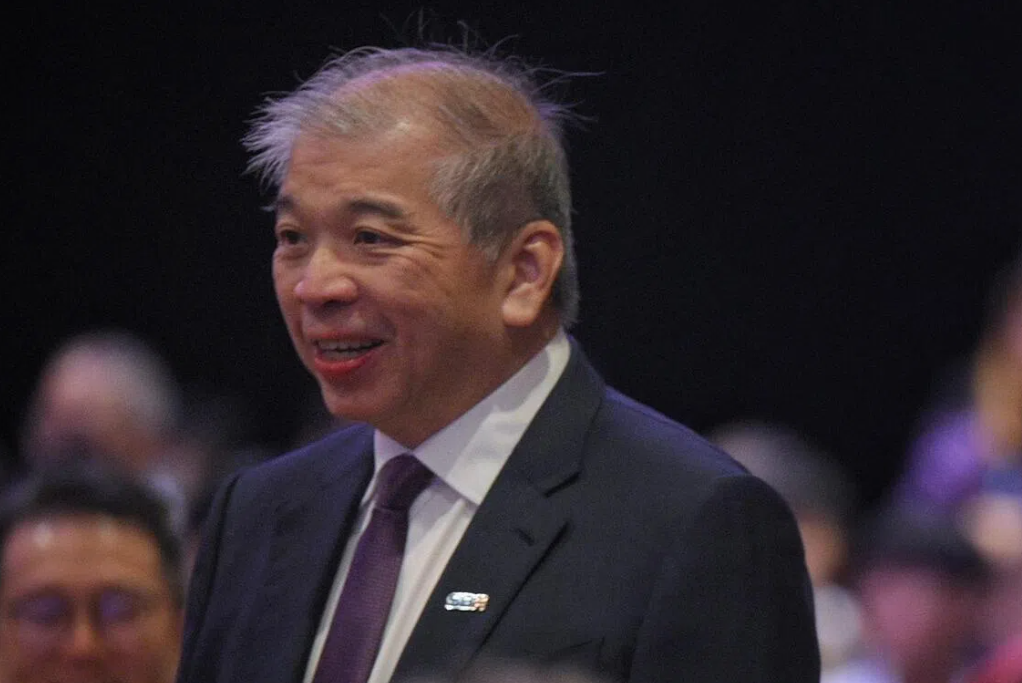
A major legal escalation has unfolded for Singapore's shipping community with the filing of civil lawsuits in California against Teo Siong Seng, the chief executive of Singamas Container Holdings, alongside other prominent executives in the global container manufacturing sector. These court actions, launched separately in early June, represent a significant new phase of litigation distinct from criminal proceedings already initiated by US federal authorities, and they signal how alleged price-fixing schemes in the logistics industry can trigger multiple layers of legal exposure across different jurisdictions and legal frameworks.
The two civil class-action cases, brought to the District Court for the Northern District of California by American firms C.A. Spalding Company and Daybreak Express on June 2 and 9 respectively, pursue damages through the civil courts rather than relying on government prosecution. This dual-track approach is characteristic of complex antitrust violations where private businesses that suffered direct financial harm seek monetary redress independently of—and often in addition to—criminal penalties. The American plaintiffs are seeking to recover substantial losses they contend they absorbed due to artificially inflated container prices over several years.
At the heart of the allegations sits an intricate scheme allegedly coordinated among five major manufacturers: China International Marine Containers (CIMC), Shanghai Universal Logistics Equipment, CXIC Group Containers, Singamas Container Holdings, and two unnamed producers. Together, these firms controlled approximately 95 per cent of global production of standard dry containers, granting them extraordinary market influence. The indictment, originally filed on January 22 and made public on May 19, outlined how executives from these companies purportedly conspired to restrict output and maintain elevated pricing through systematic production controls.
The mechanics of the alleged cartel reveal a sophisticated operational framework designed to maintain the conspiracy's secrecy and effectiveness. Rather than crude agreements to set prices directly, the conspirators reportedly implemented production quotas by limiting the number of shifts and operational hours available on each manufacturing line. To enforce compliance and detect violations, the cartel allegedly deployed 87 video surveillance cameras across 49 container production lines at their facilities—a technology-enabled monitoring system that suggests calculated coordination and mutual accountability among the participants. This level of operational detail indicates a long-standing arrangement rather than a spontaneous or informal understanding.
The financial impact of this alleged price manipulation proved substantial for container purchasers worldwide. Between 2019 and 2021, the price of a standard 20-foot container more than doubled, surging from approximately US$1,600 to US$3,500 according to investigators' findings. For businesses relying on shipping containers for international trade—a category encompassing countless manufacturers, retailers, and logistics operators across Southeast Asia and globally—this represents a dramatic increase in operational costs. Malaysian importers and exporters particularly dependent on containerised trade would have faced significant margin pressures during this period.
The profit windfall accruing to the alleged conspirators underscores the magnitude of their scheme's financial success. CIMC's container manufacturing division generated approximately 137 million yuan in profit during 2019, but this surged to 1.99 billion yuan in 2020 and climbed further to 11.3 billion yuan in 2021—representing a more than 80-fold increase across three years. Singamas followed a similarly dramatic trajectory, moving from a loss position of roughly US$110 million in 2019 to profitability of approximately US$186.8 million by 2021. Such explosive profit growth, coinciding precisely with the alleged conspiracy period, provides compelling circumstantial evidence of anticompetitive gains extracted from the broader market.
The civil lawsuits are weaponising a particularly potent legal mechanism: the treble damages provision available under American antitrust law. Should courts find the defendants liable, they face potential penalties equivalent to three times the actual losses suffered by the plaintiffs. This multiplier effect transforms the damage calculus dramatically, as it is designed not merely to compensate victims but to deter and punish anticompetitive conduct severely. For Teo and his co-defendants, exposure extends far beyond restitution for direct losses, potentially reaching hundreds of millions of dollars in aggregate liability across multiple lawsuits if courts find against them.
Teo Siong Seng, a prominent 71-year-old figure in Singapore's business establishment, has assumed a lower profile since being named in the criminal indictment. He has taken leaves of absence from several high-profile positions, including his roles as executive chairman of Pacific International Lines, chairman of the Singapore Business Federation (a position he held from 2014 to 2020), board member of Enterprise Singapore, and pro-chancellor of the National University of Singapore. Most notably, he announced on May 28 that he would not seek re-election as SBF chairman when his term expires on June 24, having been elected to the position only on May 20. His rapid withdrawal from public-facing leadership roles reflects both the seriousness of the allegations and potential reputational concerns for the organisations he represented.
Among the other defendants are five named individuals: Mai Boliang, who served as CIMC president and chief executive before transitioning to chairman in August 2020; Huang Tianhua, CIMC vice-president; Wan Yongbo, general manager of CIMC's Operation Management Centre; Li Qianmin, general manager of Shanghai Universal Logistics Equipment; and Zhang Yuqiang, chief executive of CXIC Group Containers. All are identified as Chinese nationals. The inclusion of Vick Ma, Singamas's marketing director, adds a notable element: Ma was arrested in France in April and is currently awaiting extradition to the United States, indicating that international law enforcement cooperation has already begun to enforce these charges across borders.
The procedural mechanisms now set in motion reflect the formality and gravity of American civil litigation. Court summonses were issued on June 8 and 11, requiring all named defendants to file formal responses within 21 days of service. Failure to respond within this deadline could result in default judgments against them, effectively conceding liability without contesting the plaintiffs' claims. For defendants located outside the United States, properly serving summonses presents additional procedural complexity, yet the US courts maintain broad jurisdictional reach over foreign defendants whose conduct affects American commerce significantly.
For Malaysian readers and Southeast Asian business observers, this case carries several implications. First, it demonstrates how regional supply chains remain vulnerable to anticompetitive conduct by dominant suppliers, with cartel-driven price increases filtering through to local importers and exporters. Second, it illustrates the increasingly globalised enforcement of antitrust law, where American courts pursue foreign executives and companies whose conduct impacts US commerce, a jurisdiction that extends to firms serving international markets. Third, the involvement of a prominent Singaporean business figure highlights that antitrust violations are not confined to opaque or rogue operators but can implicate respected establishment figures, potentially warranting heightened scrutiny of pricing patterns in concentrated industries across the region.
The Teo case will unfold across multiple jurisdictions and legal forums simultaneously—criminal proceedings in the United States, civil litigation in California, and potentially international extradition processes for detained executives. Resolution may take years and could establish important precedents regarding how multinational cartels are prosecuted and penalised. For the container industry and logistics sector more broadly, these lawsuits signal that regulators and private plaintiffs worldwide are increasingly vigilant and willing to pursue remedies for alleged price-fixing, potentially reshaping competitive dynamics and pricing transparency in containerised shipping for years to come.

%22%2F%3E%3C%2Fpattern%3E%3C%2Fdefs%3E%3Crect%20width%3D%22100%25%22%20height%3D%22100%25%22%20fill%3D%22url(%23ph21o2sg)%22%2F%3E%3Crect%20width%3D%22100%25%22%20height%3D%22100%25%22%20fill%3D%22url(%23ph21o2sp)%22%2F%3E%3Ctext%20x%3D%2250%25%22%20y%3D%2250%25%22%20text-anchor%3D%22middle%22%20dominant-baseline%3D%22central%22%20fill%3D%22rgba(255%2C255%2C255%2C0.95)%22%20font-family%3D%22Georgia%2C%20'Times%20New%20Roman'%2C%20serif%22%20font-weight%3D%22700%22%20font-size%3D%22170%22%20letter-spacing%3D%22-0.02em%22%3EGabungan%3C%2Ftext%3E%3C%2Fsvg%3E)