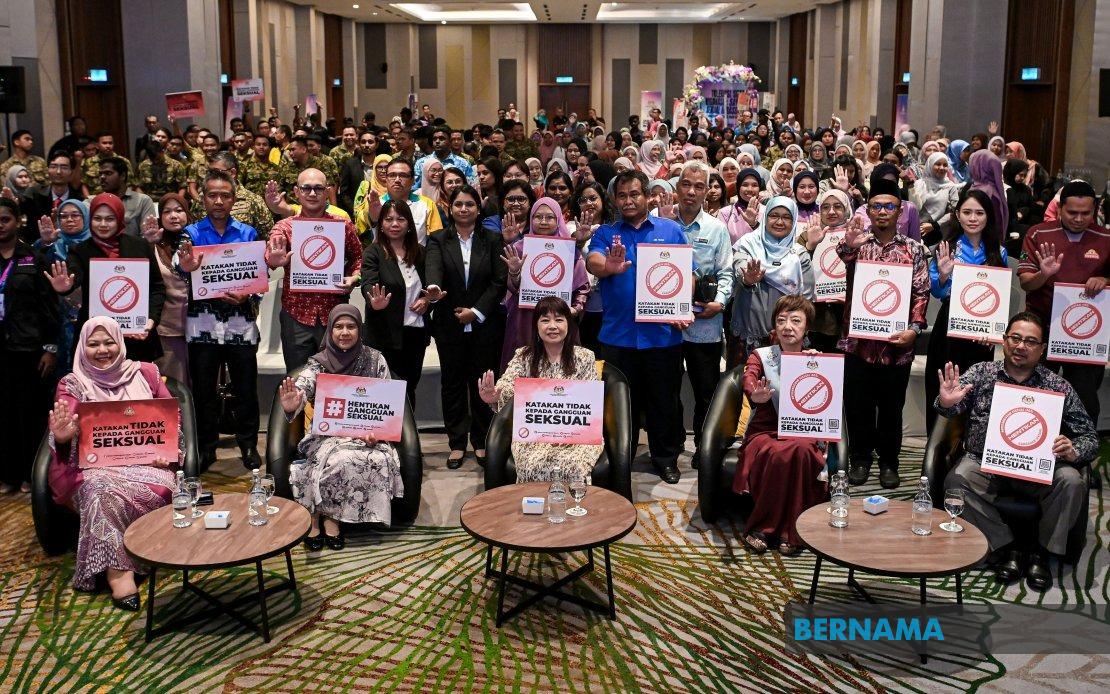
Malaysia has recorded 388 sexual harassment cases during the opening five months of 2024, reflecting an ongoing surge in reported incidents that reflects shifting social dynamics around workplace misconduct and personal safety. Deputy Minister of Women, Family and Community Development Lim Hui Ying disclosed these figures at an official event, highlighting how the nation's experience with sexual harassment continues to demand urgent policy attention and cultural transformation.
The trajectory of reported cases has become increasingly steep in recent years. Data from the Royal Malaysia Police shows a dramatic escalation from 477 documented cases in 2022 to 1,038 cases recorded throughout 2023, demonstrating more than a doubling of reported incidents within twelve months. This substantial rise underscores how Malaysia's experience mirrors global patterns where heightened awareness campaigns and institutional reforms have emboldened victims to come forward with their experiences rather than remaining silent.
However, Lim offered crucial perspective on interpreting these figures, cautioning against viewing numbers as evidence of spiralling misconduct alone. The increase substantially reflects a fundamental cultural shift where victims and their communities now possess greater confidence and societal permission to challenge harassment rather than internalising shame. This interpretation carries profound implications for how policymakers should assess the true scope of the problem—the growth in reported cases may paradoxically indicate progress in breaking cycles of silence that historically obscured the real prevalence of misconduct.
The data reveals disturbing patterns regarding where these incidents predominantly occur and who commits them. Most reported sexual harassment takes place within workplace environments, where power imbalances and professional hierarchies can enable perpetrators while silencing targets. Equally troubling, many cases involve individuals with established family connections to victims, suggesting that harassment pervades even intimate spheres where trust should exist. This dual vulnerability—the professional sphere and family networks—creates compounded barriers to reporting, as victims grapple with concerns about career jeopardy, family dissolution, and social ostracism.
Lim underscored that psychological and social pressures continue preventing many affected individuals from lodging formal complaints despite their experiences. Shame operates as a powerful silencer, often accompanied by legitimate anxiety about professional consequences and relational damage. For workers in hierarchical industries or those financially dependent on family members, the decision to report becomes laden with genuine risk. These dynamics mean that the 388 cases recorded likely represent merely the visible fraction of harassment occurring throughout Malaysian society, with countless unreported incidents remaining hidden behind fears of retaliation or social judgment.
The Deputy Minister emphasised that sexual harassment constitutes far more than interpersonal conflict—it represents serious misconduct that systematically erodes victims' dignity, psychological wellbeing, and quality of life. This framing positions harassment as a fundamental violation meriting criminal and civil justice responses rather than as minor workplace friction. She pointedly rejected any cultural normalisation of such conduct, insisting that Malaysian society must explicitly reject tolerance for this behaviour as foundational to building inclusive and safe communities.
Institutional mechanisms for addressing harassment have recently expanded. The Tribunal for Anti-Sexual Harassment (TAGS) has received 100 formal complaints as of mid-June, with 82 cases reaching resolution within sixty days of initial hearings. This efficiency demonstrates that specialised tribunals can accelerate access to justice significantly faster than conventional court systems. For Malaysian workers and family members seeking vindication, TAGS represents a meaningful avenue where cases receive dedicated attention from informed adjudicators rather than becoming backlogged within overburdened general courts.
Beyond tribunal operations, the government has broadened its response framework through advocacy initiatives aligned with the National Action Plan 2025–2030. These efforts explicitly connect women's security and development to national stability, recognising that sexual harassment undermines not merely individual victims but broader social cohesion. The Women's Development Department implements Peace and Security advocacy designed to strengthen women's participation in security architecture and developmental planning, ensuring that those most affected by harassment influence the policies intended to protect them.
Lim called upon diverse stakeholders—colleagues, employers, family members, educators, and students—to collectively reject harassment through proactive cultural work. This responsibility distribution acknowledges that institutional reforms alone cannot transform social conduct; parents and educators must cultivate respect from childhood, employers must establish accountability systems, and peers must challenge normalising attitudes that permit harassment to flourish. She particularly emphasised that this effort extends to supporting male victims, whose relatively low numbers may partly reflect gendered reporting patterns and victims' concerns about disclosure.
Early intervention emerged as critical to preventing escalation from harassment into more severe violence. When communities and institutions address misconduct promptly rather than permitting it to persist unexamined, the likelihood of progression toward more severe harm substantially diminishes. This preventive approach requires that both formal channels and social networks respond swiftly and seriously to initial complaints, signalling that harassment will not be tolerated regardless of perpetrator status or victim relationship to the harasser.
The government has established integrated support infrastructure recognising that legal remedies must accompany psychological and practical assistance. Talian Kasih 15999 provides counselling and psychosocial support throughout all hours, offering crisis intervention to individuals in acute distress. Combined with localised social support centres, this network aims to ensure that affected persons can access immediate help regardless of geographic location or time of need, acknowledging that trauma from harassment demands responsive mental health services.
For Malaysian workers and families, these developments signal both progress and ongoing vulnerability. While institutional recognition of sexual harassment has expanded and specialist tribunals accelerate justice, fundamental barriers to reporting persist rooted in economic precarity, family dynamics, and social stigma. Achieving genuine cultural transformation will demand sustained commitment from employers implementing rigorous accountability, educators instilling respect in students, and communities that actively support disclosure rather than penalising victims for speaking truthfully about their experiences.

%22%2F%3E%3C%2Fpattern%3E%3C%2Fdefs%3E%3Crect%20width%3D%22100%25%22%20height%3D%22100%25%22%20fill%3D%22url(%23ph21o2sg)%22%2F%3E%3Crect%20width%3D%22100%25%22%20height%3D%22100%25%22%20fill%3D%22url(%23ph21o2sp)%22%2F%3E%3Ctext%20x%3D%2250%25%22%20y%3D%2250%25%22%20text-anchor%3D%22middle%22%20dominant-baseline%3D%22central%22%20fill%3D%22rgba(255%2C255%2C255%2C0.95)%22%20font-family%3D%22Georgia%2C%20'Times%20New%20Roman'%2C%20serif%22%20font-weight%3D%22700%22%20font-size%3D%22170%22%20letter-spacing%3D%22-0.02em%22%3EGabungan%3C%2Ftext%3E%3C%2Fsvg%3E)