The Selangor state government has issued an urgent public alert warning residents to exercise heightened caution against deceptive short message service (SMS) communications purporting to offer details about the KitaSelangor Voucher incentive scheme. The reminder from the State Secretary's Office (SUK) specifically advises the public not to click on suspicious hyperlinks or engage with messages originating from unauthorised sources, as such communications are being weaponised by scammers seeking to exploit public interest in the assistance programme.
The advisory comes as fraudsters attempt to capitalise on growing awareness of the state's financial relief initiative by sending unsolicited messages that mimic official government channels. These deceptive communications often attempt to capture personal information or direct recipients to fraudulent websites designed to harvest sensitive data. The SUK Office emphasised that such scams represent a serious threat to public security and financial wellbeing, particularly among vulnerable populations who are most likely to be targeted by organised cybercriminals.
Crucially, the Selangor state government has clarified that the public application process for the KitaSelangor Voucher Programme remains closed at present. No SMS notifications have been sent to the general public, meaning any unsolicited messages received claiming to be from the state government regarding this programme should be treated with extreme suspicion. This distinction between the current status and the future rollout is essential for residents to understand in order to protect themselves from falling victim to coordinated fraud operations.
The state government has reinforced its commitment to communicating exclusively through official channels and strongly encourages the public to verify all information about the KitaSelangor Voucher exclusively through accredited government sources. Residents are urged not to accept unverified claims or follow instructions contained in suspicious messages, as doing so could expose them to identity theft, financial loss, or other forms of cybercriminal exploitation. The government's emphasis on relying only on official announcements represents a critical safeguard against the proliferation of misinformation in the digital space.
According to the rollout timeline provided by SUK, the actual notification process will commence in stages from June 23 onwards. Eligible recipients who have been pre-identified by the state government will receive legitimate SMS notifications containing instructions to verify their personal details and submit formal applications through the dedicated KitaSelangor Voucher Portal. This phased approach allows the government to manage the volume of applications while maintaining verification procedures that protect both applicants and programme integrity.
The public has been advised to await the official state government announcement scheduled for June 22 before taking any action in connection with the programme. This pre-announcement will provide authoritative guidance on what recipients should expect, how to identify legitimate communications, and the proper procedures for application submission. By establishing this clear timeline, authorities hope to create a window during which residents can prepare themselves to distinguish genuine government communications from fraudulent imposters.
The KitaSelangor Voucher Programme targets specific demographic groups identified through comprehensive data analysis conducted by relevant state and federal agencies. Eligible recipients include economically disadvantaged households registered in the eKasih poverty database, individuals who have lost employment, registered members of vulnerable population groups supported by the Social Welfare Department (JKM), and single mothers meeting strict eligibility criteria. This targeted approach ensures that assistance reaches those facing the greatest economic hardship while establishing clear parameters that potential scammers might attempt to exploit.
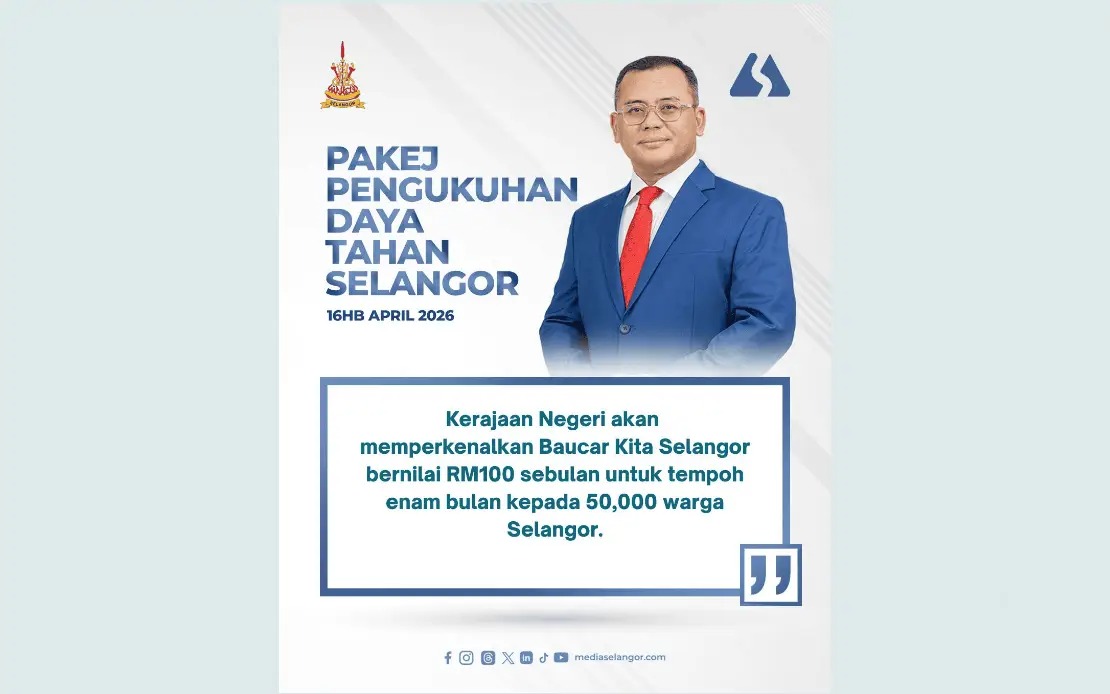
Under the programme framework, the Selangor state government intends to distribute monthly cash aid of RM100 to approximately 50,000 low-income families throughout the state. The assistance initiative is scheduled to commence operations on June 30 and represents a significant component of the state's broader economic support strategy. Each eligible recipient will receive financial support across a six-month distribution period, providing essential liquidity during a period of sustained economic pressure affecting households across Malaysia.
The KitaSelangor Voucher Programme forms part of the expansive RM140 million Selangor Resilience Strengthening Package Phase 1, which was formally unveiled on April 16 by state leadership. According to Selangor Menteri Besar Datuk Seri Amirudin Shari, this comprehensive assistance package has been designed to help state residents navigate the challenging economic environment created by global inflation, rising cost of living pressures, and international supply chain disruptions. The initiative reflects the state government's recognition of deepening financial strain affecting ordinary Malaysians.
The emergence of this fraud warning highlights the broader cybersecurity challenges facing Malaysian states as government assistance programmes expand in scope and visibility. Scammers systematically monitor public announcements about financial aid schemes and rapidly develop social engineering tactics designed to impersonate government communications. The sophistication of such operations has increased substantially, with fraudsters investing considerable effort in creating convincing replicas of official state messaging to maximise their deceptive impact.
For Malaysian residents and those in surrounding states, this incident serves as a broader reminder of the importance of digital literacy and healthy scepticism regarding unsolicited communications claiming to offer financial assistance. Government agencies nationwide continue to emphasise that legitimate application processes for assistance programmes occur exclusively through official platforms and announced timelines. Citizens are encouraged to maintain vigilance, avoid clicking unknown links, and independently verify the authenticity of any communications purporting to represent state or federal authorities.

%22%2F%3E%3C%2Fpattern%3E%3C%2Fdefs%3E%3Crect%20width%3D%22100%25%22%20height%3D%22100%25%22%20fill%3D%22url(%23ph21o2sg)%22%2F%3E%3Crect%20width%3D%22100%25%22%20height%3D%22100%25%22%20fill%3D%22url(%23ph21o2sp)%22%2F%3E%3Ctext%20x%3D%2250%25%22%20y%3D%2250%25%22%20text-anchor%3D%22middle%22%20dominant-baseline%3D%22central%22%20fill%3D%22rgba(255%2C255%2C255%2C0.95)%22%20font-family%3D%22Georgia%2C%20'Times%20New%20Roman'%2C%20serif%22%20font-weight%3D%22700%22%20font-size%3D%22170%22%20letter-spacing%3D%22-0.02em%22%3EGabungan%3C%2Ftext%3E%3C%2Fsvg%3E)