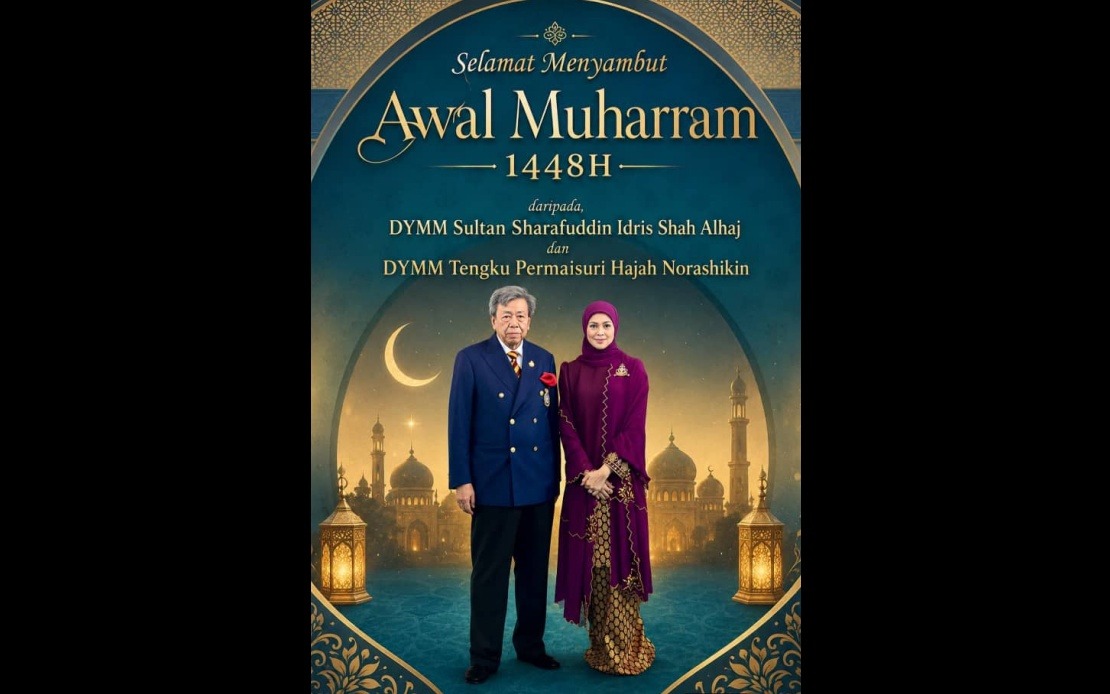
Sultan Sharafuddin Idris Shah, the ruler of Selangor, has made a fresh appeal for Muslims to place unity at the forefront of their concerns as they navigate contemporary challenges. Speaking during the Maal Hijrah 1448H celebration in Shah Alam, the Sultan reframed the Islamic new year not simply as a historical marker but as a symbolic call for positive transformation and collective cohesion across the Muslim community. His remarks carry particular weight in a Malaysian context where interfaith and intra-community tensions occasionally surface in public discourse, making the emphasis on internal unity timely and relevant.
The Sultan grounded his message in familial wisdom, invoking the teachings of his late father, Sultan Salahuddin Abdul Aziz Shah, whose consistent guidance had stressed the importance of avoiding divisive language and conduct within the ummah. This generational perspective underscores how such values are transmitted through leadership and institutional memory, anchoring contemporary calls for unity in deeper historical and cultural traditions. By citing his father's counsel, Sultan Sharafuddin positioned his own exhortation within a lineage of principled leadership that views communal harmony as foundational to governance and social stability.
Central to the Sultan's position is a framework for constructive disagreement rooted in propriety and mutual respect. He articulated that when differences of opinion arise—whether over policy, religious interpretation, or community matters—these should be addressed through channels characterised by wisdom and proper decorum rather than through inflammatory public confrontations. This distinction between the legitimacy of dissent and the method of expressing it reflects a sophisticated understanding of democratic discourse tempered by cultural and religious values. The Sultan's emphasis on voicing criticism "in a good and courteous manner" suggests that the substance of disagreement need not be sacrificed, but rather the manner of its expression should reflect the principles of the faith itself.
The Sultan further specified that when advice or corrections are necessary, they ought to be communicated with care and courtesy, implying that tone and relational context matter as much as content. This principle has immediate relevance in Malaysia's diverse, multi-ethnic democracy, where social media and digital platforms have lowered the threshold for public airing of grievances. The Sultan's implicit warning is that unmediated, adversarial dialogue risks exacerbating tensions rather than resolving them, a concern that applies across religious and ethnic communities in the country.
He advocated strongly for the resolution of disputes through private consultation, emphasising that when reasonable parties engage in confidential, respectful discussion guided by shared commitment to finding optimal solutions, outcomes improve substantially. This approach reflects a preference for consensus-building and deliberation over polarisation—a model that contrasts sharply with the escalatory dynamics of public disagreement. In the Malaysian context, where social cohesion is sometimes fragile and rumour can inflame sentiment rapidly, the Sultan's counsel for discretion carries practical urgency.
The Sultan articulated a security dimension to this argument: public quarrels expose vulnerabilities within the Muslim community and the nation that external actors may exploit to their advantage. He cautioned that allowing internal divisions to fester publicly invites opportunistic interference and undermines collective strength. This geopolitical awareness reflects recognition that in Southeast Asia's complex regional environment, internal harmony strengthens rather than weakens negotiating positions and resilience. When communities appear fractured, they become susceptible to both external pressure and internal instability.
He stressed that prolonged, openly aired conflict produces no genuine victors—only cumulative losses distributed across all parties. This reframing moves the conversation beyond the notion that disputes are zero-sum competitions to be won, instead positioning reconciliation and consensus as the true measures of success. For Malaysian policymakers and community leaders navigating sensitive issues, whether related to religious authority, development, or social policy, this perspective offers an alternative paradigm to the winner-take-all approach that sometimes dominates public debate.
The Sultan called on the Muslim community to embrace the deeper spirit of Hijrah by strengthening bonds of unity, cultivating tolerance across different schools of thought and interpretations, and elevating collective interests over sectional or personal concerns. This vision of Hijrah transcends mere historical commemoration, instead positioning it as an annual renewal of commitment to the values of solidarity and shared purpose. For Malaysia's Muslim-majority population and its significant minority Muslim communities, this framing offers a unifying narrative that could transcend differences in practice, ethnicity, or political affiliation.
He expressed his hope that the commencement of the new Islamic year would usher in blessings, stability, and material prosperity for all segments of Malaysian society. This inclusive language—encompassing the broader society beyond Muslim communities—reflects recognition that the interests of different religious and ethnic groups in Malaysia are interdependent. Prosperity and peace for one community contributes to conditions favourable for all, a principle that underpins multicultural coexistence.
The Sultan's final call was for a renewed and sustained endeavour to strengthen unity and harmony not only among Muslims but across Malaysian society broadly. This expansive vision suggests that the lessons of Hijrah—transformation, migration towards something better, and community cohesion—have relevance beyond religious boundaries. In a nation where social harmony is both a constitutional aspiration and a practical necessity for development, the Sultan's message serves as a reminder to leaders and citizens alike that the foundations of national progress rest upon internal coherence and mutual respect rather than public recrimination.

%22%2F%3E%3C%2Fpattern%3E%3C%2Fdefs%3E%3Crect%20width%3D%22100%25%22%20height%3D%22100%25%22%20fill%3D%22url(%23ph21o2sg)%22%2F%3E%3Crect%20width%3D%22100%25%22%20height%3D%22100%25%22%20fill%3D%22url(%23ph21o2sp)%22%2F%3E%3Ctext%20x%3D%2250%25%22%20y%3D%2250%25%22%20text-anchor%3D%22middle%22%20dominant-baseline%3D%22central%22%20fill%3D%22rgba(255%2C255%2C255%2C0.95)%22%20font-family%3D%22Georgia%2C%20'Times%20New%20Roman'%2C%20serif%22%20font-weight%3D%22700%22%20font-size%3D%22170%22%20letter-spacing%3D%22-0.02em%22%3EGabungan%3C%2Ftext%3E%3C%2Fsvg%3E)