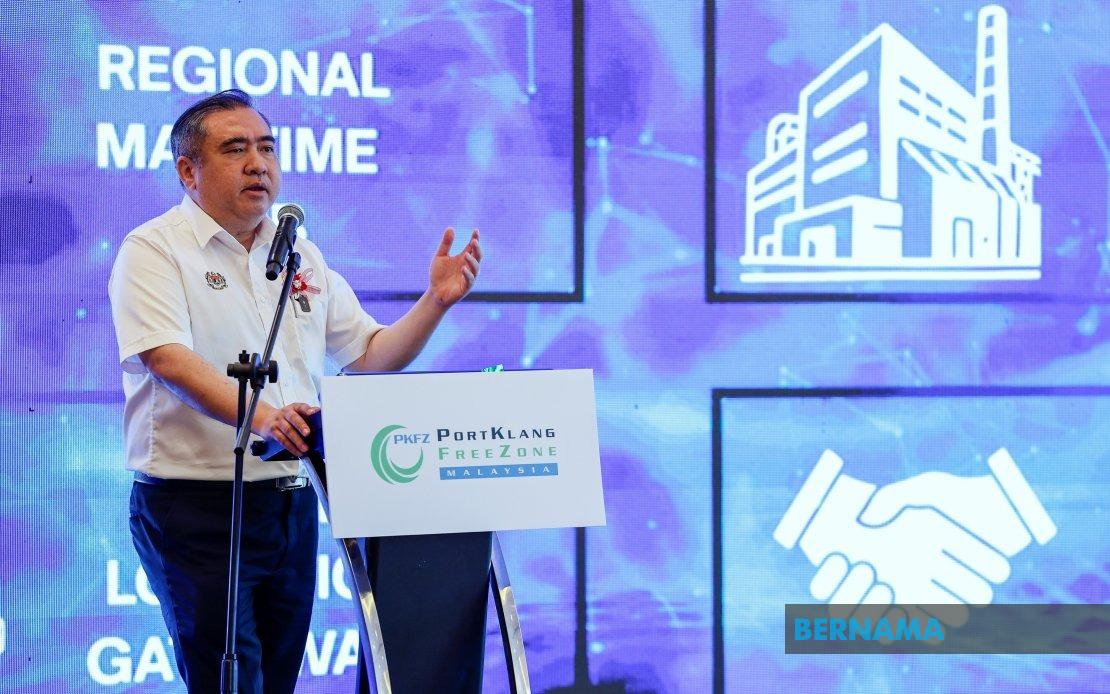
The Selangor State Government is moving ahead with efforts to clear land encumbrances that have held back the Port Klang Third Terminal project on Carey Island, signalling renewed momentum for one of Malaysia's most strategically important infrastructure initiatives. Working alongside the Transport Ministry and private sector partners through a concession framework, state officials are tackling the foundational requirement that must be addressed before ground can be broken on what analysts view as a critical expansion of national port capacity. Transport Minister Anthony Loke confirmed that resolving these land complications remains the primary focus before the project can transition to its construction phase, though the government continues to harbour ambitions of commencing work during the current calendar year.
The Third Terminal represents far more than a routine port expansion for Malaysia. As a scheme designed to reinforce the country's standing in regional and global shipping markets, the facility would substantially increase Port Klang's throughput capacity and cement its position as a leading Southeast Asian maritime hub. The project sits within a broader government strategy to leverage Malaysia's geographic location and existing port infrastructure as economic anchors in an increasingly competitive regional logistics landscape. Prime Minister Datuk Seri Anwar Ibrahim has already directed relevant agencies to accelerate progress on the initiative, underscoring its importance to the administration's economic agenda.
The land tenure complexity that currently occupies officials reflects the multi-stakeholder nature of Carey Island's ownership. According to Selangor Menteri Besar Datuk Seri Amirudin Shari, the state government has earmarked approximately 1,699.68 hectares for the terminal development, a footprint encompassing 1,011.71 hectares of seabed managed by the Selangor State Development Corporation alongside 687.96 hectares of coastal territory held by Yayasan Selangor. This fragmented ownership structure, while manageable, requires careful coordination and negotiation to establish clear development rights and ensure all stakeholders achieve acceptable outcomes. The involvement of multiple entities—state development agencies, charitable foundations, and private concessionaires—means that progress depends on consensus across different institutional interests.
Minister Loke outlined the proposed governance structure for the terminal's implementation, explaining that the project will operate under a Build-Operate-Transfer model typical of major infrastructure undertakings in Malaysia. This approach allows private operators to construct and manage the facility for a specified concession period before eventually transferring assets to government control, thereby distributing financial risk and operational expertise between public and private partners. The concession framework being negotiated with the private sector aims to attract capable operators while maintaining government influence over a critical national asset. Loke's emphasis on resolving land matters first reflects a recognition that successful infrastructure delivery requires sorting foundational issues before committing to capital-intensive construction.
The timing of this announcement comes amid broader investments materialising at Port Klang's existing operations. Minister Loke presided over several concurrent facility launches totalling RM566 million in fresh investment, including the opening of Wisma Golden Horse at the Port Klang Free Zone, a new Suntek Materials manufacturing plant, and Phase 2 expansion of the Golden Horse Rubber facility. These developments underscore active commercial confidence in Port Klang's evolution as an integrated logistics and manufacturing cluster. Simultaneously, the government unveiled the PKFZ: Smart Intelligence Industrial Park initiative, positioning Port Klang as a digitally connected commercial node rather than merely a cargo handling operation. For Malaysian readers, these layered investments signal that Port Klang is being deliberately repositioned as a comprehensive trade ecosystem rather than a standalone port.
The Third Terminal project carries particular significance for Malaysia's position within ASEAN shipping networks. With regional competitors including Singapore, Thailand, and Indonesia expanding their port capacities, Malaysia faces competitive pressure to modernise and enlarge its maritime infrastructure. Port Klang currently operates as the nation's primary container gateway, and constraining its growth could disadvantage Malaysian exporters and importers relative to those using alternative regional hubs. The terminal expansion would address this bottleneck directly, allowing greater volumes of goods to move through Malaysian infrastructure and retaining cargo that might otherwise be diverted to competing ports. For Malaysian businesses, especially those in manufacturing and export-oriented sectors, the terminal's eventual completion carries material implications for logistics costs and supply chain efficiency.
Beyond port infrastructure alone, the government is simultaneously addressing workforce challenges that constrain maritime and logistics industry expansion. Minister Loke revealed that a memorandum of understanding signed between the Port Klang Free Zone authority and the Armed Forces Ex-Servicemen's Affairs Corporation two weeks prior aims to channel military retirees into skilled positions across the sector. This initiative complements an earlier government programme enabling military veterans to obtain Class E heavy vehicle licenses, addressing critical shortages of qualified drivers in the haulage industry. For Malaysia's defence establishment, the scheme offers dignified post-service employment pathways while channelling experienced personnel toward economically productive roles. The coordination between transport, defence, and commercial stakeholders demonstrates a more holistic approach to infrastructure and workforce development than has historically characterised Malaysian project implementation.
The employment dimension reflects broader labour market tightness within Malaysia's logistics sector. As e-commerce, manufacturing, and international trade have expanded, the demand for skilled logistics workers has outpaced supply, creating bottlenecks in warehouse operations, distribution networks, and transportation services. Military retirees, accustomed to structured environments, discipline, and technical training, represent a substantial untapped labour pool that can be rapidly deployed into civilian logistics roles. The MoU witnessed by Deputy Prime Minister Datuk Seri Dr Ahmad Zahid Hamidi signals political commitment to this workforce strategy, though success will depend on practical implementation, adequate training programmes, and employer willingness to engage with the scheme. Malaysian logistics companies struggling with driver and operator shortages may find this initiative addresses immediate operational constraints.
Looking forward, the convergence of port infrastructure expansion, digital industrial park development, and workforce readiness initiatives suggests the government is pursuing a comprehensive strategy to elevate Port Klang's competitiveness over the medium term. However, the land resolution process underscores a persistent challenge within Malaysia's infrastructure delivery: navigating complex ownership structures and institutional coordination often introduces delays that extend timelines and inflate costs. The government's stated target of commencing Third Terminal construction within the current year appears ambitious given that foundational land issues remain unresolved. Malaysian observers will be watching closely to determine whether the renewed political attention and inter-agency coordination announced by Minister Loke translate into tangible acceleration or represent aspirational rhetoric that yields to familiar implementation delays.
For Malaysia's broader economic trajectory, the Third Terminal's eventual realisation matters considerably. The project embodies an approach to infrastructure investment that connects port capacity to industrial development, employment creation, and regional competitiveness. Success would demonstrate that Malaysia can deliver complex, multi-stakeholder projects on viable timelines, bolstering investor confidence in other major initiatives under consideration. Conversely, extended delays would reinforce perceptions that Malaysia's infrastructure development capacity lags regional competitors, potentially influencing corporate location decisions within ASEAN. The next phase of land resolution negotiations will thus carry significance extending well beyond Carey Island's shoreline.

%22%2F%3E%3C%2Fpattern%3E%3C%2Fdefs%3E%3Crect%20width%3D%22100%25%22%20height%3D%22100%25%22%20fill%3D%22url(%23ph21o2sg)%22%2F%3E%3Crect%20width%3D%22100%25%22%20height%3D%22100%25%22%20fill%3D%22url(%23ph21o2sp)%22%2F%3E%3Ctext%20x%3D%2250%25%22%20y%3D%2250%25%22%20text-anchor%3D%22middle%22%20dominant-baseline%3D%22central%22%20fill%3D%22rgba(255%2C255%2C255%2C0.95)%22%20font-family%3D%22Georgia%2C%20'Times%20New%20Roman'%2C%20serif%22%20font-weight%3D%22700%22%20font-size%3D%22170%22%20letter-spacing%3D%22-0.02em%22%3EGabungan%3C%2Ftext%3E%3C%2Fsvg%3E)