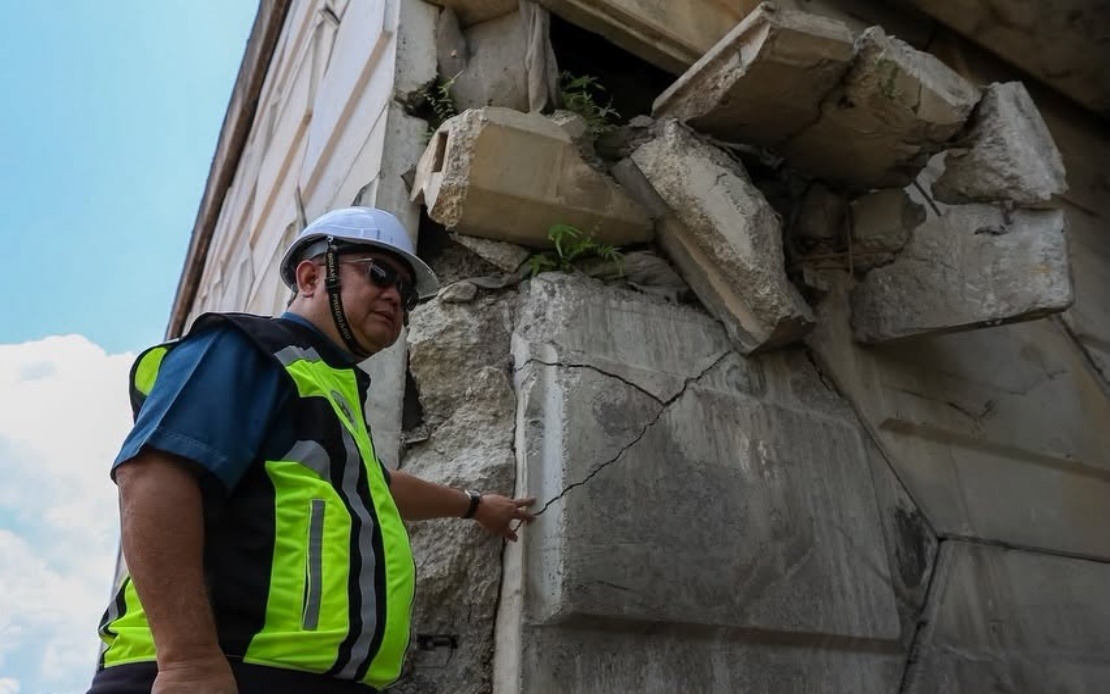
The Selangau-Mukah Interchange Flyover on Sarawak's vital Pan Borneo Highway will reopen in controlled phases once structural repairs and comprehensive safety assessments are completed, Works Minister Datuk Seri Alexander Nanta Linggi confirmed this week. The assurance comes after the critical route was closed following damage sustained when a palm oil tanker struck Ramp 1, compromising the structural integrity of the interchange and forcing authorities to implement a full shutdown pending repairs.
Nanta visited the collision site to personally assess the damage and meet with technical teams overseeing the remediation effort. His visit underscores the significance of the closure to the national infrastructure network, particularly for Sarawak's commercial and transportation sectors that rely on the Pan Borneo Highway as a lifeline connecting major towns and industrial zones. The structural damage affected portions of the retaining wall system, requiring engineers to undertake controlled and methodical repairs to restore the ramp's stability and load-bearing capacity.
The decision to implement a complete closure rather than partial restrictions reflects the severity of the structural compromise. According to technical assessments conducted on-site, the extent of damage warranted a cautious approach prioritising motorist safety above speed of reopening. Nanta stated that controlled structural repairs will proceed systematically, with unaffected routes reopened incrementally as each section passes safety certification. Sections still presenting risk factors will remain cordoned until all reconstruction work concludes and final inspections verify structural integrity.
The prolonged closure has created substantial inconvenience for commuters navigating the Bintulu-Mukah-Sibu corridor, a heavily trafficked route serving residents, business operators, and logistics companies. Commercial transporters, in particular, face significant detours and extended travel times, impacting supply chains and delivery schedules throughout the region. Nanta acknowledged this hardship but maintained that restoring full operational safety represents the non-negotiable prerequisite for reopening, refusing to compromise on standards despite public pressure and economic impact.
The minister emphasised that public concerns raised through both conventional media channels and social media platforms warrant serious engagement from government agencies. This acknowledgment reflects growing recognition that infrastructure decisions carry direct consequences for communities and warrant transparent communication. Feedback mechanisms, whether formal or grassroots, provide valuable intelligence about user experiences and emerging safety concerns that technical teams may not immediately identify in laboratory or controlled assessments.
Nanta identified three primary operational imperatives guiding the recovery process. First, maintaining absolute safety standards for all road users without exception or compromise. Second, rigorous monitoring of repair schedules to prevent unnecessary delays that would prolong disruption beyond technical requirements. Third, ensuring the public receives accurate, timely information regarding current lane closures, available alternative routes, and progress milestones in reconstruction efforts. This multi-pronged approach attempts to balance immediate safety requirements with acknowledgment of genuine public inconvenience.
The Pan Borneo Highway represents a major infrastructure investment designed to enhance connectivity across Sarawak's dispersed geography. The Selangau-Mukah Interchange serves as a critical junction in this network, facilitating movement between coastal and inland communities. A prolonged closure affecting this node demonstrates vulnerability in infrastructure systems to unexpected incidents and highlights the cascading economic and social effects of single-point failures in transport networks. For Malaysian policymakers, the incident reinforces the importance of designing resilience into major infrastructure projects.
The involvement of a palm oil tanker in the collision speaks to the intensity of industrial traffic on Sarawak highways. The region's substantial palm oil sector generates heavy vehicular movements, introducing unique challenges for infrastructure design and maintenance. Engineers must account for concentrated loads and impact scenarios involving large industrial vehicles when specifying structural standards. The collision raises questions about traffic management protocols, vehicle weight restrictions, and whether existing safety barriers and protections adequately address the specific hazard profile of industrial transport corridors.
Nanta's personal oversight of the repair process signals ministerial commitment to resolving the disruption, though it also reflects the political sensitivity surrounding infrastructure failures. The closure affects the ruling government's credibility on infrastructure delivery at a time when major development projects feature prominently in political messaging. The minister's repeated emphasis on safety over speed attempts to reframe the closure as a responsible governance decision rather than an operational failure, though affected communities may view prolonged disruption differently regardless of underlying rationales.
The phased reopening approach represents a measured strategy attempting to balance competing pressures. Rather than an all-or-nothing closure followed by complete reopening, the staged methodology allows portions of the interchange to resume function once individual sections meet safety certification. This approach minimises disruption while maintaining safety integrity, though it requires sophisticated traffic management to handle partial operations safely. Successful implementation depends on clear signage, effective communication, and public compliance with changing traffic restrictions during the transition period.
Looking forward, the incident will likely prompt infrastructure authorities to review design standards, maintenance protocols, and emergency response procedures across the Pan Borneo Highway network. Similar interchanges may require assessment for comparable vulnerabilities. The government may also examine whether additional protective infrastructure such as enhanced barriers or load-limiting measures could mitigate collision risks without compromising traffic flow. These post-incident reviews represent standard practice in infrastructure management, though implementation across existing networks requires balancing safety improvements against cost and disruption.
For Malaysian drivers and businesses depending on Sarawak's transport corridors, the closure represents an uncomfortable reminder of infrastructure vulnerability. The incident demonstrates how a single accident can cascade into substantial regional disruption, affecting commerce, travel plans, and daily routines. While Nanta's commitment to safety-first reopening protocols provides assurance on long-term integrity, the near-term inconvenience underscores the importance of redundancy in critical transport networks and the value of maintaining alternative routes when possible.

