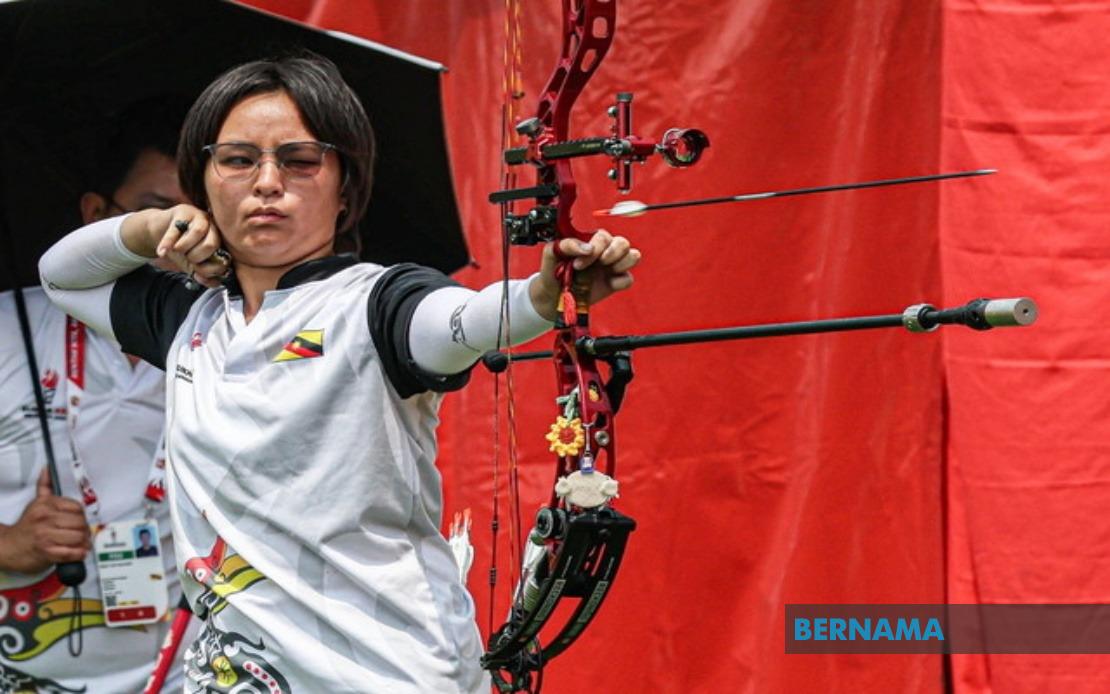
Wee Yee Qi's decision to abandon recurve archery in favour of compound bow competition has delivered immediate and striking results at the 2026 SUKMA Games, with the 17-year-old Sarawak archer capturing a pair of gold medals in her maiden appearance at Malaysia's premier multi-sport event. The Miri-born competitor's breakthrough performance underscores the growing competitive depth of Malaysia's archery talent pool and suggests that tactical adjustments in discipline selection can unlock significant potential in young athletes navigating their early careers.
Competing at the National Institute of Valuation Stadium in Bangi on August 21, Yee Qi paired with Eason Lau Hui Wan to secure victory in the mixed team final, narrowly defeating Kedah's combined strength of Muhammad Zaim Ahmad and Ili Nabihan Shafizan by a single point, 151-150. The razor-thin margin illustrated the intensity of competition at this level and Yee Qi's capacity to perform under pressure during crucial moments. Such precision and composure in a high-stakes environment typically indicate maturity beyond what one might expect from an athlete at the beginning of their competitive journey.
The teenage archer followed this achievement by anchoring Sarawak's women's team to gold in the team event alongside teammates Aira Nadirah Aizuddin and Nur Zara Aisyah Khairul Fadly. The final proved dramatic, with Sarawak trailing throughout the opening three ends before executing a powerful comeback to ultimately prevail over Terengganu 217-213. This comeback victory demonstrated the psychological resilience necessary for elite competition, as the Sarawak trio overcame adversity against Terengganu's contingent of Airazalia Azrai, Nur Shafiena Mohd Shuhamri, and Putri Aqiera Issandra Ismayuddin.
In her remarks to national news agency Bernama immediately following the competitions, Yee Qi expressed gratitude to her coaching staff, crediting their guidance and the exposure to competitive tournaments as instrumental in developing her technical and tactical capabilities. She traced her entry into archery to talent identification efforts at her school some six years prior, a pathway that demonstrates the importance of systematic grassroots talent development programmes in schools across Malaysia. Family support emerged as another critical factor in her progression, a reminder that elite athletic achievement rarely occurs in isolation from domestic encouragement and backing.
Yee Qi's transition from recurve to compound bow represents a calculated strategic move rather than a casual experiment. She acknowledged that her performances in recurve archery had plateaued, suggesting that her anatomical characteristics, psychological profile, or technical affinity aligned better with the different biomechanics and equipment of compound shooting. Such discipline switches, while sometimes viewed with scepticism, have historically proven beneficial when athletes recognise their own strengths and work with coaching staff to identify the discipline that best suits their capabilities. Her immediate success validates this assessment.
Despite the dual gold medal success at SUKMA, Yee Qi has temporarily redirected her focus toward academic obligations, preparing for the Sijil Pelajaran Malaysia examination scheduled for November. This balanced approach to development, prioritising secondary education whilst maintaining athletic progression, reflects a mature understanding of long-term personal development. Many elite athletes from developing nations have benefited from completing formal education before committing fully to sport, ensuring alternative career pathways remain viable.
Following her SPM examinations, Yee Qi intends to resume full-time commitment to archery training with an ambitious objective: representing Malaysia on the international stage. This aspiration is realistic given her current trajectory, though the pathway to national team selection typically demands consistency at the highest amateur competition levels and successful qualification through national trials. Her SUKMA performances have established a strong foundation upon which to build future campaigns.
The broader significance of Yee Qi's performance extends beyond individual achievement to reflect the current competitive landscape of Malaysian archery. Selangor's second-place finish in the mixed team event through Muhammad A'rif A'fiq Suhaimi and Nur Alyaa Nazurah Fadzil Fairuz, who defeated Sabah 154-152, and their bronze in the women's team competition indicates healthy depth of talent across multiple states. This distribution of medal success across Sarawak, Selangor, and other states suggests that Malaysian archery is developing a more geographically balanced competitive structure.
Sarawak's strong showing in archery at SUKMA 2026 stands as testament to targeted investment in training infrastructure and coaching expertise in the state. East Malaysian states have increasingly become competitive forces in certain individual sports at SUKMA, shifting away from traditional powerhouse concentrations in Peninsular Malaysia. This regional diversification strengthens the overall quality of Malaysian archery development, as competition between states intensifies and technical standards rise across the board.
Yee Qi's story carries implications for Malaysian sports policy more broadly. Her journey from school talent identification through to national competition demonstrates the potential value of systematic grassroots programmes and the importance of flexibility when athletes encounter performance plateaus. Rather than persisting with unsuccessful approaches, early career guidance that encourages strategic reassessment of discipline or approach can accelerate development. Sports bodies and coaching hierarchies that embrace this pragmatic approach may unlock hidden potential in their young talent pipelines.
As Yee Qi concludes her final secondary education examinations and prepares for deeper immersion in competitive archery, stakeholders will be monitoring her progression toward national team aspirations. The technical skills she has demonstrated, combined with her capacity to deliver under pressure and her willingness to adapt her approach based on performance feedback, suggest that Malaysian archery has reason to view her future involvement with optimism and expectation.

