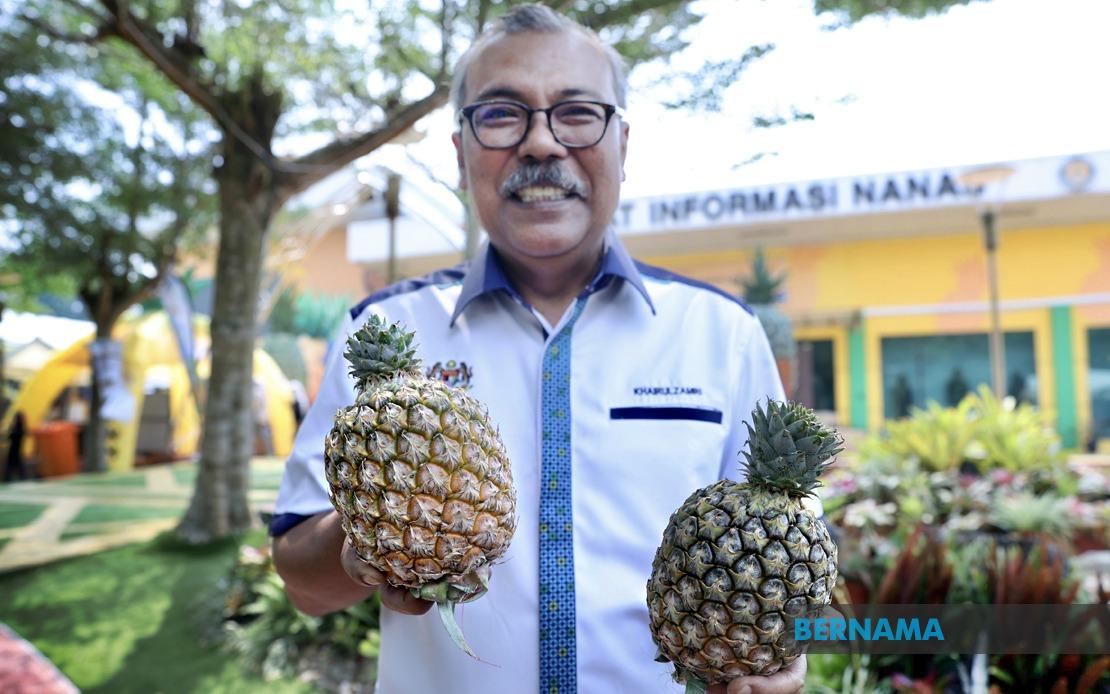
A promising new agricultural innovation is commanding attention at Malaysia's premier farming showcase. The Sarawak Gold pineapple variety, branded as SG1, has emerged as a centrepiece attraction at Laman Nanas during MAHA 2026, the Malaysia Agriculture Expo now underway at the Malaysia Agriculture Expo Park (MAEPS) in Serdang. Drawing from seven tonnes of fresh fruit transported from Sarawak, the exhibition offers visitors an unprecedented opportunity to experience this novel cultivar firsthand.
The Malaysian Pineapple Industry Board (LPNM) is positioning SG1 as a transformative option for domestic growers. According to LPNM director-general Mohd Khairuzamri M. Salleh, this variety originated in Miri through deliberate cultivation efforts and represents a significant leap forward in commercial viability. The fruit distinguishes itself through multiple competitive advantages that address longstanding constraints facing the traditional pineapple sector in Malaysia.
SG1's sensory profile rivals the widely cultivated MD2 variety in terms of sweetness, yet it presents distinctive visual characteristics that enhance market appeal. Most notably, the fruit's crown develops an elegant rose-like formation, a feature that strengthens its aesthetic value for premium retail positioning. Quality consistency throughout the fruit—from apex to base—ensures that consumers receive uniform taste experiences regardless of fruit size, addressing a concern that has occasionally plagued conventional varieties.
The cultivation timeline offers perhaps the most compelling economic advantage. While the established MD2 variety demands fourteen months from planting to harvest, SG1 achieves maturity in merely nine months. This accelerated production cycle fundamentally improves return on investment for farmers, enabling multiple production runs within equivalent timeframes and reducing capital lock-up costs associated with extended growing periods.
Planting density represents another revolutionary aspect of the SG1 model. Growers can establish between 25,000 and 30,000 plants per acre, a substantially higher concentration than conventional spacing permits. This density optimization dramatically amplifies yields per unit of land, a particularly valuable attribute for Malaysia where agricultural real estate commands premium prices and availability constrains expansion opportunities.
The LPNM has initiated expansion protocols targeting Peninsular Malaysia's pineapple-growing regions. Seedlings are anticipated to reach commercial farmers through established distribution networks within the coming year, broadening access beyond Sarawak's current monopoly on production. This dispersal strategy reflects official confidence in the variety's adaptability across Malaysia's diverse climatic zones and soil conditions.
International market penetration has already commenced. Trial export shipments from Sarawak to Singapore have demonstrated commercial viability and acceptance in regional markets. LPNM officials recognize substantial potential for expanded shipments to lucrative destinations including China and New Zealand, particularly given SG1's inherent resilience characteristics that facilitate long-distance transportation without significant quality degradation.
Beyond the primary fruit product, MAHA 2026's pineapple pavilion champions a holistic value-extraction philosophy. The theme "Value Creation for Food Security" fundamentally reframes industry narratives away from singular focus on fresh pineapple sales. The promotional concept of "one planting, three harvests" articulates how crowns can be replanted, while plant residues support diverse downstream applications.
This circular approach transforms conventional agricultural waste into economic assets. Residual plant material becomes feedstock for ruminant nutrition products, addressing livestock productivity challenges. Additionally, processing waste streams feed into textile and paper manufacturing processes, creating integrated value chains that maximize returns across integrated production ecosystems. Such diversification reduces farmer vulnerability to fresh fruit price volatility while strengthening rural income stability.
MHA 2026 operates through September 6 at MAEPS, featuring approximately 2,000 exhibitors and projecting attendance exceeding four million visitors. The event provides unprecedented scale for agricultural stakeholder engagement across industry value chains. For Malaysia's pineapple sector specifically, SG1's exhibition represents a decisive moment in industry modernization, signaling transition toward higher-productivity cultivation systems compatible with contemporary commercial requirements and regional export ambitions.
The convergence of accelerated maturation cycles, density farming efficiency, and premium market positioning suggests SG1 addresses multiple structural challenges simultaneously. For Malaysian growers facing intensified regional competition from established producing nations, this variety offers pathways toward competitive restoration through productivity enhancement and value-chain diversification. Regional agricultural ministries and development authorities monitoring emerging innovations are likely observing SG1's trajectory closely as a model for technology transfer and commercial scaling within Southeast Asia's agricultural modernization agenda.

