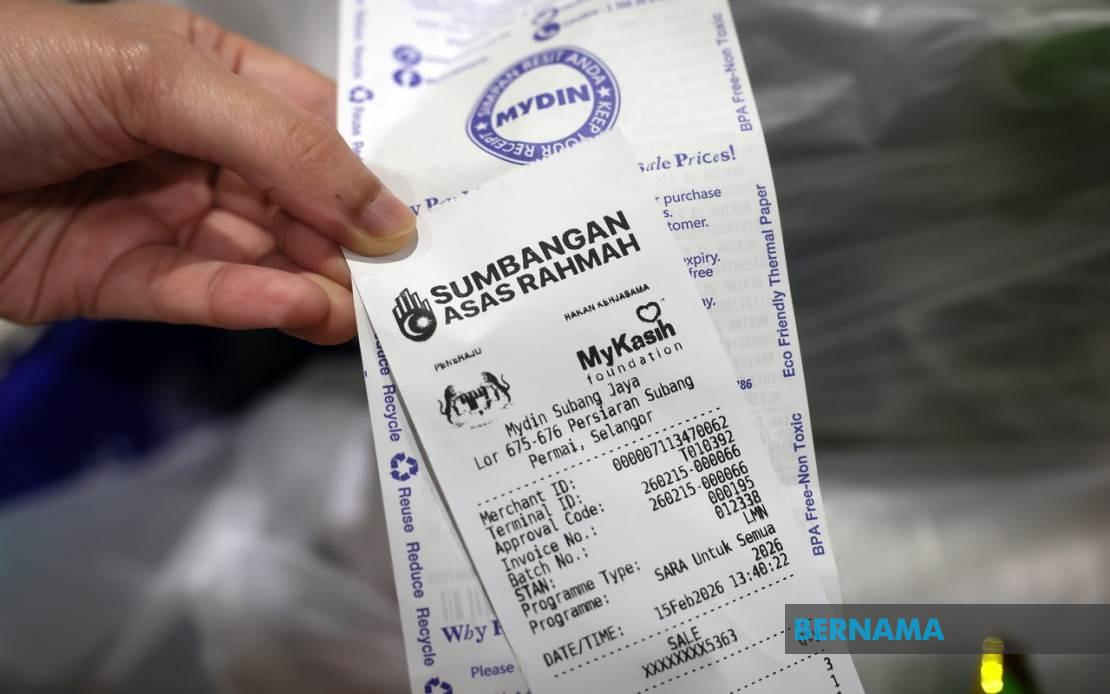
Malaysia's flagship Sumbangan Asas Rahmah (SARA) assistance programme has achieved a 99 per cent utilisation rate, reflecting robust take-up among its target beneficiary group of nearly nine million monthly Sumbangan Tunai Rahmah (STR) recipients. The Ministry of Finance disclosed that cumulative transaction values have totalled RM3.45 billion so far this year, underscoring the significance of the cashless transfer mechanism in channelling targeted relief to Malaysia's lower and middle-income households during a period of sustained inflationary pressures.
The broader ecosystem encompassing the SARA Untuk Semua (SARA For All) initiative has generated equally impressive figures, with approximately 22 million individuals—representing 87 per cent of the total recipient population—engaging in local market transactions worth more than RM1.77 billion. This extension of the programme beyond the original STR cohort represents a deliberate policy pivot to amplify the reach of targeted social support and capitalise on the multiplier effects that emerge when government transfers circulate through domestic supply chains. The two-tier structure demonstrates Kuala Lumpur's evolving approach to welfare administration, moving beyond conventional cash transfers toward purpose-directed spending mechanisms that serve dual objectives of poverty alleviation and economic stimulus.
The Ministry of Finance framed recipient spending patterns as a critical performance metric for evaluating how effectively the twin programmes are mitigating living cost burdens. The cashless architecture proves instrumental in this regard, as it generates granular transactional data that enable policymakers to monitor real-time programme efficacy and trace fund flows directly to their intended purposes. This transparency function distinguishes SARA from conventional cash assistance and provides government with unprecedented visibility into how welfare allocations translate into household purchasing behaviour and broader economic activity.
Operationally, SARA functions as a digitalised credit system accessed through MyKad, with recipients able to redeem accumulated credits at registered SARA Rakan Niaga merchant outlets. The eligible commodity basket encompasses 15 essential categories spanning basic foodstuffs, personal hygiene items, household cleaning products, and pharmaceutical supplies. This curated approach deliberately constrains spending toward necessities while preventing diversion to non-essential or luxury goods, thereby reinforcing the programme's underlying intent to strengthen household resilience against price volatility in basic consumption items. The merchant partnership model simultaneously supports participating retailers, particularly those in lower-income neighbourhoods where SARA recipients concentrate.
The programme's expansion signals shifting fiscal priorities within Malaysia's social expenditure framework. Budget allocations earmarked for STR and SARA combined have escalated substantially, rising from RM10 billion in 2024 to a projected RM15 billion in 2026. This trajectory reflects heightened government commitment to constructing a more nuanced, vertically targeted safety net that concentrates resources on populations demonstrating greatest vulnerability to macroeconomic shocks. The three-year doubling of dedicated funding underscores recognition that conventional, untargeted transfer schemes prove inefficient when fiscal space remains constrained and competing developmental demands proliferate.
The Ministry's parliamentary response, fielded in answer to an inquiry from Datuk Aminolhuda Hassan (PH-Sri Gading), constituted acknowledgment of the programme's significance within broader legislative and public discourse. The question itself reflected parliamentary interest in establishing robust performance benchmarks for major social initiatives, signalling that both government and opposition scrutiny increasingly demands empirical evidence of programme effectiveness rather than relying on nominal roll-out figures alone. The 99 per cent uptake statistic and transaction volume data provided satisfy this demand for concrete performance indicators.
The economic implications extend beyond immediate household consumption. Each transaction within the SARA ecosystem generates activity that permeates supplier networks, wholesalers, logistics providers, and financial intermediaries. The multiplier effects referenced by the Ministry constitute a secondary welfare channel distinct from the direct income support mechanism. As merchants replenish inventory to service SARA-funded demand, they generate orders that ripple upstream through wholesale and manufacturing sectors. This demand-side stimulus proves particularly potent in rural constituencies and lower-income urban zones where SARA merchant concentration remains high, effectively channelling economic activity toward communities experiencing persistently higher unemployment and underemployment.
The programme's architecture also reflects Malaysian policymakers' evolving understanding of behavioural economics and welfare administration. By constraining eligible purchases to defined categories, SARA designers implicitly rejected paternalistic assumptions that poor households necessarily misallocate transfers. Instead, the constraint model balances recipient autonomy—individuals retain choice regarding which SARA-eligible vendor to patronise and which specific items to purchase—against programme integrity and fiscal sustainability. This middle path acknowledges dignity considerations while preserving government capacity to monitor programme performance and prevent abuse.
Regional comparisons underscore Malaysia's positioning within Southeast Asian welfare innovation. Neighbouring jurisdictions implementing similar programmes have encountered substantially lower uptake rates and persistent challenges in ensuring merchants maintain compliance with eligible commodity restrictions. Malaysia's 99 per cent utilisation rate and the apparent merchant participation willingness suggest more successful institutional coordination and programme design implementation relative to comparable regional schemes. This comparative advantage may partly reflect Malaysia's existing digital infrastructure maturity and relatively advanced financial inclusion metrics relative to some regional peers.
Looking forward, the Ministry committed to sustained monitoring of both STR and SARA to ensure allocations genuinely reach intended beneficiaries amid ongoing cost-of-living pressures. This undertaking implicitly acknowledges that programme design constitutes merely the initial step; effective execution demands continuous data collection, evaluation, and iterative refinement. The commitment also signals awareness that inflationary trajectories remain uncertain and programme adequacy may require periodic recalibration to maintain purchasing power preservation for target beneficiaries.
The Ministry's disclosure simultaneously addresses implicit questions regarding programme costs and displacement effects. The RM3.45 billion transaction volume represents actual government expenditure that has demonstrably translated into merchant transactions and household consumption, rather than accumulating as unspent balances that might indicate beneficiary exclusion or accessibility barriers. The high utilisation rate therefore functions as implicit evidence that programme mechanics operate smoothly across diverse demographic and geographic cohorts, from urban and rural recipients alike.
For Malaysian readers and regional observers, the SARA programme's performance metrics offer a rare dataset of cashless transfer programme outcomes in a developing economy context. The integration of digital payment infrastructure with targeted commodity restrictions represents a governance innovation with potential applicability across multiple domains beyond welfare administration. As living costs remain elevated throughout Southeast Asia and fiscal constraints limit conventional transfer expansion, SARA's design and performance trajectory merit close analytical attention from policymakers across the region seeking to maximise the welfare impact of constrained public resources.

