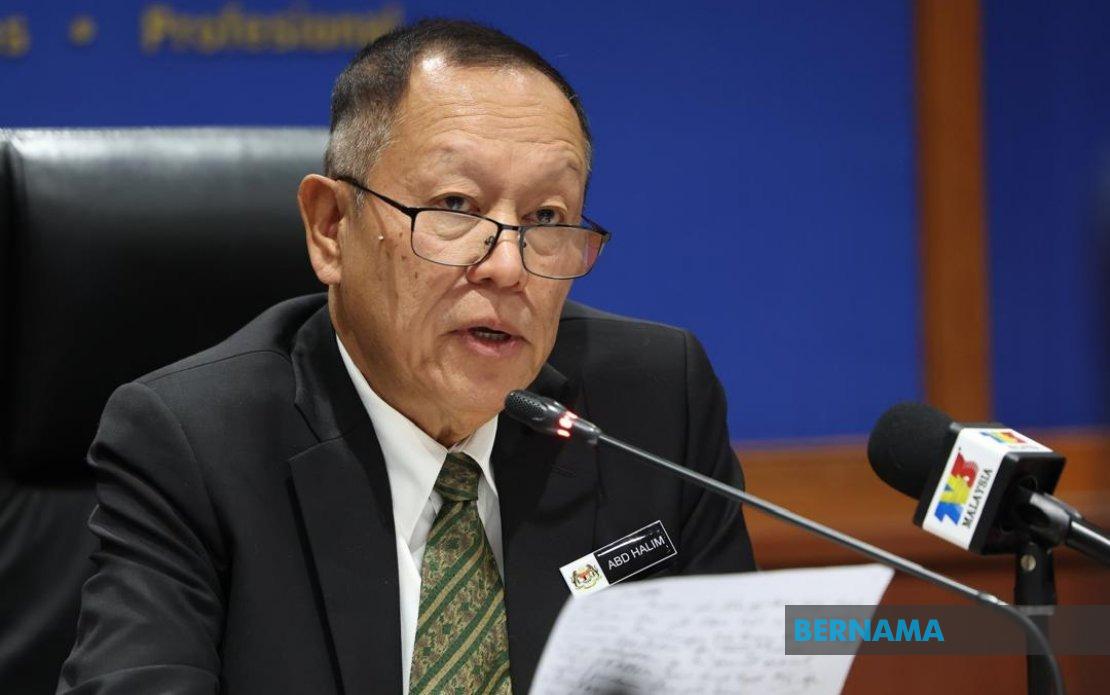
The Malaysian Anti-Corruption Commission is close to completing its new regional headquarters in Sabah, marking a significant operational milestone for the anti-graft agency's eastern Malaysian presence. Located on Jalan Sepanggar in Kota Kinabalu, the facility has reached 90 per cent completion and is scheduled for full handover by the end of 2024. MACC Chief Commissioner Datuk Seri Abd Halim Aman announced the timeline following a visit to the agency's current base at the Federal Government Administration Complex Building, accompanied by Sabah MACC Director Datuk Mohd Fuad Bee Basrah.
The consolidation of three separate MACC offices into a single dedicated headquarters represents a strategic shift for the commission's operational structure in Sabah. Currently, MACC personnel working across the state operate from scattered locations, fragmenting resources and creating logistical challenges. The new building will physically unite all Sabah-based staff, eliminating the inefficiencies that arise from distributed operations. This spatial reorganisation extends beyond mere convenience, addressing fundamental institutional requirements that underpin the agency's credibility and functional independence.
According to Abd Halim, the acquisition of purpose-built premises strengthens MACC's standing as an autonomous enforcement body. Independent agencies require material independence from other government structures, and a dedicated building symbolises and facilitates this separation. The chief commissioner emphasised that institutional autonomy depends not only on legal authority but also on demonstrable operational independence. By moving from temporary accommodation within a general administrative complex to a facility designed specifically for anti-corruption investigations and enforcement, MACC signals to the public and to potential witnesses or complainants that it operates as a distinct entity with its own governance and priorities.
The consolidation will generate measurable improvements in internal coordination and communication. When staff work in three different locations, information flow becomes cumbersome, coordination across teams suffers, and case management becomes unnecessarily complex. A unified headquarters enables real-time collaboration among investigators, legal specialists, support staff, and administrative personnel. Operational efficiency gains materialise through shortened decision cycles, reduced duplication of effort, and improved knowledge-sharing among officers handling overlapping matters. Administrative functions such as human resources, finance, and records management also benefit from centralised operations, allowing the agency to deploy resources more strategically.
For Sabah specifically, the new office addresses a long-standing gap in institutional infrastructure across Malaysian Borneo. The state has historically experienced underinvestment in federal enforcement capabilities relative to peninsular Malaysia, partly due to geographic and logistical constraints. A modern MACC headquarters signals sustained federal commitment to corruption prevention in the region and demonstrates that anti-graft enforcement carries equivalent priority across Malaysia's federal territories. This has implications for confidence in governance, particularly given Sabah's ongoing concerns about transparency and resource management in state procurement and land administration.
Abd Halim used the occasion to address media responsibilities in covering MACC investigations, requesting restraint in publishing suspect identities and images. The chief commissioner distinguished between accountability and prejudgment, noting that media coverage should respect the legal presumption of innocence and avoid inflaming public opinion against individuals not yet convicted. This appeal reflects a recurring tension in anti-corruption journalism: balancing the public interest in transparency against the rights of persons accused but not adjudicated. The guidance seeks to establish professional norms around naming, shaming, and visual identification, particularly in early investigative stages where information remains contested.
The commissioner's emphasis on verified sourcing addresses a specific vulnerability in corruption reporting. Unconfirmed allegations, leaked documents of unclear provenance, and speculative analysis can spread rapidly through social media and online platforms, potentially damaging reputations and distorting public understanding of investigations. By urging journalists to authenticate information before publication, Abd Halim encourages editorial discipline that protects accuracy while supporting MACC's investigative processes. Premature or inaccurate public disclosure can compromise witness protection, alert subjects to investigation details, and create evidentiary complications if subsequent legal proceedings occur.
The timing of these remarks during a facility tour underscores institutional messaging beyond the physical infrastructure project. MACC faces recurring public and political scrutiny regarding its independence and consistency in applying enforcement standards. The new headquarters becomes a tangible emblem of the commission's permanence and institutional maturity. By coupling infrastructure announcements with ethical guidance to media stakeholders, Abd Halim reinforces that MACC's legitimacy depends on coordinated commitment to professionalism across multiple institutions—the anti-corruption agency itself, the judiciary, law enforcement partners, and the media ecosystem that frames public understanding of investigations.
For Malaysian readers and observers in neighbouring Southeast Asian countries, the Sabah project reflects broader patterns in governance strengthening. Regional anti-corruption agencies across Southeast Asia have increasingly invested in dedicated facilities and institutional autonomy measures, recognising that enforcement credibility depends partly on material autonomy and professional capacity. The MACC's Sabah expansion aligns with comparable initiatives in Indonesia, Thailand, and the Philippines, where anti-graft bodies have sought to insulate themselves from political pressure through institutional hardening and geographic decentralisation of investigative capacity.
The year-end opening also aligns with Malaysia's commitment to international anti-corruption frameworks. UNCAC signatories are expected to maintain capable, independent anti-corruption institutions with adequate resources and infrastructure. The new Sabah facility demonstrates compliance with these expectations and strengthens Malaysia's position in comparative governance assessments. International engagement on corruption prevention increasingly evaluates not just formal laws but material capacity for implementation, making physical infrastructure investments visible markers of institutional seriousness.
Looking forward, the consolidation creates opportunities for MACC to implement unified operational protocols across Sabah. Standardised investigation methodologies, consistent case management systems, and integrated training programmes become feasible when personnel work under one roof. The new facility may also accommodate expanded investigative capacity, potentially enabling MACC to address corruption in Sabah's substantial extractive industries, fisheries sector, and state administration more comprehensively than current dispersed operations permit. The effectiveness of this expansion will ultimately depend not on the building itself but on whether MACC receives corresponding increases in staffing, training, and operational budgets to match its enhanced institutional platform.

%22%2F%3E%3C%2Fpattern%3E%3C%2Fdefs%3E%3Crect%20width%3D%22100%25%22%20height%3D%22100%25%22%20fill%3D%22url(%23ph21o2sg)%22%2F%3E%3Crect%20width%3D%22100%25%22%20height%3D%22100%25%22%20fill%3D%22url(%23ph21o2sp)%22%2F%3E%3Ctext%20x%3D%2250%25%22%20y%3D%2250%25%22%20text-anchor%3D%22middle%22%20dominant-baseline%3D%22central%22%20fill%3D%22rgba(255%2C255%2C255%2C0.95)%22%20font-family%3D%22Georgia%2C%20'Times%20New%20Roman'%2C%20serif%22%20font-weight%3D%22700%22%20font-size%3D%22170%22%20letter-spacing%3D%22-0.02em%22%3EGabungan%3C%2Ftext%3E%3C%2Fsvg%3E)