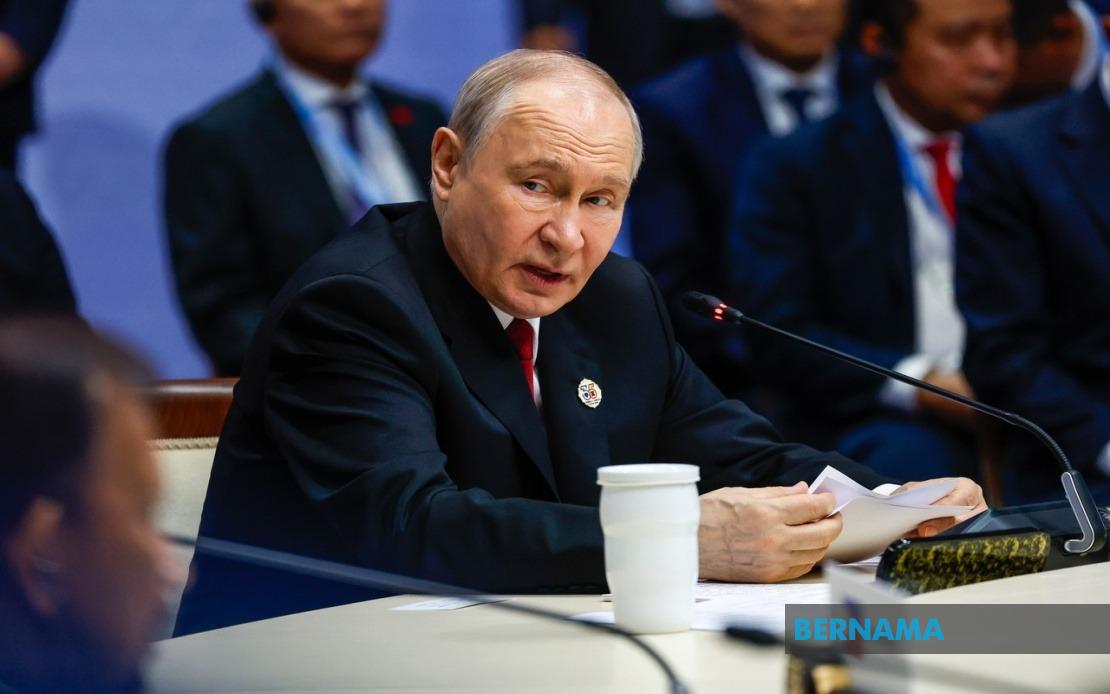
Russia and ASEAN marked three and a half decades of diplomatic engagement at a commemorative summit in Kazan, with President Vladimir Putin highlighting how their strategic partnership has become increasingly vital to regional stability as global tensions mount. Speaking at the opening ceremony of the two-day gathering, Putin underscored that the relationship between Moscow and the ten-member Southeast Asian bloc transcends traditional diplomacy, encompassing a sophisticated architecture of cooperation spanning security, trade, energy, agriculture, and cultural exchanges that reflects mutual commitment to balanced development across the Asia-Pacific.
The formal establishment of ties between Russia and ASEAN traces back to 1991 in Kuala Lumpur, a period when the Soviet Union was transitioning and Southeast Asia was reshaping its strategic landscape. That initial engagement gradually deepened through successive stages of institutional recognition. By 1996, Russia achieved full ASEAN Dialogue Partner status, positioning itself among a select group of external powers granted substantive consultative access to the bloc's decision-making processes. The relationship experienced significant elevation in 2018 when it was formally designated as a Strategic Partnership, a classification that signals Moscow's intention to move beyond episodic engagement towards sustained, coordinated action across multiple dimensions of statecraft.
Putin's characterisation of the partnership as a "stabilising factor" carries particular weight given the turbulent international environment. The Asia-Pacific region continues to experience crosscurrents of geopolitical competition, particularly between major powers seeking influence over critical sea lanes and economic zones. Russia's emphasis on the partnership's role in contributing to "a balanced security architecture" reflects Moscow's perspective that ASEAN, as a bloc committed to non-alignment and pragmatic engagement, offers an important counterweight to bloc-based rivalry and zero-sum strategic competition that might otherwise dominate regional dynamics.
The substantive scope of Russia-ASEAN cooperation extends across sectors that directly impact Southeast Asian development priorities. Energy collaboration remains particularly significant, given the region's substantial energy requirements and Russia's position as a major global supplier of hydrocarbons and nuclear technology. Agricultural partnerships address food security concerns that resonate throughout Southeast Asia, where population growth and climate pressures create ongoing challenges for domestic production. The inclusion of digitalisation and technology transfer in the cooperation framework demonstrates both sides' recognition that economic competitiveness increasingly depends on access to modern technological infrastructure and expertise.
The summit's timing reflects broader strategic calculations. As Southeast Asia continues to attract investment from multiple powers and serves as a crucial hub in global supply chains, Russia views deeper institutional engagement with ASEAN as essential to preventing its marginalisation from regional developments. For ASEAN members, Russia's acknowledged strengths in energy production, advanced technology, agricultural expertise, and higher education provision create mutual interest in sustained partnership. This complementarity of capabilities and needs suggests genuine practical foundations for cooperation rather than purely political posturing.
Current geopolitical uncertainties lend fresh urgency to the relationship. Global economic volatility, disrupted supply chains, and shifting trade patterns have created conditions where ASEAN nations increasingly value diversified partnerships rather than over-dependence on any single external power. Russia similarly faces economic pressures and sanctions-related constraints that make strengthening ties with dynamic Asian markets strategically rational. The summit provided an opportunity for both sides to reaffirm commitment to areas including trade and investment expansion, food and energy security assurance, digital transformation cooperation, and educational and scientific exchanges that transcend temporary political friction.
The attendance of Prime Minister Datuk Seri Anwar Ibrahim and Philippine President Ferdinand Marcos Jr, who held the ASEAN Chair, underscored the bloc's institutional significance. Their presence indicated that ASEAN members view Russia engagement as sufficiently important to warrant top-level participation, despite the controversial geopolitical context. Malaysia's representation proved particularly notable given the country's traditionally balanced approach to major power relations and its economic interests across multiple spheres of Russian cooperation, from energy and trade to education and technology.
For Malaysian readers and Southeast Asia observers, the Russia-ASEAN partnership's evolution reflects a broader pattern whereby regional nations seek to maintain relationships with diverse external actors regardless of global power competition. This hedging strategy allows ASEAN members to access multiple sources of investment, technology, and diplomatic support while preserving the bloc's collective autonomy and decision-making independence. Malaysia, as a significant ASEAN economy with substantial energy requirements and development aspirations, stands to benefit from sustained Russian cooperation in sectors where Moscow possesses competitive advantages.
The strategic partnership's foundation in international law and mutual interest represents an implicit commitment to avoiding the winner-take-all dynamics that characterise some contemporary great power relationships. By framing their engagement around shared principles of respect for sovereignty, non-interference in internal affairs, and mutually beneficial cooperation, Russia and ASEAN position themselves as defenders of a multipolar international order that accommodates diverse national interests rather than enforcing hierarchical alignments.
Looking forward, the partnership's trajectory will likely depend on how effectively both sides translate declared commitments into tangible economic and institutional outcomes. The commercial dimensions of cooperation—increased two-way investment, expanded trade volumes, and collaborative ventures in energy and technology—will ultimately determine whether the partnership extends beyond diplomatic rhetoric into substantive mutual benefit. For ASEAN members, the summit represented an opportunity to reset engagement with Russia on terms that balance regional security concerns with economic pragmatism and the principle of inclusive, pluralistic international relations.

%22%2F%3E%3C%2Fpattern%3E%3C%2Fdefs%3E%3Crect%20width%3D%22100%25%22%20height%3D%22100%25%22%20fill%3D%22url(%23ph21o2sg)%22%2F%3E%3Crect%20width%3D%22100%25%22%20height%3D%22100%25%22%20fill%3D%22url(%23ph21o2sp)%22%2F%3E%3Ctext%20x%3D%2250%25%22%20y%3D%2250%25%22%20text-anchor%3D%22middle%22%20dominant-baseline%3D%22central%22%20fill%3D%22rgba(255%2C255%2C255%2C0.95)%22%20font-family%3D%22Georgia%2C%20'Times%20New%20Roman'%2C%20serif%22%20font-weight%3D%22700%22%20font-size%3D%22170%22%20letter-spacing%3D%22-0.02em%22%3EGabungan%3C%2Ftext%3E%3C%2Fsvg%3E)