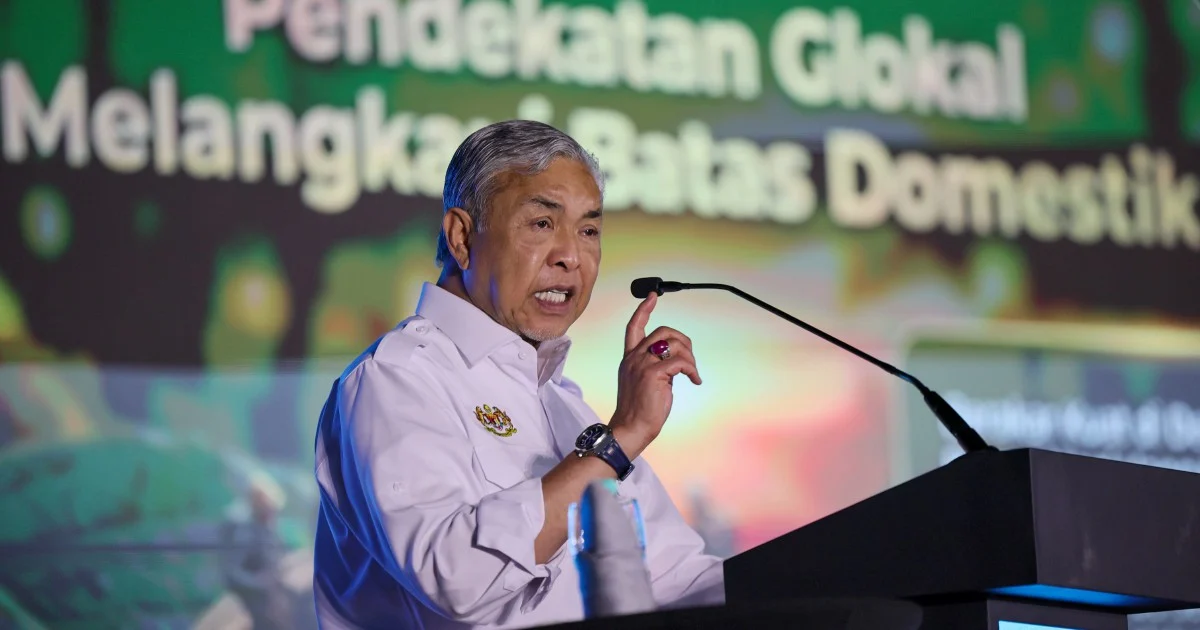
Deputy Prime Minister Datuk Seri Dr Ahmad Zahid Hamidi has called for Malaysia's National Rural Economic Agenda to function as a comprehensive development roadmap that aligns village and countryside growth with the nation's international commitments and global standards. Speaking in Maran, Zahid underscored the importance of crafting rural expansion strategies that do not operate in isolation from broader economic and developmental frameworks that increasingly define competitive advantage in the international marketplace.
The emphasis on synchronising rural progress with global agendas reflects a broader recognition within Malaysia's political leadership that remote and agricultural communities can no longer develop according to purely domestic parameters. As global supply chains, trade agreements, and sustainability standards reshape economic opportunities, rural economies must adopt comparable practices and capabilities. The Deputy Prime Minister's statement signals awareness that Malaysia's rural sector—home to millions of citizens and critical to food security and resource management—requires strategic modernisation that extends beyond traditional subsidy and infrastructure models.
The National Rural Economic Agenda, under this framework, becomes more than a domestic poverty-reduction or infrastructure programme. Instead, it transforms into a vehicle for integrating Malaysia's countryside into higher-value production chains, digital economies, and sustainability initiatives that increasingly dominate global commerce. This interpretation suggests that Zahid and his ministry are considering how rural development can contribute to Malaysia's competitive positioning in an era where agricultural technology, organic certification, digital connectivity, and environmental stewardship determine market access and premium pricing.
For Malaysian policymakers, this positioning carries substantial implications. Rural areas have historically lagged urban centres in infrastructure investment, educational attainment, and technological adoption. If the National Rural Economic Agenda operates as articulated—bridging global and local priorities—it could address long-standing regional disparities by channelling resources toward sectors and skills aligned with international demand. Fruit production destined for export markets, aquaculture meeting food safety standards, and agrotourism integrating conservation principles would exemplify this alignment.
The statement also suggests a diplomatic dimension. Malaysia's international standing depends partly on how effectively it manages rural development while honouring commitments to regional organisations, trade partners, and global forums addressing climate action, poverty reduction, and sustainable agriculture. Rural regions in Malaysia, particularly those dependent on palm oil, timber, and agricultural commodities, face intense external scrutiny regarding deforestation, labour practices, and environmental impact. Aligning domestic rural agendas with global expectations demonstrates serious intent to address such concerns while maintaining economic viability.
Regionally, Malaysia's approach could influence how Southeast Asian nations approach rural modernisation. The region faces common challenges: migration from countryside to cities, youth unemployment in farming communities, pressure on natural resources, and expectations to meet international environmental and labour standards. A Malaysian blueprint that successfully marries rural prosperity with global competitiveness could offer instructive lessons for neighbours like Indonesia, Thailand, and Vietnam, which manage far larger rural populations and agricultural sectors.
The integration of global agendas into rural planning also reflects Malaysia's investment in digital infrastructure and the knowledge economy. Rural broadband expansion, e-commerce platforms connecting farmers to international buyers, and digital financial services represent mechanisms through which villages can access opportunities previously confined to urban areas. When Zahid references alignment with global agendas, he implicitly endorses technology-driven rural transformation—a costly but potentially transformative pathway.
Yet implementation challenges remain substantial. Bridging the gap between ambitious policy frameworks and ground-level execution has historically proven difficult in Malaysia's rural development portfolio. Infrastructure quality, institutional capacity, and farmer education typically lag behind policy announcements. Ensuring that rural stakeholders—smallholder farmers, indigenous communities, rural entrepreneurs—actually benefit from and participate in this globalised agenda requires sustained commitment beyond political rhetoric and dedicated allocation of technical and financial resources.
Moreover, tension may emerge between global sustainability standards and rural economic interests. Environmental regulations demanded by international markets might constrain short-term agricultural expansion or limit certain traditional practices. Managing this balance—ensuring rural incomes rise while environmental commitments are honoured—demands sophisticated policy design and genuine dialogue with affected communities. The success of the National Rural Economic Agenda will ultimately depend on how well these competing pressures are reconciled and whether rural Malaysians perceive genuine, tangible improvements in their livelihoods rather than merely external compliance exercises.

