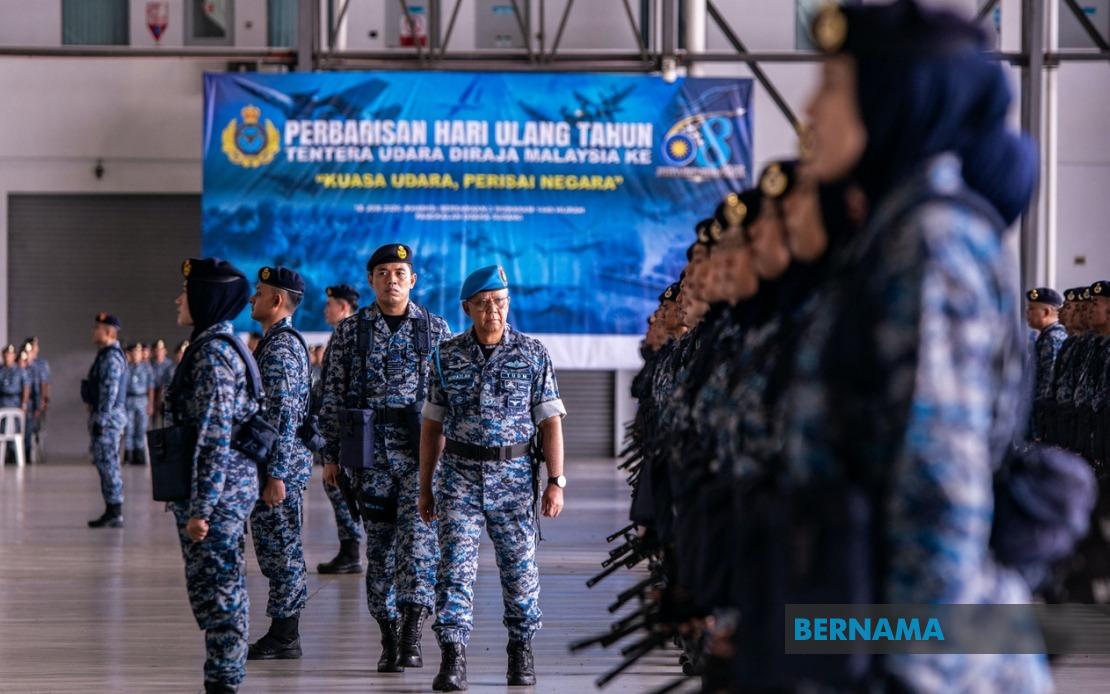
Malaysia is moving to strengthen its aerial defensive posture with the deployment of sophisticated radar installations across the country, reflecting heightened regional security awareness. At the RMAF's 68th anniversary gathering in Subang on June 18, Chief of Air Force General Tan Sri Muhamad Norazlan Aris unveiled plans to establish air defence and surveillance radar networks at multiple strategic sites, a development signalling the military's commitment to modernising critical infrastructure and maintaining operational readiness in an increasingly complex security environment.
The initiative encompasses four major locations chosen for their geopolitical significance. Air defence radars will be positioned in Bintulu, Sarawak; Bukit Puteri, Terengganu; and Bukit Lunchu, Johor, while a separate air surveillance radar system will be established on Pulau Layang-Layang in the South China Sea. The geographic spread of these installations underscores Malaysia's determination to extend effective monitoring across both peninsular and maritime territories, addressing previously identified blind spots in the nation's airspace observation capabilities.
These infrastructure investments form the cornerstone of phase one within the broader RMAF Capability Development Plan 2055, a long-term strategic framework designed to ensure the force remains technologically competitive and prepared for emerging security threats. The plan reflects recognition that contemporary military effectiveness demands continuous investment in early warning systems and real-time situational awareness, capabilities increasingly essential in a region experiencing volatile geopolitical shifts and evolving threat profiles.
The general cited ongoing Middle Eastern tensions as a cautionary case study for Malaysian defence planners. Disruptions affecting sea lanes through the Strait of Hormuz demonstrate how localised conflicts can cascade into global consequences, impacting energy markets and supply chain stability far beyond the immediate conflict zone. Malaysia, as a trading nation heavily dependent on maritime commerce, faces particular vulnerability to such disruptions, making the necessity of robust surveillance capabilities an economic security imperative rather than merely a military concern.
The country's reliance on unimpeded passage through critical maritime chokepoints, particularly the Strait of Malacca and surrounding South China Sea waters, underscores why enhanced air surveillance merits significant resource allocation. These sea lanes facilitate commerce essential to Malaysian prosperity, and monitoring airspace above these routes provides early warning of potential threats to shipping and naval operations. The radar network thus serves dual purposes: defending territorial integrity while protecting the commercial arteries sustaining the economy.
The South China Sea installation assumes particular significance given ongoing territorial disputes and increasing military activity in the region. By establishing surveillance capability on Pulau Layang-Layang, Malaysia extends its monitoring reach into contested waters where its claims overlap with those of other claimants. Such infrastructure investments represent gradual consolidation of presence and operational capacity in areas where Malaysia asserts sovereignty, a subtle but meaningful assertion of rights through technological presence and demonstrated monitoring capability.
General Muhamad Norazlan's emphasis on maintaining vigilance reflects strategic sophistication in recognising that security encompasses both proactive deterrence through visible capability and reactive readiness to respond to incidents. The radar systems enable early detection of incursions or anomalous activities, providing decision-makers precious time to respond proportionately before situations escalate into crises. This early warning function proves invaluable in managing incidents involving civilian and military aircraft, especially given the complexity of operating airspace shared with numerous international flight corridors.
The modernisation programme also addresses a fundamental asymmetry in Southeast Asia's military development. Neighbouring powers have invested substantially in advanced surveillance and air defence systems, creating capabilities gaps that Malaysia must methodically narrow. The phased approach embodied in the 2055 plan acknowledges budgetary constraints while demonstrating intent to progressively enhance military effectiveness across the planning horizon, a realistic strategy for a country balancing defence expenditure with other developmental priorities.
The parade itself, themed 'Kuasa Udara, Perisai Negara' (Air Power, Nation's Shield), featured 16 officers and 272 personnel across four flights including the RMAF Special Forces, Ground Defence Force, Women's Composite Flight, and Multi-Trade Composite Flight. The ceremonial occasion provided opportunity for General Muhamad Norazlan to present commendation certificates and service medals to 17 recipients, acknowledging individual contributions to the service's operational and institutional mission.
For Malaysian defence observers, these radar installations represent tangible progress toward the vision articulated in the broader capability development framework. The investments signal that air force leadership has secured budgetary support for priority modernisation projects, a necessary precondition for implementing ambitious long-term strategies. Successful completion of phase one creates momentum for advancing subsequent phases, gradually building the integrated air defence architecture that contemporary regional security challenges increasingly demand.
The timing of these announcements also reflects Malaysia's measured response to accelerating military developments across Southeast Asia. Rather than pursuing dramatic capability leaps that might provoke regional tensions, the RMAF pursues incremental but sustained modernisation aligned with genuine operational requirements. This approach demonstrates strategic patience and prudent resource management while progressively enhancing Malaysia's ability to protect airspace, monitor maritime activities, and contribute to regional stability through maintained readiness and enhanced situational awareness across all strategic domains.

%22%2F%3E%3C%2Fpattern%3E%3C%2Fdefs%3E%3Crect%20width%3D%22100%25%22%20height%3D%22100%25%22%20fill%3D%22url(%23ph21o2sg)%22%2F%3E%3Crect%20width%3D%22100%25%22%20height%3D%22100%25%22%20fill%3D%22url(%23ph21o2sp)%22%2F%3E%3Ctext%20x%3D%2250%25%22%20y%3D%2250%25%22%20text-anchor%3D%22middle%22%20dominant-baseline%3D%22central%22%20fill%3D%22rgba(255%2C255%2C255%2C0.95)%22%20font-family%3D%22Georgia%2C%20'Times%20New%20Roman'%2C%20serif%22%20font-weight%3D%22700%22%20font-size%3D%22170%22%20letter-spacing%3D%22-0.02em%22%3EGabungan%3C%2Ftext%3E%3C%2Fsvg%3E)