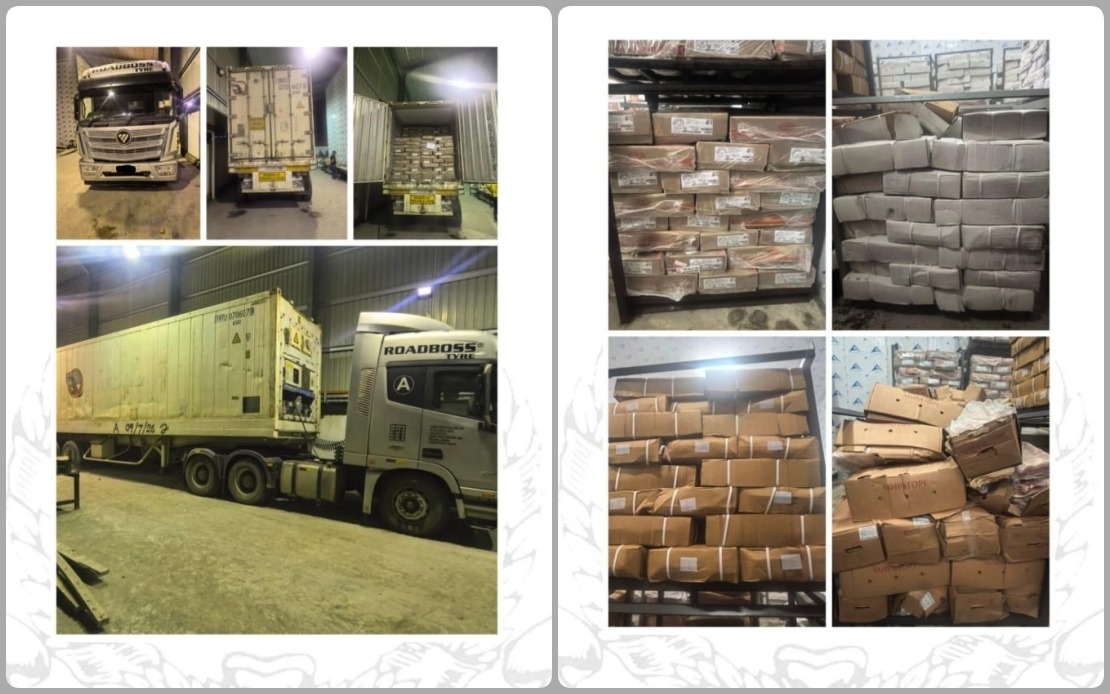
Police have uncovered a significant cache of contraband frozen pork products valued at RM6.19 million following a targeted enforcement operation at a warehouse in Miri, Sarawak, with authorities arresting a 26-year-old local man suspected of orchestrating the illegal importation scheme. The raid, conducted under Operation Taring Chiller late on July 9, underscores the Royal Malaysia Police's determination to dismantle networks trafficking in undocumented food commodities that pose potential risks to the halal integrity of Malaysia's food supply chain and consumer safety standards.
According to Datuk Seri Mohd Yusri Hassan Basri, director of the Internal Security and Public Order Department, the warehouse inspection revealed an extensive inventory of pork products accumulated without the requisite import documentation. Among the discoveries were 30,000 kilogrammes of cooked frozen pork intestines, 18,000 kilogrammes of pork loin distributed across 15 pallets, and substantial quantities of bone-in pork belly with rind and frozen pork shoulder stored across multiple pallets. The scale of the stockpile indicates a sophisticated operation designed to supply significant volumes of illicit product to wholesale or retail networks, potentially circumventing both customs procedures and halal certification requirements that govern the legitimate food import sector.
The enforcement action was jointly executed by the Wildlife Crime Bureau and Special Investigation Intelligence division, operating in coordination with the Miri district police headquarters and the Sarawak Veterinary Services Department. This interagency approach highlights how Malaysia's law enforcement bodies increasingly recognise that smuggling networks operating in border regions require coordinated intelligence and operational responses spanning federal, state, and specialist agencies. The involvement of veterinary authorities emphasises that these raids extend beyond customs violations to encompass food safety and regulatory compliance concerns.
Authorities have initiated investigations under Sections 9(1) and 9(3) of the Veterinary Public Health Ordinance 1999, the primary legislative instrument governing the importation, storage, and distribution of food products in Malaysia. Beyond criminal proceedings, the department issued a RM25,000 compound notice—a significant administrative penalty that demonstrates authorities' capacity to impose immediate financial consequences while prosecution proceeds. Such enforcement mechanisms serve as deterrents to operators considering entry into the illegal food import market.
The Miri seizure represents a single operation within a much broader national enforcement campaign. Between January 1 and July 10, the Wildlife Crime Bureau and Special Investigation Intelligence division conducted 201 raids throughout Malaysia, resulting in 375 arrests and confiscating contraband valued at RM264.86 million. This broader enforcement context reveals that food smuggling constitutes merely one component of an extensive illicit trade ecosystem encompassing non-duty-paid goods, diverted subsidised commodities, wildlife trafficking, and electronic waste. The aggregate figures demonstrate that Malaysia confronts a multifaceted smuggling challenge requiring sustained, intelligence-driven interventions across diverse product categories and geographic regions.
For Malaysian consumers and faith-based communities, the seizure holds particular significance given the nation's predominantly Muslim population for whom halal certification and food source transparency represent essential considerations. Illegally imported pork products, lacking proper documentation and handling verification, circumvent the rigorous traceability requirements integral to Malaysia's halal assurance framework. When such products infiltrate the supply chain through wholesale channels, they risk contaminating legitimate distribution networks and eroding consumer confidence in food safety labelling and certification systems that individuals rely upon when making purchasing decisions.
The operation's Sarawak location reflects the geographic realities of Malaysia's smuggling challenge. Positioned along international borders and maritime routes, Sarawak remains a strategic transit point for contraband moving between Indonesia, Brunei, and other regional neighbours. The state's extensive coastline and remote warehouse facilities create environments conducive to clandestine storage operations. Miri, as a major commercial hub in northern Sarawak, logically serves as a consolidation point where products can be accumulated before distribution to peninsular markets via established supply networks.
The case illustrates how modern smuggling enterprises operate with operational sophistication comparable to legitimate businesses, utilising warehousing infrastructure, inventory management systems, and likely maintaining relationships with wholesale distributors or retailers prepared to acquire illicit goods at discounted prices. The RM6.19 million valuation suggests the suspect had either conducted previous successful transactions or had secured financing and customer commitments before the operation's discovery. This level of commercial organisation indicates that disrupting such networks requires not merely identifying and arresting individual operatives but systematically mapping distribution chains, identifying end-market customers, and eliminating the financial incentives that drive such enterprises.
From a regulatory perspective, the enforcement operation demonstrates that Malaysia's food import controls, while comprehensive on paper, remain vulnerable to determined evasion by actors willing to accept criminal penalties. The RM25,000 compound represents a manageable cost if calculated against potential profits from selling RM6.19 million in contraband at wholesale prices substantially below legitimate imports. This profit differential—driven by eliminated customs duties, eliminated halal certification costs, and reduced compliance expenses—explains continued smuggling despite sustained enforcement efforts.
The Royal Malaysia Police have committed to escalating intelligence operations, monitoring frameworks, and coordinated enforcement activities to combat smuggling and organised crime more systematically. This statement signals recognition that reactive raid operations, while important for dismantling individual networks and generating deterrent effects, cannot alone solve the smuggling challenge. Authorities increasingly acknowledge that sustainable import security requires upstream intelligence development, financial investigations tracking the money flows supporting smuggling networks, and international cooperation targeting smuggling routes originating in source countries.
Looking forward, the case underscores the necessity for continuous vigilance as smugglers adapt methodologies and routing mechanisms in response to enforcement pressure. The scale of this single Miri discovery—RM6.19 million in contraband—serves as a sobering reminder that substantial quantities of illegally imported products continue reaching Malaysian territory despite substantial enforcement resources deployed. For regulators, consumers, and legitimate importers alike, the seizure demonstrates both the commitment authorities bring to enforcement and the persistent challenge posed by sophisticated smuggling networks operating across Malaysia's extended borders and maritime zones.

