A damaging inquiry by the Public Accounts Committee has exposed a stark failure in Malaysia's cooking oil subsidy system, with RM10.879 billion in assistance evaporating between 2019 and February 2025. The shortfall reveals troubling gaps in how the government manages subsidies, monitors markets, and enforces compliance, casting doubt over claims of improved efficiency in the nation's targeted assistance programmes.
The scale of the leakage contradicts the government's repeated assurances about subsidy rationalisation. Over recent years, successive administrations have championed the shift from blanket subsidies to more narrowly focused support mechanisms, arguing that precision targeting would eliminate waste and ensure needy Malaysians receive genuine help. Yet the PAC's findings suggest that even within a supposedly streamlined system, billions have escaped accountability without reaching the low-income households the programme was designed to support.
The cooking oil subsidy scheme operates at the intersection of consumer welfare and economic policy. Since the 2008 global commodity surge, governments have wrestled with balancing affordability for ordinary Malaysians against the fiscal cost of open-ended price controls. The decision to maintain subsidies reflects the political sensitivity of food prices—any sharp increase risks public anger and inflation fears—but also highlights the operational challenges of managing price guarantees across complex supply chains involving importers, distributors, retailers, and ultimately consumers at the till.
When subsidies disappear without trace, multiple suspects emerge. Diversion at the import stage—where foreign oil enters Malaysia—is one possibility. Leakage through informal grey markets or smuggling to neighbouring countries represents another. Perhaps goods designated for subsidy recipients found their way to non-eligible buyers, or documentation systems failed to track the flow of money and goods. The PAC findings do not yet specify the mechanism of loss, but the size of the gap suggests systemic failure rather than mere accounting errors.
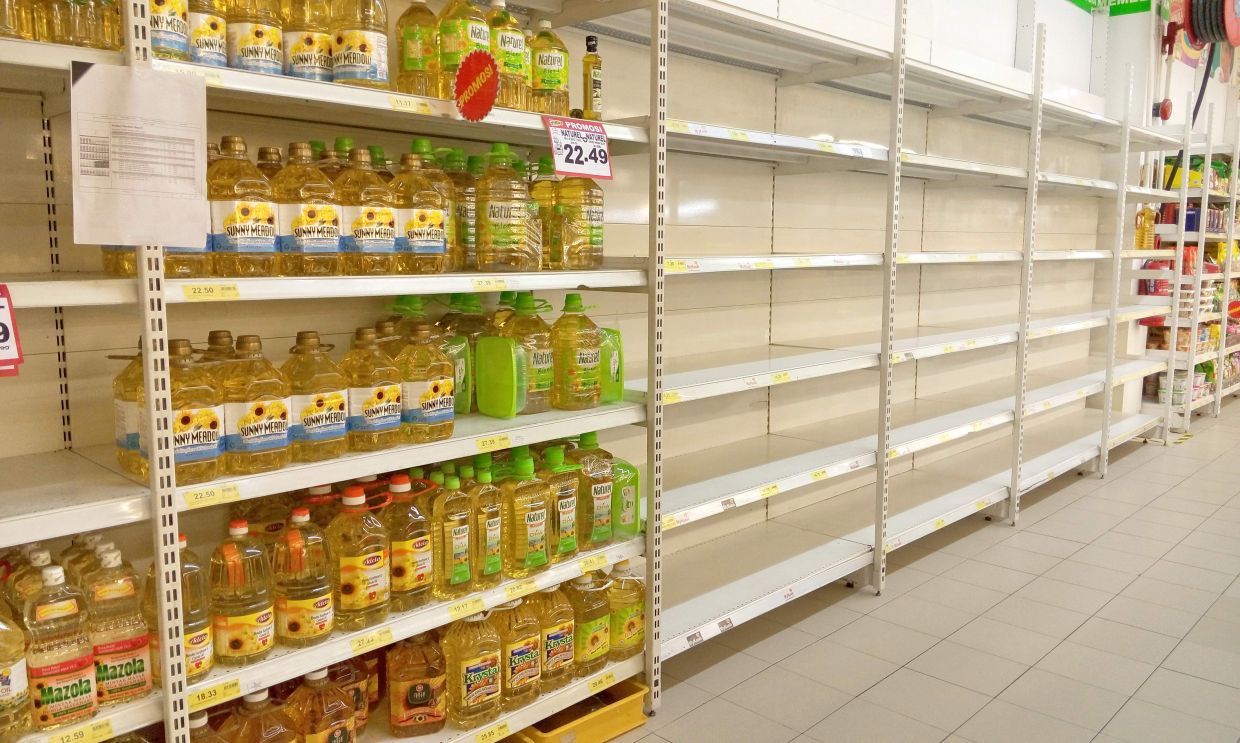
The empty shelves phenomenon, which coincided with the subsidy drain, provides a clue to what may have occurred. When officially subsidised cooking oil becomes scarce in retail outlets, consumers have little choice but to purchase unsubsidised alternatives at market prices, while merchants and middlemen capture the windfall gain between the subsidised ceiling price and the actual cost they face. This dynamic creates perverse incentives for hoarding, parallel sales, and diversion—the very behaviours a well-designed subsidy system should prevent. The PAC's investigation appears to have uncovered evidence of exactly this kind of leakage.
Accountability questions cascade down multiple institutional levels. The Ministry of Domestic Trade and Cost of Living bears responsibility for policy design and implementation. The Central Bank of Malaysia and relevant financial regulators oversee the flow of subsidy payments. Customs and the Royal Malaysia Police should be monitoring compliance at borders and in the market. Yet the PAC's work suggests that either communication between these bodies is poor, or that enforcement capacity is insufficient to police a scheme of this complexity and scale. Finger-pointing between agencies has become a familiar pattern in Malaysian subsidy scandals, and the public deserves clarity on where accountability truly lies.
For Southeast Asian readers, Malaysia's experience offers a cautionary lesson. Across the region, governments from Indonesia to Thailand to the Philippines grapple with subsidy schemes of comparable scale. The Indonesian cooking oil subsidy has repeatedly been plagued by diversion and smuggling to neighbouring countries, imposing fiscal costs that eventually force policy reversals and consumer hardship. The PAC's findings suggest that without rigorous supply chain monitoring, digital traceability systems, and inter-agency coordination, even the most carefully designed subsidy system risks becoming a channel for enrichment rather than assistance.
The political dimension cannot be ignored. Cooking oil subsidies carry symbolic weight in Malaysian politics, affecting perceptions of whether the government cares for ordinary citizens' welfare. When billions leak away, it damages both fiscal credibility and public trust. The timing matters too—a figure of RM10.879 billion over five years suggests the problem has been festering across multiple budget cycles and different government configurations, which raises uncomfortable questions about how senior officials and ministers failed to sound alarms when outlays diverged from intended outcomes.
Restoring integrity to the subsidy system requires several steps. First, a complete forensic audit must identify exactly where the RM10.879 billion went and which individuals or organisations benefited. This is not merely an accounting exercise but a matter of public accountability and potential criminal liability. Second, the Ministry of Domestic Trade and Cost of Living should implement real-time digital tracking systems that link subsidy payments, goods movements, and retail sales, creating transparency that current paper-based methods lack. Third, coordination mechanisms between the Central Bank, Customs, the Police, and enforcement bodies must be formalised and adequately resourced.
Beyond these operational fixes lies a deeper policy question: whether Malaysia should continue subsidising cooking oil at all, or shift to direct cash assistance to low-income households that leaves supply and pricing to market forces. Several economists have argued that direct transfers are more transparent, less prone to diversion, and give recipients agency in their purchasing decisions. Any such pivot would be politically fraught, but the PAC's revelation may create an opening for serious debate about alternative approaches.
The RM10.879 billion loss represents not merely a budgetary overrun but a failure of governance. It suggests that despite layers of oversight, policy committees, and financial controls, Malaysia's apparatus still cannot reliably ensure that public money reaches its stated destination. Rebuilding public confidence requires not just correcting the immediate problem but demonstrating that such breaches will be swiftly detected and sanctioned in future. Until then, every rupiah of taxpayer money flowing into subsidy programmes will carry a question mark.

