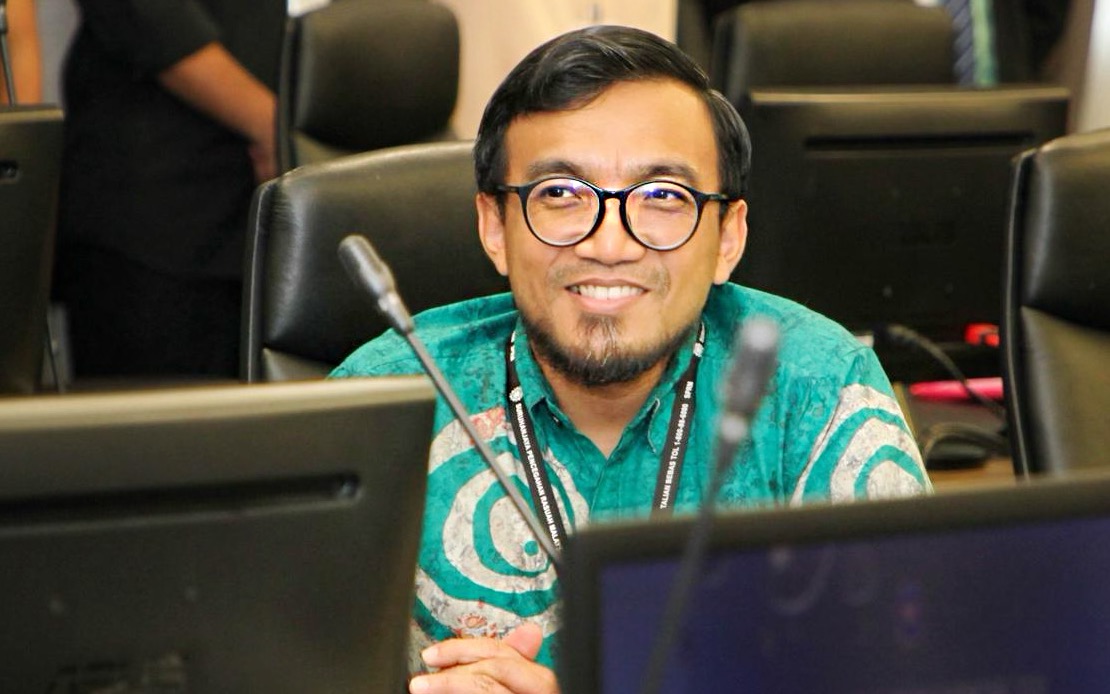
Tabung Haji's path to recovery following the Royal Commission of Inquiry recommendations should hinge not merely on meeting implementation deadlines, but rather on establishing concrete, measurable performance indicators that can demonstrate genuine institutional reform, according to a senior economist from International Islamic University Malaysia.
Dr Muhammad Irwan Ariffin, lecturer in the Department of Economics at IIUM's Kulliyyah of Economics and Management Sciences, cautions that the success of reform efforts depends heavily on how effectively progress is communicated to stakeholders. In the context of a hajj financing body that manages the savings of millions of Malaysian Muslims, the psychological dimension of recovery matters as much as the operational one. Public perception, he argues, is not merely shaped by what institutions do, but equally by how transparently and consistently they communicate what they are doing.
The expert emphasizes that regular progress reports on RCI recommendation implementation are essential for addressing the uncertainty that has long plagued Tabung Haji's standing among depositors. When an institution manages funds collected over decades, confidence cannot be rebuilt through isolated gestures or occasional announcements. Instead, a sustained cadence of transparent updates demonstrating incremental progress toward reform goals creates a foundation upon which public trust can be gradually reconstructed. This communication strategy becomes especially critical when considering that many depositors have withdrawn funds or postponed hajj plans due to accumulated doubts about the institution's financial health and governance standards.
Irwan notes that economic behaviour is fundamentally shaped by expectations and perceptions rather than by financial reality alone. This principle, well-established in behavioural economics, means that even if Tabung Haji's underlying financial position improves, the institution cannot fully restore depositor confidence unless it communicates that improvement effectively. Conversely, poor communication about reforms—particularly unexplained delays or ambiguous progress reports—can trigger precisely the kind of panic withdrawals that further destabilize the institution. The gap between an institution's actual condition and public perception of that condition can become self-fulfilling when mismanagement of information causes depositors to act on pessimistic assumptions.
On governance restructuring, the economist advocates for a periodic review framework that allows for continuous refinement of internal systems and procedures. Rather than implementing a static governance model, Tabung Haji should establish mechanisms for ongoing assessment and improvement, ensuring that the organization remains responsive to emerging challenges and lessons learned from past failures. The composition of the board of directors demands particular attention, with selection criteria anchored firmly in demonstrated expertise and personal integrity rather than other considerations. This approach aligns with the RCI's own recommendations and reflects global best practices in institutional governance.
Crucially, the expert stresses that internal committees must operate with demonstrable independence from political pressures and conflict-of-interest situations. The credibility of governance depends not simply on having the right structures in place, but on those structures functioning without external interference. Coupled with rigorous adherence to accounting standards and transparent financial disclosures, such committee independence can gradually restore institutional credibility among both individual depositors and regulatory bodies.
Irwan frames the proposed reforms within the context of Islamic economic principles, arguing that they represent a practical operationalization of fundamental Qur'anic values. The emphasis on trust (amanah) and justice ('adl) resonates with Islamic teachings on wealth protection and proper stewardship. The concept of hifz al-mal—one of the five fundamental objectives (maqasid) of Islamic law—speaks directly to protecting depositors' wealth from misappropriation or reckless investment. When governance reforms incorporate mechanisms to prevent harm before it materializes (sadd al-dhari'ah), they embody Islamic jurisprudential wisdom alongside contemporary institutional best practice.
These improvements in governance carry practical financial implications beyond their philosophical resonance. Sound governance structures enable management to accurately determine actual profits earned, the appropriate level of reserves to maintain, and the hibah distributions that can be safely allocated to depositors. Without such clarity, the institution cannot properly fulfil its obligations to millions of Muslims who have entrusted their wealth to what should function as a secure savings vehicle for one of Islam's five pillars.
Rather than limiting investment scrutiny to superficial halal-haram classification, Irwan advocates for comprehensive assessment frameworks that examine how governance decisions protect depositor interests. This deeper approach recognizes that purely halal investments can still be mismanaged through poor governance, eroding returns and creating hidden risks. The integration of robust governance standards into investment evaluation represents a maturation of Islamic financial principles beyond their symbolic application.
Attracted by prospects of greater transparency, Malaysia's younger generation of hajj savers and prospective savers represent a crucial constituency for Tabung Haji's long-term viability. This demographic exhibits notably higher financial literacy than previous generations and demonstrates greater concern about institutional governance and transparent fund management. Providing accessible, comprehensive financial reporting alongside educational initiatives on financial literacy can enable younger Muslims to register for hajj at earlier ages, building a broader depositor base for the institution. The emphasis on transparency regarding risks, returns, and governance decisions directly addresses the information preferences that characterize financially sophisticated younger Malaysians.
On investment strategy, Irwan recommends portfolio approaches that balance stability and liquidity against growth-oriented asset classes. This balanced diversification recognizes that Tabung Haji must manage competing imperatives: maintaining liquid reserves to process hajj travel and fund withdrawals while generating sufficient returns to provide credible hibah distributions. The portfolio construction must reflect the unique obligations of an Islamic savings institution serving aspirational pilgrims whose timelines and requirements differ substantially from conventional investors.
Collectively, these recommendations outline a reform agenda that extends well beyond administrative box-ticking or timeline adherence. They envisage a fundamentally restructured institution that demonstrates progress through measurable performance metrics, maintains continuous communication with stakeholders, operates transparent governance structures insulated from political pressure, and bases investment decisions on comprehensive rather than narrow assessment criteria. For Malaysian depositors and the broader Muslim community, such comprehensive institutional renewal offers a pathway toward restoring justified confidence in an institution that should serve as a trusted custodian of wealth destined for fulfilling Islam's most sacred duty.

