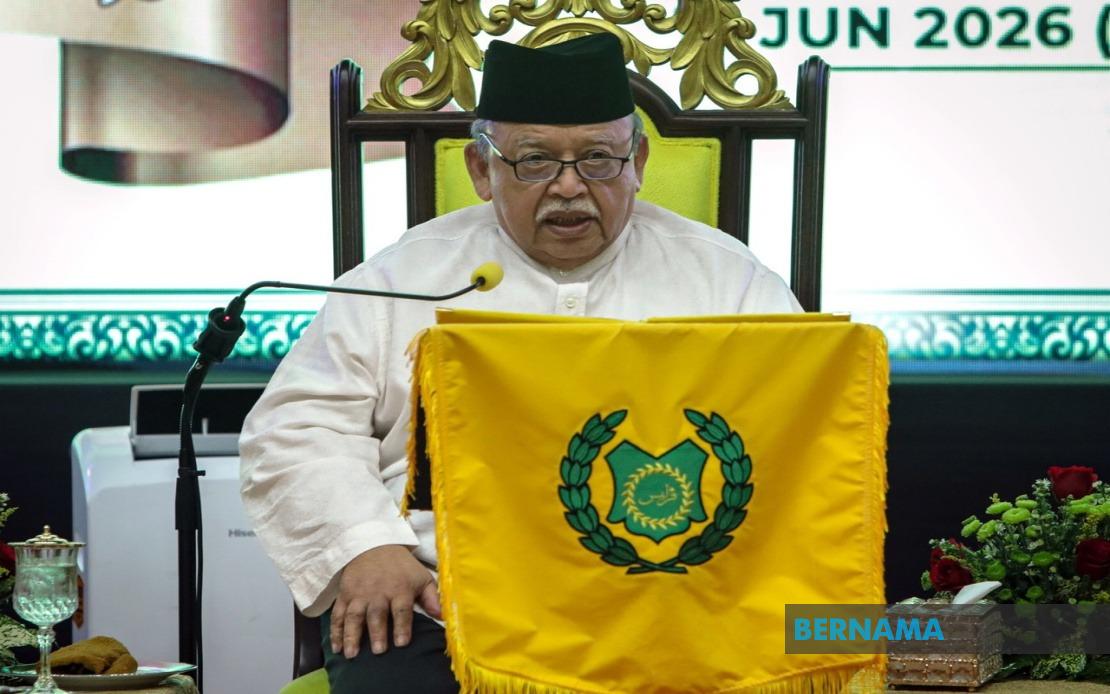
Tuanku Syed Sirajuddin Jamalullail, the Raja of Perlis, has delivered a pointed message about the foundations necessary for sustainable national development, emphasising that material advancement without moral substance cannot constitute meaningful progress. Speaking at the state-level Maal Hijrah 1448H/2026M celebration in Kangar on June 18, the Ruler articulated a vision in which citizens approach their work with reverence, maintain uncompromising ethical standards, and actively resist corrupt practices in their pursuit of a thriving society. His intervention underscores growing concerns among Malaysia's institutional leadership about the gap between infrastructure development and the character-building required to sustain it.
Central to Tuanku Syed Sirajuddin's address was a redefinition of what constitutes genuine progress within the Malaysian context. He distinguished between the superficial markers of development—buildings, highways and technological infrastructure—and the deeper indicators that reflect a nation's actual advancement. The Ruler argued that true progress emerges when a population is intellectually engaged, demonstrates strong personal and institutional integrity, upholds standards of courtesy and civility, and maintains internal cohesion. This framework challenges the conventional development paradigm that prioritises quantifiable physical outputs, instead proposing that knowledge accumulation, character refinement, cultural preservation and philosophical maturity represent the authentic measures by which a society should evaluate itself.
The concept of MADANI, which has become increasingly prominent in Malaysian political discourse, receives particular attention in the Ruler's formulation. Rather than treating MADANI as merely another development initiative, Tuanku Syed Sirajuddin positions it as a comprehensive philosophy encompassing intellectual, cultural and moral dimensions. He contends that MADANI progress cannot be reduced to economic statistics or urban development metrics; instead, it requires cultivation of sophisticated thought patterns, preservation of cultural heritage, and maintenance of societal integrity. This interpretation resonates with broader regional conversations about whether Southeast Asian nations can chart development paths that balance modernisation with the preservation of traditional values and local identity.
The Ruler's specific emphasis on rejecting corruption, conducting work with sincerity and treating employment as a form of worship suggests concern about declining ethical standards within both public and private sectors. By framing professional conduct as a religious obligation rather than merely a contractual requirement, he appeals to spiritual motivation alongside institutional accountability. This approach recognises that in a Muslim-majority nation, invoking religious principles can galvanise behavioural change more effectively than purely secular appeals to rule-following. The connection between integrity and national prosperity is presented not as abstract moralising but as pragmatic necessity—a state cannot achieve sustainable advancement when resources are systematically diverted through corrupt channels or when institutional trust erodes.
Tuanku Syed Sirajuddin emphasises that strengthening authentic Islamic understanding, grounded in the Quran and Sunnah, should proceed alongside development of mature political culture and enhanced citizen competence. This dual focus reflects recognition that religious identity and modern governance need not be in tension; rather, they can reinforce one another when properly understood. The Ruler advocates for empowering Perlis residents to become economically independent and globally competitive while remaining rooted in spiritual principles. This formulation attempts to address a persistent challenge facing Muslim-majority Southeast Asian nations: achieving technological and economic modernisation without sacrificing religious and cultural authenticity.
The vision articulated encompasses what the Ruler describes as the ummah's comprehensive development across religious, political, economic and social spheres. Rather than treating these domains as separate, he presents them as interconnected aspects of societal flourishing. Religious development strengthens moral foundations that enable sound political decision-making; political maturity creates conditions for economic stability; economic progress facilitates social advancement. This holistic perspective contrasts with compartmentalised approaches that treat religious, political and economic development as independent variables. For Malaysian policymakers and citizens alike, this framework suggests that sustainable progress requires simultaneous attention to multiple domains rather than prioritisation of economic indicators at the expense of other considerations.
Facing rapid technological change and artificial intelligence implementation, the Ruler urges Perlis residents not to remain passive observers but to actively shape how these transformations unfold within their communities. This call to proactive engagement reflects recognition that technological change will occur regardless of local preferences; the question becomes whether Malaysians will determine how new technologies are deployed and for whose benefit. By characterising citizens as potential leaders of change rather than inevitable subjects of external forces, Tuanku Syed Sirajuddin rejects fatalism and advocates for deliberate, informed participation in shaping the future. This message carries particular resonance for younger Malaysians who will experience the full implications of artificial intelligence and digital transformation.
The Ruler's address also acknowledges contemporary challenges beyond technology, including social transformation and global economic volatility. These forces create vulnerabilities for societies whose institutions lack resilience, whose populations lack adaptability, and whose values remain unexamined. By preparing citizens intellectually and morally for these tests, Malaysia can better withstand external pressures while preserving what is essential to its identity. This preventive approach contrasts with reactive crisis management, instead building capacity for navigation of uncertain futures. For Southeast Asian readers particularly, the Ruler's emphasis on preparation for global economic change resonates with region-wide anxieties about vulnerability to external shocks and competition from larger economies.
The recognition bestowed upon Datuk Izham Mahmud through the Perlis Tokoh Maal Hijrah award represents institutional acknowledgment that individual contributions toward societal improvement deserve celebration. This practice of highlighting exemplary conduct serves multiple purposes: it creates visible models for emulation, validates efforts toward positive change, and reinforces cultural narratives about what constitutes worthy achievement. In context of the Ruler's broader message about integrity and development, such recognition gains added significance as practical endorsement of principles articulated in his address. The award suggests that commitment to ethical standards and service to community can achieve recognition even in societies where corruption may offer material rewards to practitioners.
For Malaysian audiences, particularly in Perlis but with implications extending throughout the federation, the Ruler's intervention articulates standards against which both leaders and ordinary citizens can measure their conduct. By framing integrity and knowledge-seeking as prerequisites for national progress rather than optional virtues, Tuanku Syed Sirajuddin elevates ethical standards to the status of development imperatives. This positioning makes clear that corruption is not merely a moral failing of individuals but a structural impediment to collective advancement. As Malaysia continues navigating complex challenges of modernisation, technological integration and social cohesion, the Ruler's emphasis on character-building alongside infrastructure development offers a competing vision to purely technocratic approaches to national improvement.

%22%2F%3E%3C%2Fpattern%3E%3C%2Fdefs%3E%3Crect%20width%3D%22100%25%22%20height%3D%22100%25%22%20fill%3D%22url(%23ph21o2sg)%22%2F%3E%3Crect%20width%3D%22100%25%22%20height%3D%22100%25%22%20fill%3D%22url(%23ph21o2sp)%22%2F%3E%3Ctext%20x%3D%2250%25%22%20y%3D%2250%25%22%20text-anchor%3D%22middle%22%20dominant-baseline%3D%22central%22%20fill%3D%22rgba(255%2C255%2C255%2C0.95)%22%20font-family%3D%22Georgia%2C%20'Times%20New%20Roman'%2C%20serif%22%20font-weight%3D%22700%22%20font-size%3D%22170%22%20letter-spacing%3D%22-0.02em%22%3EGabungan%3C%2Ftext%3E%3C%2Fsvg%3E)