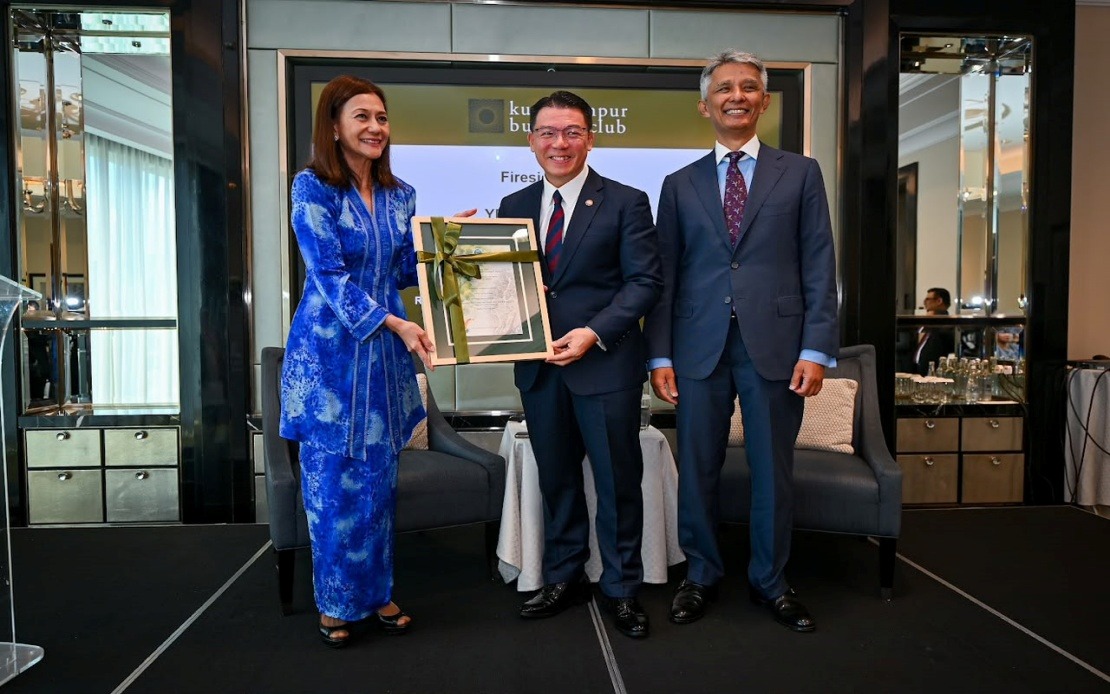
Malaysia's economic transformation hinges on unwavering commitment to the MADANI framework's reform agenda, Housing and Local Government Minister Nga Kor Ming stressed yesterday, cautioning that disruptions to governance consistency could undermine the progress already achieved. Speaking at a fireside chat organised by the Kuala Lumpur Business Club, Nga emphasised that the continuity of policy direction remains fundamental to translating current reform efforts into sustained economic gains that benefit both domestic and foreign investors seeking stability in their operational environments across the region.
The minister framed policy consistency as a cornerstone of maintaining Malaysia's competitive positioning in an increasingly volatile global economy. Without predictable governance frameworks and reform trajectories, Nga warned, investor confidence tends to erode, leaving the nation vulnerable to economic shocks and competitive pressures from neighbouring economies similarly vying for foreign direct investment. The clarity and stability provided by a coherent policy framework, he argued, differentiates Malaysia from peers and justifies capital allocation decisions by multinational corporations and institutional investors considering Southeast Asian expansion.
Nga credited the Anwar Ibrahim-led government with delivering measurable progress across multiple reform dimensions since assuming office. The administration has implemented governance improvements, tightened economic management practices, and recalibrated Malaysia's international engagement strategy to prioritise strategic partnerships. These initiatives, Nga contended, have collectively strengthened the nation's institutional architecture and demonstrated to global markets that Malaysia is serious about structural transformation rather than pursuing superficial policy adjustments.
Several concrete indicators validate this assessment. Malaysia has successfully repositioned itself as an investment destination of choice, attracting capital flows by offering transparent regulatory environments and predictable policy parameters. The nation's resilience through recent global economic uncertainties—particularly sustained trade performance despite external headwinds—reflects the robustness of reforms already implemented. Additionally, improvements in Malaysia's Corruption Perceptions Index ranking signal measurable progress in institutional governance, while upgraded international credit ratings indicate greater fiscal credibility among rating agencies.
The minister highlighted Malaysia's diplomatic achievements as integral to the broader economic transformation agenda. Strategic partnerships, including a RM52.73 billion initiative with Turkmenistan and long-term energy cooperation frameworks with Russia, exemplify how consistent foreign policy positioning creates tangible economic opportunities. These arrangements extend beyond symbolic gestures, offering substantive pathways for technology transfer, investment inflows, and diversified economic engagement that reduce dependency on traditional markets.
Nga argued that a second-term electoral mandate would provide the government essential institutional legitimacy to deepen structural reforms further. Extending the governing administration's tenure would permit completion of multi-year reform initiatives currently in implementation phases, allowing authorities to avoid the policy disruptions frequently accompanying leadership transitions. Such continuity proves particularly valuable for complex institutional reforms requiring sustained effort across electoral cycles, particularly those involving bureaucratic reorganisation, regulatory overhaul, or cultural transformation within public agencies.
The capacity to strengthen institutional infrastructure represents another critical advantage of policy continuity. Government agencies tasked with implementing MADANI objectives require stable leadership, consistent resource allocation, and multi-year strategic planning horizons. Frequent changes in governance direction often necessitate reorientation of institutional priorities, absorption of new leadership philosophies, and wasteful recycling of planning efforts. Stable governance environments, conversely, permit institutions to develop deep expertise, internalise reform objectives across hierarchies, and achieve genuine efficiency improvements.
Malaysia faces a distinctive challenge in translating incremental reforms into comprehensive economic transformation. The nation's existing economic structures, regulatory frameworks, and institutional practices evolved over decades and resist rapid change. Achieving meaningful transformation requires sustained pressure applied consistently across multiple reform fronts simultaneously. Half-measures or episodic policy initiatives prove insufficient for reorienting complex economies toward higher productivity, greater innovation capacity, or enhanced competitiveness in technology-intensive sectors.
Regional dynamics further underscore the importance of Malaysian policy consistency. Competition for foreign investment, talented personnel, and technology partnerships intensifies across Southeast Asia as neighbouring nations launch their own transformation initiatives. Vietnam, Thailand, and Indonesia have all articulated ambitious development visions and implemented targeted reforms. Malaysia's ability to differentiate itself hinges partly on demonstrating superior governance reliability and policy predictability compared to regional competitors. Investors comparing locations across Southeast Asia often weight institutional stability heavily, viewing it as proxy for reduced risk and improved returns on long-term investments.
The MADANI framework itself represents a sophisticated policy architecture addressing multiple interconnected development challenges simultaneously—fiscal sustainability, institutional modernisation, inclusivity, and competitive positioning. This comprehensive approach requires coordination across numerous government agencies, consistent messaging from political leadership, and sustained public sector commitment despite inevitable implementation challenges. Fragmenting or reversing components of this integrated strategy would diminish effectiveness across the entire system.
Looking forward, Nga's remarks signal the government's recognition that Malaysia stands at a critical juncture in its development trajectory. The investments made in institutional reforms, diplomatic positioning, and economic management must compound over time to yield transformative results. This perspective should inform Malaysia's approach to domestic political competition, suggesting that discussing policy frameworks and implementation capacity merits equal emphasis with electoral campaigns focusing on personality or partisan advantage.