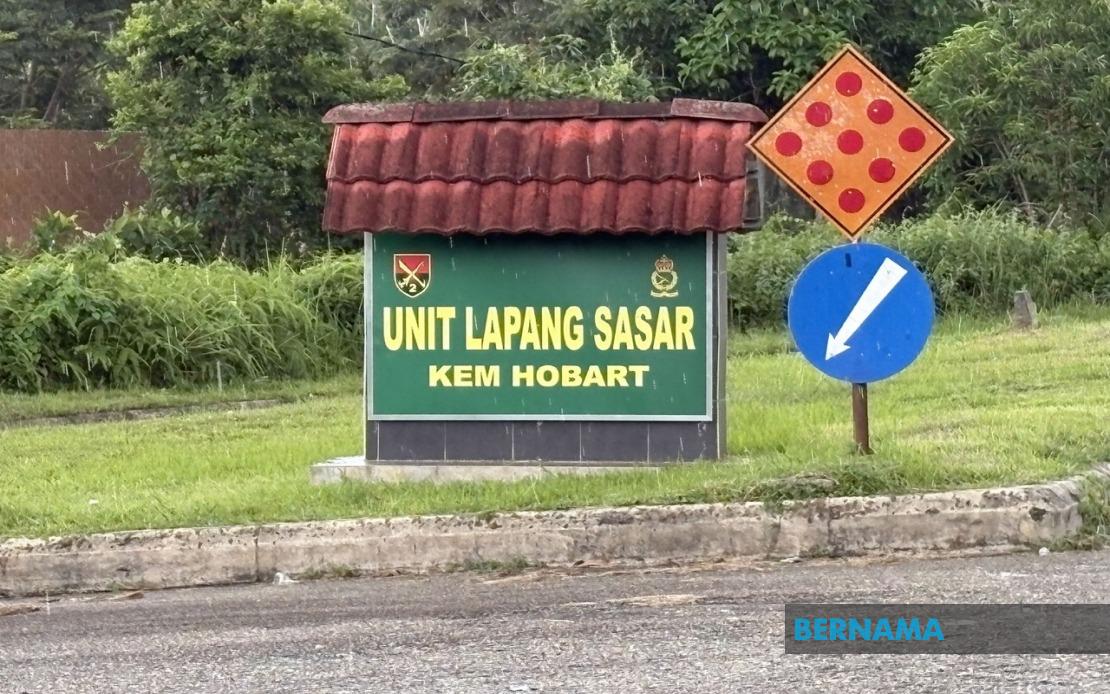
An explosion during a military training exercise at Hobart Camp in Gurun has claimed the lives of two army personnel, prompting authorities to launch a comprehensive investigation into the circumstances surrounding the blast. The incident occurred during a grenade-throwing exercise conducted as part of the Combat Enhancement Training programme run by the First Squadron, Royal Malaysian Engineers Regiment, under the Second Infantry Division. The explosion happened at approximately 10.57 am, leaving both soldiers fatally injured despite immediate evacuation efforts to nearby medical facilities.
Kuala Muda police chief ACP Hanyan Ramlan confirmed that investigators have classified the matter as a sudden death report investigation, a standard procedure when fatalities occur under unusual circumstances. The decision to open a formal investigation file reflects the seriousness with which authorities are treating the incident and signals their commitment to establishing a comprehensive factual record of what transpired. Police indicated that the investigation would be thorough and methodical, drawing on multiple lines of inquiry to understand how the training exercise ended in tragedy.
The two victims have been identified as Corporal Norazmi Abu Bakar, attached to the Sixth Battalion of the Royal Malay Regiment, and Private Siti Khadijah Sungip, serving with the First Squadron of the Royal Malaysian Engineers Regiment. Both personnel were actively participating in the grenade-throwing component of their combat training when the explosion occurred. They were immediately transported to Sultan Abdul Halim Hospital in Sungai Petani, but despite medical intervention efforts, both soldiers were pronounced dead while en route to the facility, indicating the severity of injuries sustained in the blast.
Investigating officers will prioritise recording detailed statements from witnesses who were positioned at the training ground during the exercise. These accounts will prove crucial in reconstructing the sequence of events and identifying any procedural irregularities, equipment malfunctions, or human error that may have contributed to the explosion. Police have appealed for full cooperation from all parties present at Hobart Camp, including military personnel, training instructors, and observers, to facilitate a complete and transparent investigation.
The incident underscores the inherent risks associated with training exercises involving live ordnance and explosives, even when conducted under controlled conditions with established safety protocols. Grenade-throwing drills form an essential component of combat training for infantry units, requiring soldiers to develop proficiency in handling explosive devices while maintaining situational awareness and adherence to safety procedures. The fatal outcome suggests that something departed from standard operating procedures or safety measures during this particular session.
Authorities have already commenced preliminary forensic examination and evidence collection at the scene. The remains of both victims have been transferred to Sultanah Bahiyah Hospital in Alor Setar for post-mortem examinations, which will provide medical insights into the nature and extent of injuries sustained during the explosion. These forensic findings will complement investigative efforts to establish a comprehensive understanding of the incident.
The Malaysian Army has acknowledged the occurrence of the incident and cooperated with police investigations. The military will likely undertake its own parallel review of training protocols and safety procedures to identify any systemic issues that may have contributed to the tragedy. Such incidents often trigger comprehensive safety audits across military training programmes to prevent similar occurrences in future.
For Malaysian military personnel and their families, this incident serves as a sobering reminder of the occupational hazards inherent in military service, particularly during combat training exercises. The loss of two young soldiers has reverberated through military circles and highlights ongoing discussions about balancing training effectiveness with enhanced safety measures. Southeast Asian armed forces continuously grapple with optimizing training intensity while minimizing preventable accidents.
The investigation process will likely extend over several weeks as authorities compile witness statements, analyse forensic evidence, and review training documentation and procedures. Preliminary findings should begin emerging once the post-mortem results are available and witness interviews are completed. These findings will be crucial not only for providing closure to the victims' families but also for informing future modifications to training protocols if systemic issues are identified.
This tragic incident at Hobart Camp represents a significant loss for the Malaysian armed forces and raises important questions about training safety standards. The thorough investigation being conducted by Kuala Muda police, in conjunction with military authorities, will determine whether the explosion resulted from equipment failure, procedural deviation, or other factors. The outcome will likely influence how similar training exercises are conducted throughout the region's military establishments.

%22%2F%3E%3C%2Fpattern%3E%3C%2Fdefs%3E%3Crect%20width%3D%22100%25%22%20height%3D%22100%25%22%20fill%3D%22url(%23ph21o2sg)%22%2F%3E%3Crect%20width%3D%22100%25%22%20height%3D%22100%25%22%20fill%3D%22url(%23ph21o2sp)%22%2F%3E%3Ctext%20x%3D%2250%25%22%20y%3D%2250%25%22%20text-anchor%3D%22middle%22%20dominant-baseline%3D%22central%22%20fill%3D%22rgba(255%2C255%2C255%2C0.95)%22%20font-family%3D%22Georgia%2C%20'Times%20New%20Roman'%2C%20serif%22%20font-weight%3D%22700%22%20font-size%3D%22170%22%20letter-spacing%3D%22-0.02em%22%3EGabungan%3C%2Ftext%3E%3C%2Fsvg%3E)