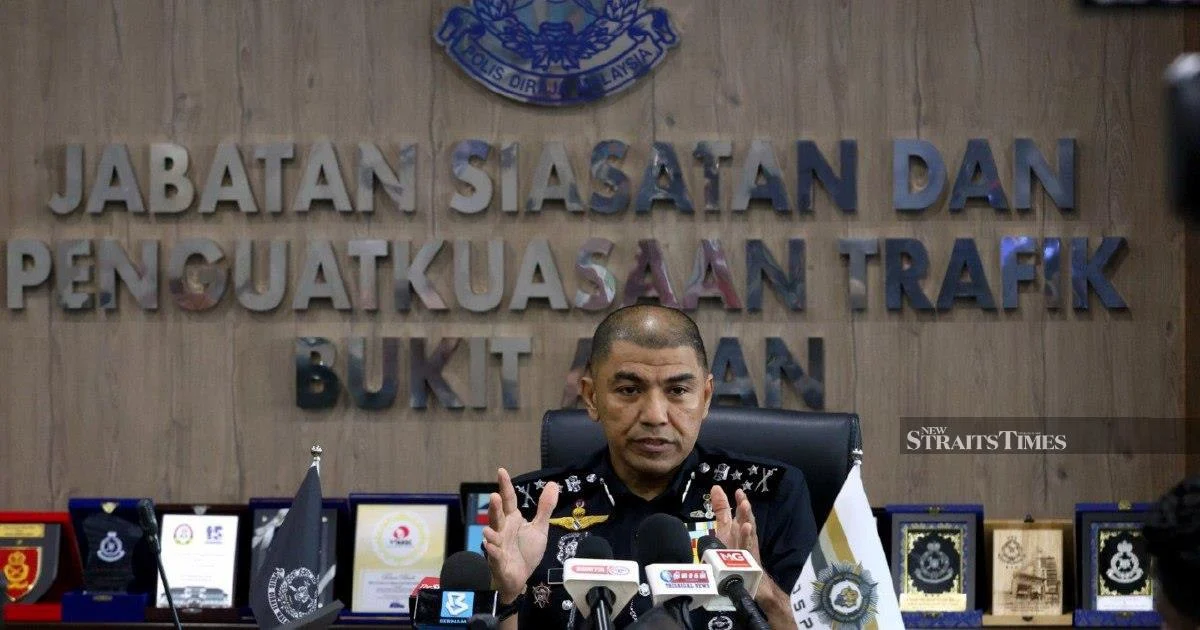
Malaysia's police force has intensified efforts to combat impaired driving among commercial vehicle operators, with enforcement officers arresting 121 drivers across the country over a three-month period for allegedly driving under the influence of drugs. The coordinated nationwide operation reflects deepening anxiety within law enforcement and road safety authorities over the prevalence of substance abuse among personnel responsible for operating buses, lorries, and other large vehicles that ferry passengers and cargo across Malaysia's extensive highway network.
The scale of the crackdown underscores a persistent challenge facing highway safety regulators in the region. Commercial vehicle drivers occupy a critical position in Malaysia's transportation ecosystem, responsible for the safe movement of goods and, in many cases, hundreds of thousands of passengers daily. When operators of these vehicles operate while under the influence of controlled substances, the consequences extend far beyond individual drivers to affect entire communities dependent on reliable, secure road transport.
Drug-impaired driving among commercial vehicle operators presents distinct hazards compared to private motorist cases. Heavy vehicles require sustained concentration, quick reaction times, and sound judgment to navigate safely, particularly during long-distance journeys or challenging weather conditions. Substance abuse impairs cognitive function and motor control—precisely the capabilities essential for safely manoeuvring large vehicles through congested urban areas, mountainous terrain, or high-speed highway stretches where single errors can trigger catastrophic multi-vehicle collisions.
The three-month timeframe of this operation demonstrates the sustained commitment required to address drug driving comprehensively. Rather than isolated spot-checks or single-day campaigns, the integrated enforcement approach allowed police to deploy resources systematically across multiple jurisdictions and establish consistent checkpoints and testing procedures. This methodology increases detection rates and sends a clear deterrent message to commercial operators considering substance use before driving.
Police deployment strategies in anti-drug driving operations typically combine roadside testing facilities with database cross-referencing and vehicle inspection protocols. Officers can conduct rapid oral fluid screening at checkpoint sites, with presumptive positive results followed by confirmatory laboratory testing. This tiered approach balances the need for swift enforcement with accuracy and due process protections for drivers.
The prevalence of drug driving among commercial operators may reflect occupational pressures unique to the transport industry. Long hours, irregular schedules, and competitive pressures to meet delivery deadlines create environments where some drivers might perceive stimulant use as necessary to maintain alertness during extended work periods. This occupational context, while not justifying illegal drug use, highlights the need for complementary interventions addressing workplace conditions alongside enforcement.
For Malaysia's transport and logistics sector, the crackdown carries significant implications. Reputable operators and fleet management companies have long advocated for strict enforcement against impaired drivers, recognising that safety lapses by a minority damage industry reputation and create genuine public health risks. Professional standards within the commercial transport sector increasingly emphasise drug-free workplace policies and pre-employment screening, making law enforcement action an ally rather than adversary to responsible operators.
The enforcement operation also signals regulatory momentum that may influence neighbouring Southeast Asian nations facing similar challenges. Regional transport corridors linking Malaysia to Thailand, Singapore, and Brunei involve cross-border commercial vehicle movements, meaning drug driving risks transcend national boundaries. Coordinated regional approaches to enforcement and driver education could amplify the effectiveness of individual nation-state efforts.
Looking forward, sustained impact from this crackdown will depend on consistent follow-through in prosecution and licence suspension procedures. Arrest figures alone, while important indicators of enforcement activity, represent only preliminary steps in the justice process. Securing convictions, ensuring meaningful penalties, and implementing licence revocation mechanisms determine whether enforcement generates genuine behaviour change within the commercial transport community.
Public health authorities and road safety agencies in Malaysia might consider leveraging this enforcement activity to launch education initiatives targeting commercial drivers specifically. Awareness campaigns addressing the particular dangers of substance-impaired operation of large vehicles, combined with information about addiction support resources available through occupational health schemes, could address underlying drivers of drug use within the sector.
The 121 arrests also reflect broader global recognition of drug-impaired driving as a serious public safety concern. Unlike drink-driving, which benefits from breathalyser standardisation and established legal thresholds in most jurisdictions, drug-impaired driving detection remains technically and legally complex. The integration of roadside testing with prosecution-grade laboratory confirmation represents evolving police capability in addressing this challenging enforcement area.
Industry stakeholders, including fleet operators, professional associations, and insurance providers, possess leverage to reinforce enforcement messages through competitive mechanisms. Companies demonstrating strong drug-testing compliance records and driver safety outcomes can expect lower insurance premiums and preferred status in logistics contracts. This market-based reinforcement complements legal enforcement in creating comprehensive disincentives against impaired operation of commercial vehicles.
Ultimately, the success of intensive enforcement operations like this three-month initiative rests on whether they contribute to measurable reductions in drug-impaired driving incidents and associated crashes involving commercial vehicles. Sustainable progress requires not merely arresting offenders but transforming safety culture within Malaysia's transport sector, ensuring that professional drivers and operators recognise impaired driving as incompatible with their occupational responsibilities and community obligations.

