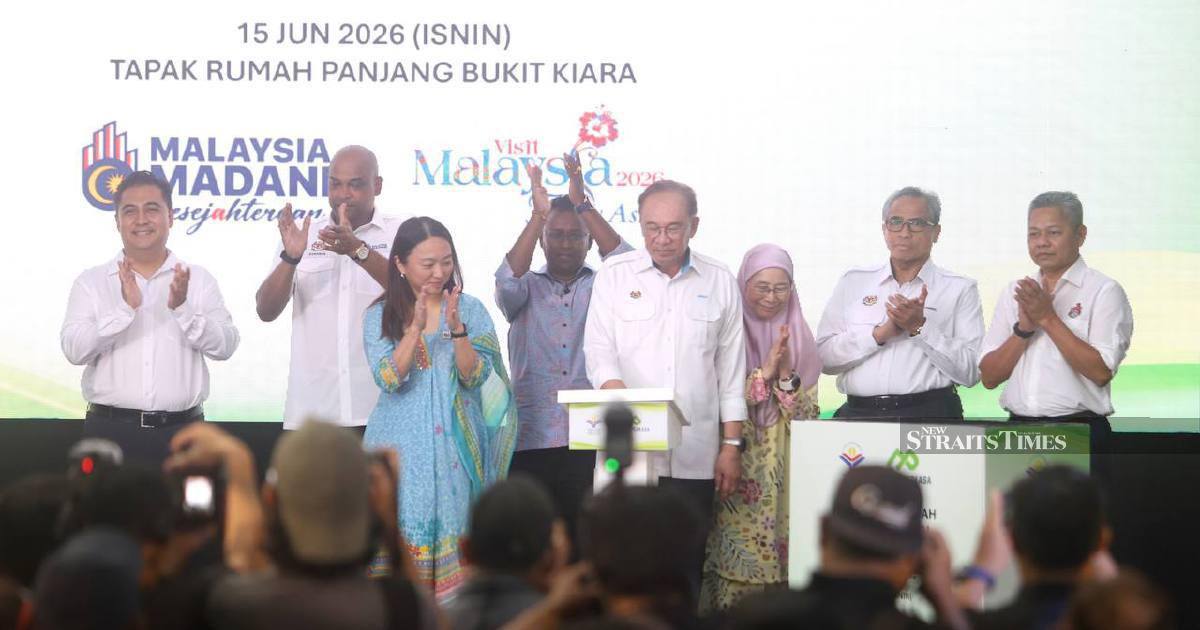
Prime Minister Datuk Seri Anwar Ibrahim has sounded a fresh warning about the dangers of politically motivated campaigns that deliberately inflame racial tensions, urging Malaysians to resist overtures that seek to splinter the nation's diverse communities. Speaking from Kuala Lumpur, the premier articulated concerns that resonate across Southeast Asia's plural societies, where demographic diversity can become a flashpoint for political mobilization if left unchecked by responsible leadership.
Anwar's message reflects growing anxiety among Malaysian policymakers about the instrumental use of racial narratives in electoral politics. Across the region, similar anxieties have prompted senior figures to publicly caution against the weaponization of identity for narrow political gain. The Prime Minister's intervention underscores a commitment to emphasizing shared national interests over divisive sectarian appeals, a positioning that distinguishes his administration from predecessors who occasionally permitted such rhetoric to flourish.
The emphasis on protecting ordinary Malaysians from the fallout of racial stirring carries particular weight given the nation's communal composition and its history of intercommunal tension. Citizens encountering such campaigns—whether through social media, traditional outlets, or grassroots mobilization—face pressure to view their neighbors through an ethnic prism rather than as fellow residents with common economic and social aspirations. This framing deliberately obscures the material interests that transcend racial categories and unite Malaysians across communities.
Anwar's warning extends an implicit critique of political actors who deploy divisive rhetoric to consolidate support among specific constituencies. By reducing complex policy questions to issues of racial or religious identity, such campaigners foreclose productive debate about governance, economic management, public service delivery, and national development. The resulting political climate becomes characterized by zero-sum thinking, where one community's advancement is portrayed as another's loss—a narrative structure that distorts actual policy outcomes and prevents constructive dialogue.
The consequences of such campaigns ripple through Malaysian society in tangible ways. Communities fractured along ethnic lines struggle to achieve collective action on matters of shared concern, from infrastructure improvement to local economic development. Trust between neighbors erodes, making it harder for government agencies to implement policies requiring community cooperation. Businesses hesitate to invest in areas marked by intercommunal tension, reducing employment opportunities and economic growth in affected regions. Schools and public spaces that ought to foster integration become sites of suspicion rather than connection.
For younger Malaysians particularly, constant exposure to divisive messaging establishes unhelpful cognitive patterns that persist into adulthood. Growing up in an environment saturated with appeals to ethnic identity as the primary organizing principle of politics and society constrains imaginative possibilities for alternative futures. Young people may internalize the belief that their interests are fundamentally opposed to those of citizens from different backgrounds, making cross-community collaboration and friendship seem irrational or disloyal.
The Prime Minister's intervention also speaks to anxieties about digital-age political mobilization. Social media platforms allow rapid dissemination of incendiary content that can reach vulnerable audiences—whether the economically marginalized, the politically disengaged, or the elderly—without editorial filtration or fact-checking. Bad-faith actors exploit algorithmic dynamics to maximize engagement, knowing that divisive content generates higher interaction rates. This structural feature of contemporary communication infrastructure makes it easier than ever to conduct campaigns designed to inflame racial sentiment at minimal cost.
Anwar's statement represents an attempt to establish normative boundaries around acceptable political discourse in Malaysia. By publicly deprecating campaigns that stoke racial division, the Prime Minister signals that such tactics violate standards of responsible governance and national leadership. He effectively invokes an alternative political vocabulary emphasizing unity, shared destiny, and common purpose—concepts that appeal to aspirations many Malaysians hold despite exposure to divisive messaging.
The resonance of this message across Southeast Asia reflects the region's broader struggles with polarization and its threat to democratic stability. Indonesia, Thailand, the Philippines, and other plural democracies have experienced how ethno-nationalist or religious-sectarian politics can corrode institutions, reduce policy effectiveness, and generate intercommunal violence. Anwar's public stance aligns Malaysia with regional voices cautioning against such trajectories, even as populist and nationalist movements in various Southeast Asian countries demonstrate the continued appeal of divisive mobilization strategies.
Implementing the Prime Minister's exhortation requires coordinated effort across society. Civil society organizations, educational institutions, and community leaders must actively promote counter-narratives emphasizing Malaysia's achievements through multiethnic collaboration and the mutual benefits of peaceful coexistence. Media organizations bear responsibility for declining to amplify inflammatory rhetoric without journalistic necessity. Political parties must resist temptation to exploit racial sentiment for electoral advantage, recognizing that short-term gains via divisive campaigning undermine long-term national stability and their own capacity to govern effectively.
Anwar's warning ultimately rests on an empirical claim worth examining closely: that Malaysians suffer materially when politicians and their operatives prioritize racial stirring over substantive governance. Economic stagnation in areas riven by intercommunal suspicion, diminished public health outcomes where communities distrust government health initiatives, and reduced social mobility where segregation limits opportunity networks all support this contention. By framing divisive politics as harmful to ordinary people's wellbeing, Anwar attempts to reorient political debate toward consequences and accountability rather than identity affirmation.

%22%2F%3E%3C%2Fpattern%3E%3C%2Fdefs%3E%3Crect%20width%3D%22100%25%22%20height%3D%22100%25%22%20fill%3D%22url(%23ph21o2sg)%22%2F%3E%3Crect%20width%3D%22100%25%22%20height%3D%22100%25%22%20fill%3D%22url(%23ph21o2sp)%22%2F%3E%3Ctext%20x%3D%2250%25%22%20y%3D%2250%25%22%20text-anchor%3D%22middle%22%20dominant-baseline%3D%22central%22%20fill%3D%22rgba(255%2C255%2C255%2C0.95)%22%20font-family%3D%22Georgia%2C%20'Times%20New%20Roman'%2C%20serif%22%20font-weight%3D%22700%22%20font-size%3D%22170%22%20letter-spacing%3D%22-0.02em%22%3EGabungan%3C%2Ftext%3E%3C%2Fsvg%3E)