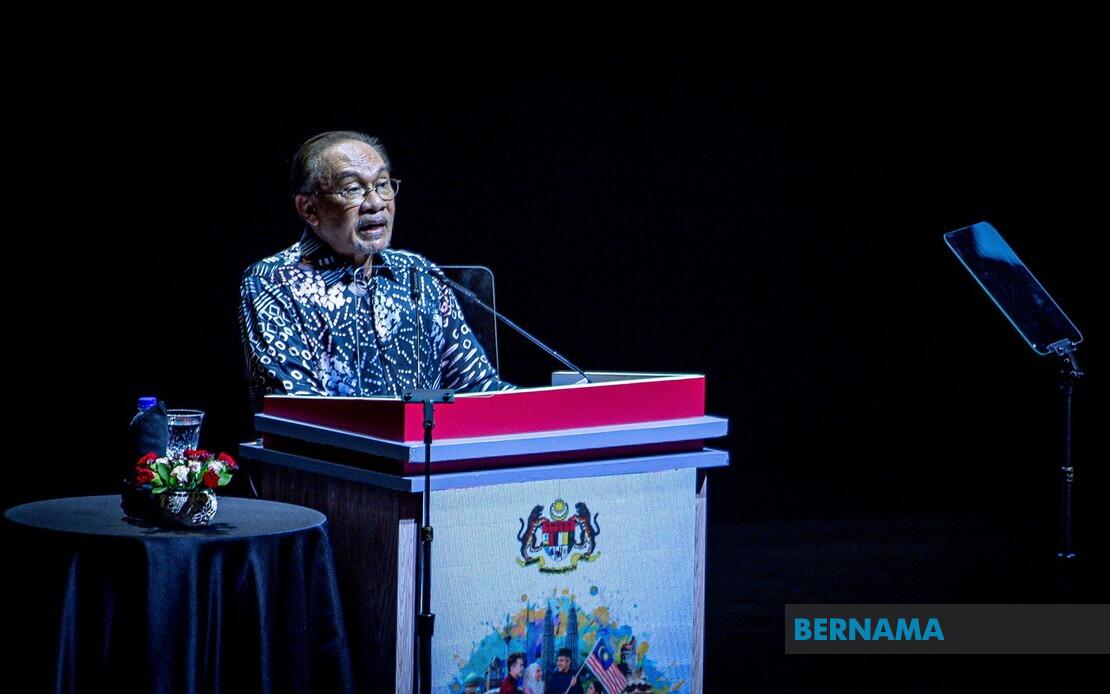
Prime Minister Datuk Seri Anwar Ibrahim has announced a six-point package of immediate measures designed to cushion Malaysians against the escalating cost of living, with implementation commencing on September 1. Speaking at the Putrajaya International Convention Centre during the 2026 National Day Prime Minister's Address, Anwar outlined initiatives spanning fuel subsidies, school maintenance allocations, artificial intelligence deployment, healthcare digitalisation, e-invoicing systems and microfinance schemes. The announcement, timed ahead of the National Day celebration, signals the government's recognition that existing policy interventions have not fully addressed public anxieties surrounding household expenses and economic pressures.
Anwar's acknowledgment that previous measures remain insufficient represents a significant political statement. Rather than claiming comprehensive success, he conceded that his administration, alongside Deputy Prime Minister Datuk Seri Dr Ahmad Zahid Hamidi and the Cabinet, recognises unresolved challenges confronting ordinary Malaysians. This transparent approach contrasts with defensive posturing often adopted by governments facing economic discontent. The Prime Minister specifically referenced struggles affecting schoolchildren, youth, housewives and mothers, demographic groups bearing disproportionate burdens when inflation erodes household purchasing power. By naming these constituencies directly, Anwar positioned the government as empathetic to genuine hardship rather than dismissive of public concerns.
The fuel subsidy component addresses a perennial political flashpoint in Malaysia. Petrol and diesel costs directly influence transportation expenses, which ripple through supply chains affecting food prices and consumer goods. Maintaining or expanding fuel support during economic uncertainty demonstrates commitment to preventing cascading price increases that devastate lower-income households. School maintenance funding similarly targets essential public services, ensuring educational facilities remain functional without imposing user fees on families already stretched financially. These foundational measures recognise that cost-of-living relief requires both immediate interventions and structural support for critical services.
The inclusion of artificial intelligence and healthcare digitalisation reflects longer-term thinking about efficiency gains and modernisation. AI applications can streamline government service delivery, potentially reducing administrative costs that ultimately burden taxpayers. Healthcare digitalisation initiatives promise reduced transaction costs for patients, diminished paperwork burdens and faster access to medical services. For a developing economy like Malaysia, improving healthcare system efficiency without expanding budgets represents pragmatic approach to delivering better public services. These technological measures appeal to younger demographics while offering genuine efficiency improvements benefiting all income levels.
E-invoicing implementation and microfinance expansion target business ecosystems and entrepreneurship pathways. Digital invoicing reduces administrative overhead for small and medium enterprises, lowering operational costs that might otherwise translate into higher consumer prices. Microfinance accessibility expands opportunities for informal sector workers and small traders to formalise operations, access capital and scale ventures. These measures recognise that cost-of-living relief extends beyond household consumption to encompassing employment creation and entrepreneurial opportunity expansion. When workers access better-paying formal sector positions or successfully grow microenterprises, household incomes rise, eventually reducing reliance on government subsidies.
The simultaneous rollout of six measures reflects strategic cabinet coordination. Deputy Prime Minister Datuk Seri Dr Ahmad Zahid Hamidi, Communications Minister Datuk Seri Fahmi Fadzil and other cabinet ministers present at the announcement suggest comprehensive whole-of-government execution. Chief Secretary to the Government Tan Sri Shamsul Azri Abu Bakar's attendance underscores bureaucratic preparedness for implementation. This institutional alignment indicates serious intent beyond rhetorical gesturing, though successful execution will determine whether announcements translate into tangible public relief.
For regional observers, Malaysia's policy response illustrates how middle-income Southeast Asian nations navigate mounting inflation and economic pressures. The package balances immediate relief measures with longer-term structural reforms. Unlike economies implementing harsh austerity, Malaysia maintains safety nets while pursuing efficiency improvements. This middle path appeals domestically but requires careful fiscal management to prevent ballooning deficits. Neighbouring countries experiencing similar cost pressures will monitor whether Malaysia's approach effectively moderates public discontent while maintaining macroeconomic stability.
The September 1 implementation date carries symbolic weight, following National Day celebrations. This timing suggests positive messaging aligned with patriotic sentiment, though critics might perceive it as political packaging. Regardless of motivations, the substantive content addresses genuine economic challenges. Malaysian households facing elevated food prices, accommodation costs and utility bills represent core government concerns. Whether six measures prove sufficient remains uncertain, but the announcement demonstrates recognition that ad-hoc interventions must yield to coordinated policy frameworks.
Looking forward, the government faces pressure to demonstrate that these measures deliver measurable relief within reasonable timeframes. Fuel subsidy adjustments should reflect at petrol pumps within weeks. School maintenance funding should become visible through facility improvements during the academic year. Healthcare digitalisation and e-invoicing adoption will require sustained effort beyond initial rollout. Microfinance expansion depends on effective marketing to informal sector participants and rigorous lending standards ensuring sustainability. Public perception will crystallise around whether ordinary Malaysians experience genuine purchasing power improvements or perceive announcements as window dressing masking continued economic stress.

