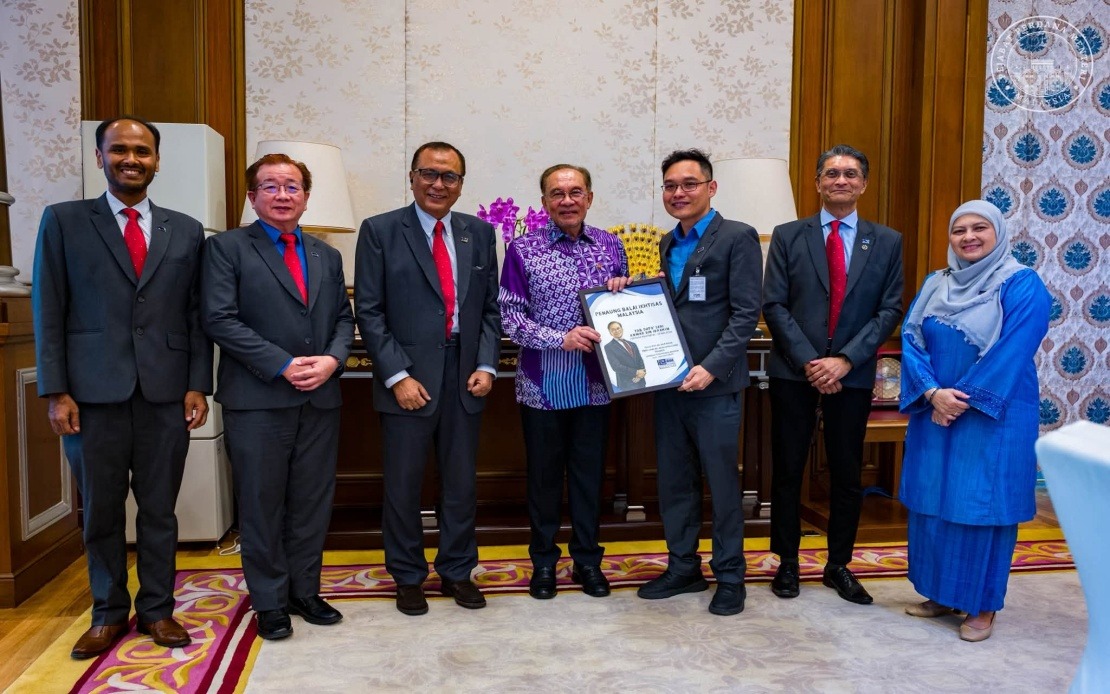
Prime Minister Datuk Seri Anwar Ibrahim has underscored the critical importance of artificial intelligence adoption and professional talent development to Malaysia's economic future, following discussions with Balai Ikhtisas Malaysia (BIM), the national professional body representing the country's most accomplished practitioners across diverse sectors. The meeting, attended by a BIM delegation headed by President Prof ChM Dr Juan Joon Ching, reflected the government's growing recognition that Malaysia's prosperity depends fundamentally on equipping its skilled workforce with contemporary technological capabilities and advanced expertise.
The timing of this engagement carries significant weight within Malaysia's broader strategic positioning. As regional economies race to harness artificial intelligence and upskill their professional cadres, the government's explicit focus on these domains signals an understanding that competitive advantage in the coming decade will belong to nations that successfully integrate cutting-edge technology with human capital development. For Malaysia, where the professional services sector contributes substantially to the economy and attracts considerable foreign investment, ensuring that doctors, engineers, architects, accountants and other specialists remain at the forefront of global best practices becomes a matter of national importance.
Anwar framed the initiative as essential to maintaining Malaysia's ambitions of serving as a regional nucleus for professional excellence and innovation. This aspiration reflects Malaysia's historical positioning as a magnet for multinational firms and international talent, a status that requires continuous reinforcement through demonstrable commitments to professional standards and technological advancement. By engaging directly with BIM and its constituent membership, the government signals that it views the professional community not merely as service providers operating within the economy, but as strategic collaborators whose insights and capabilities must inform policy decisions at the highest levels.
The discussion also centred on how the MADANI agenda—the government's overarching developmental framework aimed at advancing human wellbeing, economic prosperity, environmental sustainability, and integrity—can be advanced through the talents and networks of Malaysia's professionals. This represents a deliberate attempt to harness professional expertise towards societal goals beyond mere commercial success, recognising that architects, engineers, economists and other specialists possess the knowledge to shape infrastructure, institutions and systems that affect millions of Malaysians. By positioning professionals as essential to the MADANI vision, the government creates mutual ownership of national objectives.
The emphasis on talent development with integrity and competitiveness reflects growing global concerns about the quality and ethical dimensions of professional practice. Malaysian professionals operate in an increasingly interconnected world where standards and reputational considerations transcend borders. A commitment to nurturing talent that combines technical excellence with ethical grounding positions Malaysia's professional sector as trustworthy and dependable within regional and global contexts. This distinction becomes particularly valuable as multinational organisations and international clients evaluate where to locate operations and partnerships.
The artificial intelligence component of the discussions speaks to a more fundamental transformation underway across professional services globally. From legal research to medical diagnostics, from financial analysis to architectural design, AI tools are reshaping how professionals work and what competencies matter most. Malaysian professionals must understand not only how to use these tools effectively but also how to maintain the human judgment, creative problem-solving and ethical reasoning that machines cannot replicate. This requires deliberate, sustained professional development programmes that the government now appears committed to supporting.
BIM itself represents a crucial institutional bridge between government and the professional community. As an organisation dedicated to advancing the collective interests of Malaysia's professionals, BIM serves as both a voice for practitioners and a vehicle for implementing national professional standards. By engaging BIM directly, the government gains insights into professional sector needs while simultaneously gaining a trusted channel through which to communicate policy intentions and expectations. This institutional relationship, strengthened through consistent high-level engagement, becomes increasingly valuable as governments and professions must coordinate responses to technological disruption, regulatory change and market shifts.
The acceptance of an invitation to Hari Ikhtisas Malaysia—a ceremony honouring the professional community's contributions to national development—further reinforces the government's commitment to recognising and elevating professional expertise within the public consciousness. Such symbolic gestures, when backed by concrete policy support and resource allocation, help restore public confidence in institutions and professionals at a time when trust in various sectors has been tested. For Malaysian professionals seeking validation that their expertise and contributions matter within the national scheme of priorities, such recognition carries genuine significance.
Looking forward, the challenge lies in translating the rhetoric of this meeting into substantive programmes and policies. This requires identifying specific bottlenecks in professional talent development, securing adequate funding for training and research initiatives, and establishing clear pathways through which professionals can acquire and demonstrate mastery of emerging technologies. Malaysian universities, professional associations, and private sector firms must collaborate to design curricula and continuing education programmes that keep pace with technological change while maintaining the ethical and interpersonal dimensions that distinguish professional practice from mere technical execution.
The broader implication for Malaysia extends beyond any single professional sector. A government visibly committed to professional excellence and technological readiness signals to multinational corporations, international investors and skilled migrants that Malaysia remains a desirable location for talent and investment. In an era when knowledge workers and creative professionals can choose among multiple Southeast Asian destinations, Malaysia's willingness to prioritise their development and recognise their importance becomes a competitive advantage worth cultivating through sustained effort and genuine partnership.

