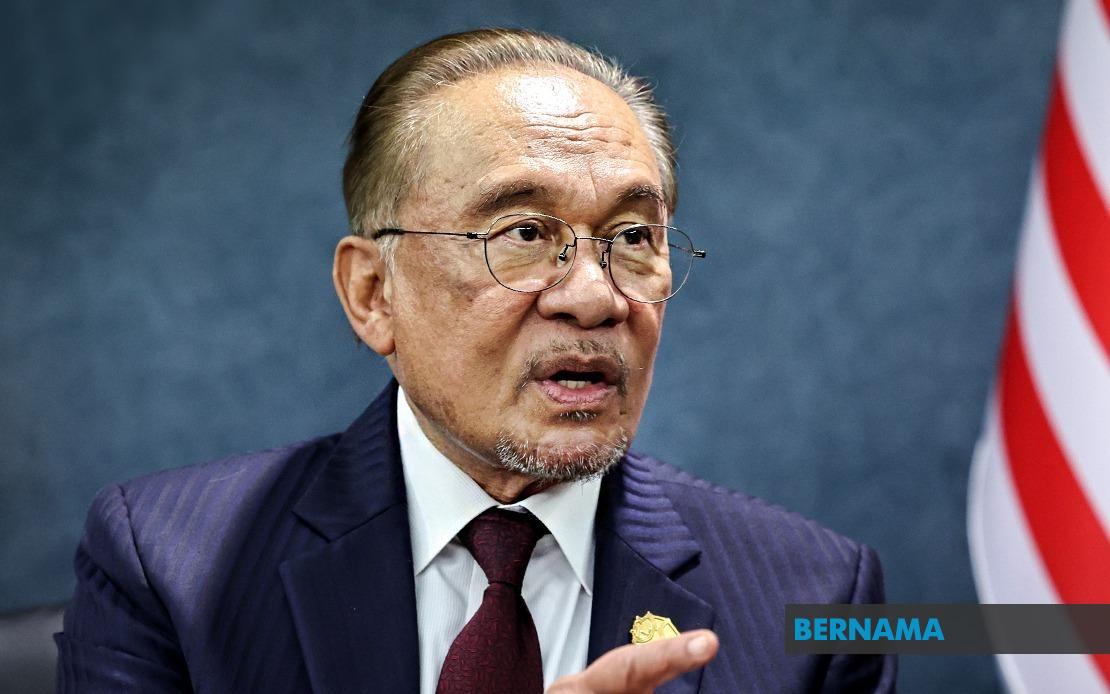
Prime Minister Datuk Seri Anwar Ibrahim delivered an address at the ASEAN-Russia Business Forum in Kazan on June 17, attending the event held at Kazan IT Park where he was received by Ilya Nachvin, Russia's Minister of Digitalisation of Public Administration, Information Technologies and Communications of the Republic of Tatarstan. The forum brought together business representatives and officials from across the ten-member ASEAN bloc alongside Russian counterparts, providing a platform for discussing economic collaboration and sectoral partnerships. Drawing on his dual portfolio as both Prime Minister and Finance Minister, Anwar engaged with the assembled delegates on matters touching commerce, investment and financial cooperation between Southeast Asia and Russia.
The participation in the ASEAN-Russia Business Forum represents Malaysia's active role within the broader commemorative summit, which marks a significant milestone in the relationship between the regional organisation and Moscow. The event underscores ASEAN's commitment to maintaining substantive engagement with Russia across multiple channels and sectors. Later in the day, Anwar proceeded to the Tatar State Academic Theater for a gala dinner hosted by the summit, where he had the opportunity to conduct a courtesy call on Russian President Vladimir Putin, reflecting the high-level nature of diplomatic interactions occurring throughout the event.
The ASEAN-Russia relationship has matured considerably since formal dialogue relations were established in 1991, evolving from initial engagement to institutionalised partnership mechanisms. Russia achieved full ASEAN Dialogue Partner status in 1996, positioning itself alongside other major powers in structured engagement with the bloc. The relationship underwent a significant upgrade when both parties formalised a Strategic Partnership in 2018, signalling mutual commitment to expanding cooperation across political-security matters, economic initiatives and socio-cultural exchanges. This three-pillar framework has provided the foundation for increasingly substantive interaction across government, business and civil society spheres.
The year 2024 witnessed cumulative ASEAN-Russia trade reaching USD18.1 billion, demonstrating the economic significance of the bilateral relationship despite periodic geopolitical tensions. Russian foreign direct investment in ASEAN economies totalled USD92.97 million during the same period, indicating ongoing confidence among Moscow-based investors in Southeast Asian markets. While these figures reflect modest FDI relative to flows from other major economies, they represent essential capital flows supporting manufacturing, extractive and technology sectors across the region. The relative stability of these trade dynamics underscores the resilience of economic ties even during periods of broader strategic uncertainty.
Malaysia's bilateral relationship with Russia carries particular weight within the ASEAN framework. In 2025, Russia ranked as Malaysia's ninth-largest trading partner among European nations, with total merchandise trade valued at RM8.72 billion (USD2.04 billion). This positioning reflects Malaysia's diverse trade relationships and its role as a manufacturing and logistics hub within Southeast Asia. The composition of bilateral commerce reveals complementary economic structures: Malaysian exports to Russia centre on electrical and electronic products, machinery, equipment and related components, alongside processed food items representing value-added agricultural output. Conversely, Malaysian imports from Russia comprise petroleum products, mineral resources, and chemicals and chemical-based products, reflecting Russia's resource wealth and Malaysia's energy and industrial chemical requirements.
Kazan itself represents a significant choice as the venue for the commemorative summit, offering symbolic and practical advantages for ASEAN-Russia dialogue. Situated at the confluence of the Volga and Kazanka rivers approximately 800 kilometres east of Moscow in the European portion of Russian territory, the city functions as a major regional centre with a population of approximately 1.3 million inhabitants. Kazan commands recognition as Russia's third capital after Moscow and Saint Petersburg, indicating its political and cultural prominence within the Russian federation. The city possesses a history spanning over a thousand years, having developed as a major crossroads between European and Asian civilisations.
The cultural significance of Kazan extends particularly to its standing as one of Russia's foremost centres of Islamic culture and heritage. This characteristic renders it a fitting setting for ASEAN engagement, given the substantial Muslim populations across Southeast Asia and Islam's centrality to cultural and social life throughout the region. Kazan effectively bridges the Russian and Muslim worlds, creating an atmosphere conducive to dialogue among diverse communities and nations. The symbolism of conducting ASEAN-Russia commemorative discussions in such a setting acknowledges the religious and cultural pluralism characterising both the Southeast Asian region and contemporary Russia.
The 35th anniversary designation attached to this summit represents a milestone worthy of structured reflection on the evolution of the relationship. Three and a half decades of dialogue relations provide sufficient historical depth to assess progress across multiple domains and to establish parameters for future engagement. The commemorative framing suggests both sides view the relationship as enduring and worthy of conscious investment in its continuation and deepening. For Southeast Asian nations, sustained engagement with Russia reflects broader ASEAN positioning principles emphasising dialogue with all major powers regardless of geopolitical differences, and commitment to maintaining regional agency through non-aligned principles.
The business forum component carries particular relevance for Malaysian participants given the economy's reliance on export-oriented manufacturing and international commerce. Enhanced understanding of Russian market opportunities, regulatory environments and investment mechanisms can facilitate Malaysian companies' market entry and expansion. Russian businesses similarly gain exposure to Southeast Asian supply chains, consumer markets and manufacturing capabilities through structured business-to-business interaction. The forum environment enables networking, partnership exploration and information exchange that formal diplomatic channels alone cannot adequately facilitate. For smaller and medium-sized enterprises from both regions, such forums provide rare opportunities to identify international collaborators and market entry strategies.
Malaysia's engagement with Russia through the ASEAN framework positions the country as part of a collective diplomatic approach rather than as an isolated bilateral relationship. This multilateral framing reinforces ASEAN solidarity and the principle of collective decision-making on external relations. The participation of Malaysian leadership at the highest levels demonstrates the country's commitment to ASEAN cohesion and its willingness to engage with Russia as part of broader regional initiatives. This balanced approach reflects Malaysia's broader foreign policy orientation toward maintaining constructive relationships across geopolitical divides while preserving strategic autonomy and regional unity.
Looking forward, the business and political dimensions of ASEAN-Russia engagement will likely continue evolving in response to shifting regional and global circumstances. Trade patterns may diversify as Southeast Asian economies develop new sectors and Russian businesses identify emerging opportunities. The political dialogue component remains significant as both ASEAN and Russia navigate complex international environments and seek to maintain channels of communication and mutual understanding. For Malaysia specifically, the relationship offers pathways for economic cooperation, technological collaboration and diplomatic engagement that contribute to the country's overall foreign policy objectives of prosperity, security and influence within international affairs.

%22%2F%3E%3C%2Fpattern%3E%3C%2Fdefs%3E%3Crect%20width%3D%22100%25%22%20height%3D%22100%25%22%20fill%3D%22url(%23ph21o2sg)%22%2F%3E%3Crect%20width%3D%22100%25%22%20height%3D%22100%25%22%20fill%3D%22url(%23ph21o2sp)%22%2F%3E%3Ctext%20x%3D%2250%25%22%20y%3D%2250%25%22%20text-anchor%3D%22middle%22%20dominant-baseline%3D%22central%22%20fill%3D%22rgba(255%2C255%2C255%2C0.95)%22%20font-family%3D%22Georgia%2C%20'Times%20New%20Roman'%2C%20serif%22%20font-weight%3D%22700%22%20font-size%3D%22170%22%20letter-spacing%3D%22-0.02em%22%3EGabungan%3C%2Ftext%3E%3C%2Fsvg%3E)