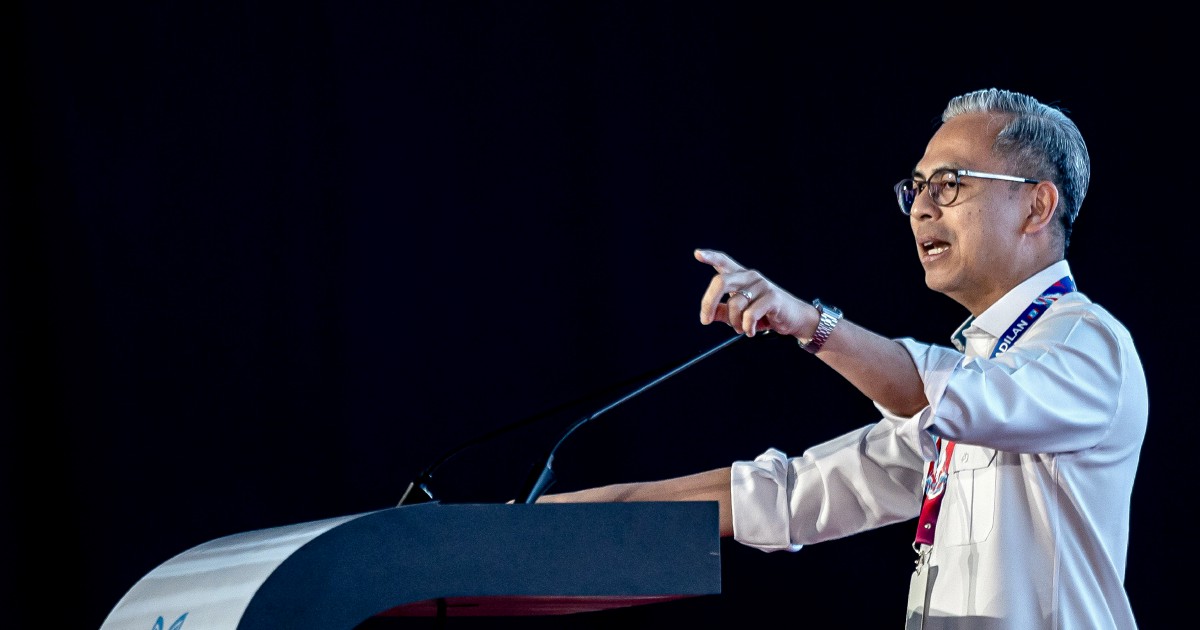
PKR leadership must recalibrate its approach to economic messaging by placing greater emphasis on the tangible financial struggles encountered by average Malaysian households rather than relying solely on impressive macroeconomic data, according to party information chief Datuk Seri Fahmi Fadzil. Speaking at Ayer Keroh, Fahmi highlighted a critical disconnect between national economic performance metrics and the lived experience of voters grappling with rising living costs and stagnant household incomes.
This observation reflects a growing awareness within PKR that electoral success depends not merely on the government's ability to maintain positive growth figures or manage inflation, but on demonstrating that economic improvements translate meaningfully to citizens' daily lives. The warning suggests an acknowledgment that despite Malaysia's relatively resilient macroeconomic position, voter sentiment remains fragile and susceptible to erosion if the party fails to address grassroots concerns about affordability, employment stability, and wage adequacy.
The distinction Fahmi drew between macroeconomic indicators and household-level economic experiences is particularly resonant given the post-pandemic Malaysian context. While official statistics may show economic recovery or moderate growth rates, many households continue to experience pressure from elevated food costs, transportation expenses, and housing affordability challenges. A government touting strong GDP figures risks appearing disconnected from constituents who struggle to make ends meet despite national prosperity.
This messaging challenge has become increasingly urgent for PKR as the party navigates its role within the current political coalition. The coalition's economic credentials rest partly on maintaining fiscal discipline and growth trajectories, yet these achievements can ring hollow for voters whose purchasing power has eroded in real terms over the past few years. Fahmi's statement signals that PKR recognizes the need to bridge this perception gap through more targeted, locally-responsive economic advocacy.
Malaysian voters, particularly in urban centres and younger demographics, have demonstrated heightened sensitivity to issues such as cost of living, youth unemployment, housing accessibility, and pension adequacy. A party that frames its economic success narrative primarily through national-level statistics risks losing relevance among voters whose primary concern is whether their salaries stretch sufficiently to cover monthly expenses. Fahmi's intervention suggests PKR is contemplating a recalibration of its communication strategy to better address these granular concerns.
The broader context reveals that macroeconomic management, while necessary, is insufficient for political survival in democratic systems where voter perception ultimately determines electoral outcomes. Even countries with strong economic fundamentals have experienced electoral setbacks when governments failed to translate aggregate prosperity into widely-shared household benefits. PKR appears to be internalizing this lesson, recognizing that the party's political future depends on demonstrating tangible improvements in citizen welfare rather than merely pointing to favourable economic data.
Fahmi's remarks also underscore intra-coalition awareness that messaging discipline matters considerably. If different coalition partners emphasize competing narratives—some highlighting macroeconomic achievements while others focus on cost-of-living relief—the government's communication becomes fragmented and potentially self-defeating. By calling for PKR specifically to pivot toward bread-and-butter issues, Fahmi may be attempting to establish the party's distinctive positioning within the coalition as the voice of ordinary workers and lower-income households.
The practical implications of this strategic reorientation could include greater party emphasis on targeted subsidies, wage policy advocacy, affordable housing initiatives, and support for small businesses and gig workers. Rather than defending broad economic policy frameworks, PKR could differentiate itself through championing specific interventions that demonstrably improve household financial circumstances. This approach would require greater granularity in policy communication and more visible party engagement with community-level economic concerns.
Regionally, Malaysia's experience reflects broader Southeast Asian political patterns where economic messaging has become increasingly localized and household-focused. Voters across the region appear less persuaded by national development narratives and more interested in how government policies affect their immediate economic security. For PKR, which aspires to be seen as a progressive, people-centric party, this strategic evolution toward emphasizing everyday economic pressures represents both a necessary adjustment and a potential opportunity to deepen its support base among economically vulnerable communities.
The timing of Fahmi's intervention also matters contextually. As Malaysia's political landscape remains fluid and coalitions potentially unstable, parties must continuously demonstrate relevance to their electoral constituencies. PKR's explicit acknowledgment that macroeconomic credentials alone cannot sustain political support suggests the party is preparing for intensified electoral competition by sharpening its economic messaging toward issues most salient to voters' lived experiences.

