The Philippine Department of Justice has initiated a formal investigation into allegations involving public officials connected to a shooting incident at the Senate building on May 13 and the subsequent escape of Senator Ronald dela Rosa from protective custody early on May 14. Justice Secretary Fredderick Vida announced that prosecutors have been assembling evidence and testimonies as part of the ongoing inquiry, which remains in its preliminary stages despite already yielding substantial leads about the circumstances surrounding both incidents.
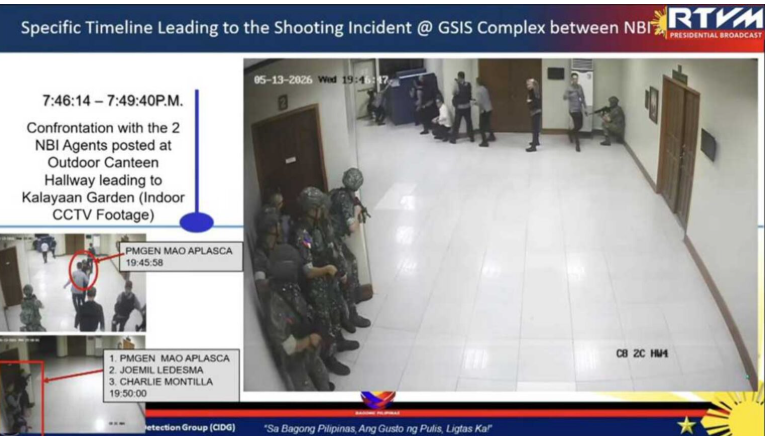
According to initial investigative findings presented by Vida, a team of prosecutors has gathered accounts from National Bureau of Investigation officials and media personnel, alongside corroborating evidence from closed-circuit television footage. This material suggests that shots were fired from the fifth floor of the Senate building, targeting what witnesses identified as an NBI vehicle stationed at the GSIS premises. The coordination of these two events—the shooting and the escape—appears to have prompted authorities to examine whether they are connected or part of a broader pattern of events.
Vida indicated that while formal charges have not yet been filed, the preliminary inquiry has pointed toward several individuals occupying government positions. He refrained from naming specific persons at this stage, emphasizing that the investigation is still developing and that premature identification could compromise the integrity of the probe. The Justice Secretary's cautious approach reflects standard investigative protocols, particularly when allegations involve high-ranking officials who might influence the course of justice.
The incident has raised significant concerns about security protocols at the Senate and the management of protective custody arrangements for high-profile detainees. Senator dela Rosa, a former Philippine National Police chief, was reportedly under protective custody at the time of his escape, raising questions about the adequacy of security measures and the involvement of officials responsible for his confinement. The proximity in timing between the shooting and his departure suggests investigators are examining whether the two events are causally linked.
Vida's public statements emphasize the department's commitment to conducting the investigation with professional rigor and impartiality. He underscored that no individual, regardless of official standing, would be exempt from potential prosecution should evidence warrant charges. Simultaneously, he stressed that the department recognizes the principle that individuals should not face judgment before comprehensive examination of available evidence is completed. This balancing act reflects the delicate position prosecutors occupy when investigating high-level officials.
The investigation carries substantial implications for governance and institutional accountability in the Philippines. A thorough inquiry into whether officials facilitated either the shooting or the escape would signal the extent to which the country's justice system can operate independently when senior government figures are implicated. For Southeast Asian observers, the case underscores ongoing questions about rule of law and institutional integrity in the region's democracies.
Security analysts have noted that the incident raises troubling questions about access to sensitive areas within government buildings and the effectiveness of protective custody protocols. The fact that sniper shots could be fired from within the Senate building itself suggests potential lapses in building security and access control. Similarly, the escape of a former police chief from protective custody raises concerns about whether adequate personnel and procedures were in place to prevent such an occurrence.
The Department of Justice's methodical approach stands in contrast to public speculation about the incident's origins and consequences. While media coverage and political commentary have offered various theories, Vida's emphasis on completing evidence examination before forming conclusions suggests authorities are resisting pressure to reach premature determinations. This deliberative stance may frustrate observers seeking immediate answers but reflects best practices in criminal investigation.
For the broader Philippine political landscape, the investigation occurs amid ongoing discussions about institutional oversight and the accountability of former security chiefs. Dela Rosa's status as a former PNP director general means that personnel decisions and actions during his tenure could come under scrutiny as investigators examine connections between past conduct and present events. The investigation thus potentially extends beyond the immediate May 13-14 incidents to encompass questions about institutional culture and decision-making at senior levels.
The case also highlights the intersection of security, protective custody, and investigative transparency. As the DOJ proceeds, questions will likely emerge about how much information can be disclosed to the public without compromising the investigation. Balancing transparency with operational security represents an ongoing challenge for Philippine authorities managing high-profile cases involving government officials.
Looking forward, the investigation's trajectory will depend substantially on the quality of evidence collected and the willingness of witnesses to provide candid testimony. CCTV footage and NBI accounts appear to provide objective records of events, potentially reducing reliance on potentially unreliable eyewitness testimony. However, establishing motive and intent—crucial elements in criminal cases—will require more extensive inquiry into communications and decision-making among officials involved.
The outcome of this investigation will carry implications extending beyond the immediate parties involved. It will reflect on the Philippine judiciary's capacity to investigate and prosecute cases involving powerful officials without political interference. For regional observers, including Malaysian analysts concerned with comparable governance challenges, the case demonstrates both the opportunities and obstacles inherent in maintaining institutional independence when investigating high-level figures.

%22%2F%3E%3C%2Fpattern%3E%3C%2Fdefs%3E%3Crect%20width%3D%22100%25%22%20height%3D%22100%25%22%20fill%3D%22url(%23ph21o2sg)%22%2F%3E%3Crect%20width%3D%22100%25%22%20height%3D%22100%25%22%20fill%3D%22url(%23ph21o2sp)%22%2F%3E%3Ctext%20x%3D%2250%25%22%20y%3D%2250%25%22%20text-anchor%3D%22middle%22%20dominant-baseline%3D%22central%22%20fill%3D%22rgba(255%2C255%2C255%2C0.95)%22%20font-family%3D%22Georgia%2C%20'Times%20New%20Roman'%2C%20serif%22%20font-weight%3D%22700%22%20font-size%3D%22170%22%20letter-spacing%3D%22-0.02em%22%3EGabungan%3C%2Ftext%3E%3C%2Fsvg%3E)