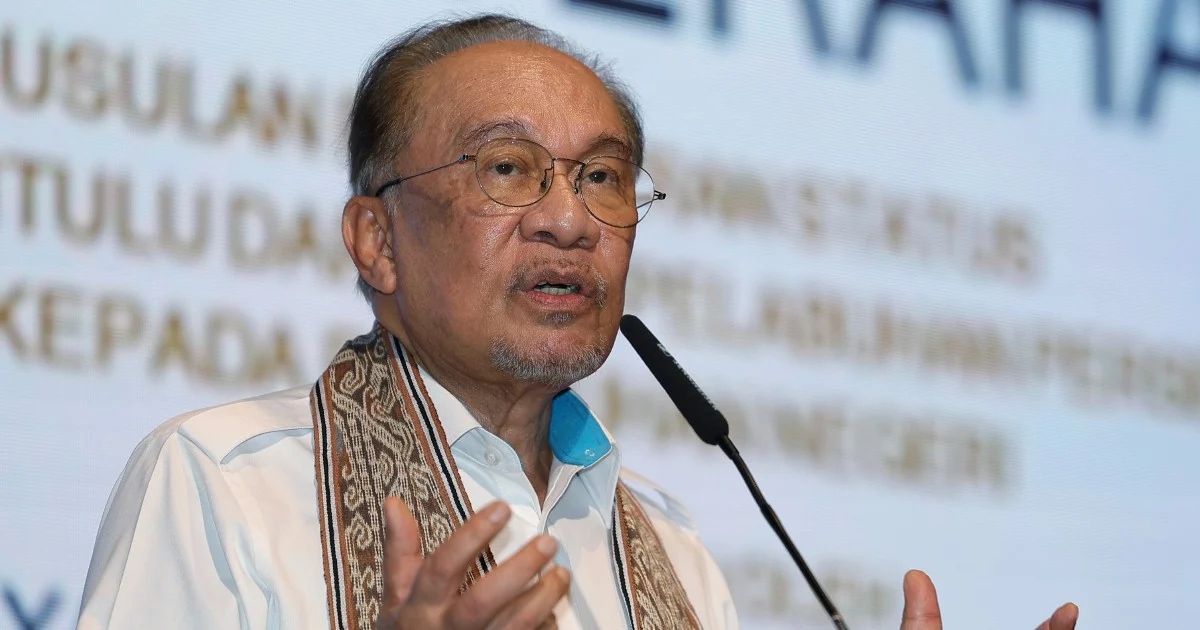
Prime Minister Datuk Seri Anwar Ibrahim has indicated that negotiations between Malaysia's two major national oil and gas companies, Petronas and Petros, are progressing in a constructive direction, bringing cautious optimism to a lengthy dialogue aimed at resolving complex fiscal and operational arrangements.
The comments, made during a visit to Kuching, signal government determination to bridge differences between the two state enterprises that have historically operated with distinct mandates and territorial interests. Petronas, the national oil company with federal oversight, and Petros, the Sarawak-based counterpart, have been engaged in discussions to clarify their respective rights and responsibilities regarding hydrocarbon exploration and production across Malaysian waters and within state boundaries.
These negotiations represent more than routine corporate coordination. The underlying tensions between Petronas and Petros reflect deeper questions about federalism, resource ownership, and how petroleum wealth should be distributed between the federal government and oil-rich states—issues that have periodically sparked political friction over the past decade. Sarawak's insistence on greater control over its oil resources has been a consistent thread in state-federal relations, particularly as the state seeks to maximize economic returns from its natural endowments.
The positive characterization offered by Anwar carries strategic weight. By publicly endorsing progress in these talks, the Prime Minister is attempting to project an image of competent administration and intergovernmental cooperation at a time when Malaysia faces competing demands on its energy sector. The country's oil and gas revenues remain vital to federal finances, yet the sustainability of conventional petroleum production has become an increasingly pressing concern as global energy transitions accelerate and regional hydrocarbon reserves gradually deplete.
For Malaysian readers and investors, the significance of these negotiations extends beyond corporate governance. How Petronas and Petros eventually align their operations will influence investment climate perceptions, project financing capabilities, and Malaysia's competitive standing in attracting offshore energy development. The clarity that emerges from these discussions could either unlock new exploration and production ventures or, conversely, prolong uncertainty that deters capital commitments.
Sarawak's position in these negotiations warrants particular attention. As the country's largest oil-producing state, Sarawak generates substantial revenue through its hydrocarbon sector, yet state officials have frequently expressed frustration with the distribution formulas that determine how much wealth flows back to state coffers relative to federal coffers. Earlier political configurations saw periodic standoffs over this issue, and resolving the technical and fiscal aspects of Petronas-Petros coordination is essential for maintaining stability in federal-state relations.
The energy transition adds urgency to reaching accommodation. Both companies face mounting pressure to diversify into renewable energy and lower-carbon technologies while conventional petroleum revenues remain their primary profit drivers. Operational duplication or conflicting strategic directions between the two entities would hamper Malaysia's capacity to navigate this transition effectively. A coordinated approach allows for more rational capital allocation, reduced wasteful competition, and clearer positioning in emerging energy markets across Southeast Asia.
Industry observers have long suggested that the Petronas-Petros relationship requires clarification precisely because historical demarcations between federal and state petroleum authority created grey areas that invited periodic disputes. The positive characterization of current negotiations suggests movement toward formal agreements that definitively allocate roles, revenue streams, and operational zones in ways that both entities find acceptable. Such clarity would represent a tangible achievement for the government, demonstrating capacity to manage complex domestic resource politics.
International energy companies operating in Malaysia also have stakes in these discussions. Upstream projects in Malaysian waters depend on predictable regulatory environments and clear fiscal frameworks. If Petronas and Petros alignment produces greater certainty about licensing, revenue-sharing, and operational standards, it would strengthen Malaysia's attractiveness as an investment destination relative to competing jurisdictions in the region.
The timing of Anwar's comments from Kuching was deliberate. Reinforcing commitment to dialogue with Sarawak on matters that state leaders prioritize signals respect for the state's political importance and economic significance. As Malaysia's ruling coalition encompasses Sarawak-based parties whose cooperation remains essential for federal stability, public demonstration of progress on state-level concerns carries political value beyond the immediate technical content.
Looking ahead, the critical test will be translating reported positive momentum into substantive agreements. Industry participants and investors will scrutinize the eventual terms to assess whether arrangements create genuine operational efficiency and fiscal fairness, or merely paper over underlying tensions. The coming months will likely reveal whether current optimism reflects genuine convergence of interests or merely the pace of diplomatic engagement.
%22%2F%3E%3C%2Fpattern%3E%3C%2Fdefs%3E%3Crect%20width%3D%22100%25%22%20height%3D%22100%25%22%20fill%3D%22url(%23phdjerg)%22%2F%3E%3Crect%20width%3D%22100%25%22%20height%3D%22100%25%22%20fill%3D%22url(%23phdjerp)%22%2F%3E%3Ctext%20x%3D%2250%25%22%20y%3D%2250%25%22%20text-anchor%3D%22middle%22%20dominant-baseline%3D%22central%22%20fill%3D%22rgba(255%2C255%2C255%2C0.95)%22%20font-family%3D%22Georgia%2C%20'Times%20New%20Roman'%2C%20serif%22%20font-weight%3D%22700%22%20font-size%3D%22320%22%20letter-spacing%3D%22-0.02em%22%3E300%3C%2Ftext%3E%3C%2Fsvg%3E)
%22%2F%3E%3C%2Fpattern%3E%3C%2Fdefs%3E%3Crect%20width%3D%22100%25%22%20height%3D%22100%25%22%20fill%3D%22url(%23ph41m7kg)%22%2F%3E%3Crect%20width%3D%22100%25%22%20height%3D%22100%25%22%20fill%3D%22url(%23ph41m7kp)%22%2F%3E%3Ctext%20x%3D%2250%25%22%20y%3D%2250%25%22%20text-anchor%3D%22middle%22%20dominant-baseline%3D%22central%22%20fill%3D%22rgba(255%2C255%2C255%2C0.95)%22%20font-family%3D%22Georgia%2C%20'Times%20New%20Roman'%2C%20serif%22%20font-weight%3D%22700%22%20font-size%3D%22151%22%20letter-spacing%3D%22-0.02em%22%3EMalaysian%3C%2Ftext%3E%3C%2Fsvg%3E)