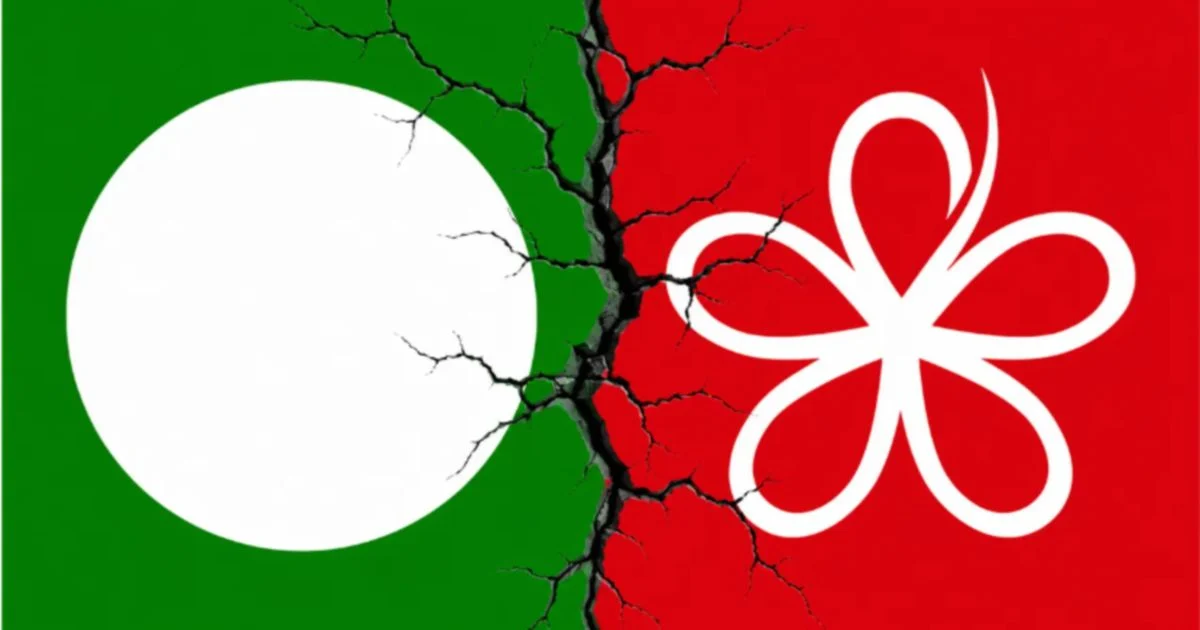
The relationship between PAS and Bersatu, the two pillars of Perikatan Nasional, has become increasingly fractious in recent weeks, raising serious questions about the coalition's ability to maintain unity and coherence in the lead-up to the 16th General Election. Political observers in Kuala Lumpur suggest that the deteriorating dynamics within the opposition bloc could translate into significant electoral losses, particularly if the infighting becomes visible to ordinary voters who may perceive the coalition as unstable and unfit to govern.
The tensions stem from fundamental disagreements over coalition strategy, party positioning, and resource allocation. Both PAS and Bersatu view themselves as the rightful leader of the Perikatan Nasional alliance, each harbouring distinct ideological priorities and electoral calculations. These competing visions have created a breeding ground for internal disputes that threaten to overshadow the coalition's broader messaging during the crucial campaign period.
For PAS, the Islamic party has historically relied on its grassroots organisational strength and support among conservative Muslim voters, particularly in rural areas. The party's leadership has expressed concerns that Bersatu's strategy and public positioning do not adequately reflect Islamic principles or prioritise the concerns of Malaysia's Muslim majority. These theological and social policy disagreements have intensified factional tensions, with prominent figures within PAS openly questioning Bersatu's commitment to the Perikatan Nasional platform.
Bersatu, for its part, entered the Perikatan Nasional coalition with expectations of playing a leadership role in the alliance. The party's accumulated political capital and influence have given its leadership a belief that it should exercise greater control over coalition direction and candidate selection processes. This aspiration has collided with PAS's entrenched position within the alliance, creating a zero-sum competitive dynamic rather than collaborative partnership.
The practical implications of this discord manifest most visibly in disagreements over seat allocation for the upcoming election. Both parties compete for similar voter demographics in certain constituencies, and negotiations over which party contests which seats have proven contentious. Rather than presenting a united front with clearly delineated campaign territories, the coalition risks fielding mixed signals to voters about internal decision-making processes and harmony.
Electoral analysts warn that visible coalition discord carries significant costs in Malaysian politics. Voters generally penalise alliances that appear fractious or internally divided, viewing such discord as an indicator of poor governance potential and lack of strategic coherence. In previous elections, coalitions that projected unity significantly outperformed those marked by public disputes and recriminations. The current trajectory suggests that Perikatan Nasional may struggle to maintain the unified message necessary to challenge incumbent coalitions effectively.
Moreover, the rift provides ammunition to rival political blocs attempting to present themselves as more stable governing alternatives. Both Barisan Nasional and Pakatan Harapan can capitalise on Perikatan Nasional's internal difficulties by emphasising their own (or claimed) party discipline and coalition cohesion. This comparative advantage becomes particularly potent in swing constituencies where marginal voters determine election outcomes, as undecided electors typically gravitate toward coalitions appearing most organised and harmonious.
The implications extend beyond immediate electoral prospects to longer-term coalition viability. If Perikatan Nasional performs poorly in GE16 partly due to internal discord, recriminations between PAS and Bersatu could intensify dramatically. The post-election period would likely see both parties blaming the other for electoral underperformance, potentially leading to formal coalition dissolution or fragmentation. This outcome would fundamentally reshape Malaysia's political landscape and alter opposition dynamics for subsequent elections.
For Southeast Asian observers, the Perikatan Nasional situation illustrates broader challenges facing opposition coalitions throughout the region. Maintaining unity across parties with distinct ideological orientations, organisational cultures, and leadership ambitions proves consistently difficult. The Malaysian case demonstrates how coalition mathematics—combining parties to achieve majority status—remains secondary to coalition functionality and authentic strategic alignment. Without genuine consensus on core objectives and mutual respect between coalition partners, electoral calculations alone prove insufficient to sustain effective alliance structures.
Political analysts monitoring the situation suggest that Perikatan Nasional leadership urgently requires mechanisms to resolve inter-party disputes before campaign intensity increases further. Formal mediation processes, clear delineation of party roles and responsibilities, and transparent seat-allocation frameworks could potentially mitigate tensions. However, observers remain sceptical about whether party leadership possesses sufficient political will to implement such mechanisms, given that underlying competitive dynamics likely preclude voluntary cooperation.
The unfolding situation carries particular importance for Malaysian politics given Perikatan Nasional's emergence as a significant electoral force. The coalition's performance in GE16 will substantially influence whether opposition politics become permanently fragmented or whether realignment occurs toward stronger, more cohesive blocs. If internal tensions prove destructive, the resulting political reconfiguration could create unexpected opportunities for alternative coalition formations or entirely new political alignments to emerge across the Malaysian political spectrum.

%22%2F%3E%3C%2Fpattern%3E%3C%2Fdefs%3E%3Crect%20width%3D%22100%25%22%20height%3D%22100%25%22%20fill%3D%22url(%23ph21o2sg)%22%2F%3E%3Crect%20width%3D%22100%25%22%20height%3D%22100%25%22%20fill%3D%22url(%23ph21o2sp)%22%2F%3E%3Ctext%20x%3D%2250%25%22%20y%3D%2250%25%22%20text-anchor%3D%22middle%22%20dominant-baseline%3D%22central%22%20fill%3D%22rgba(255%2C255%2C255%2C0.95)%22%20font-family%3D%22Georgia%2C%20'Times%20New%20Roman'%2C%20serif%22%20font-weight%3D%22700%22%20font-size%3D%22170%22%20letter-spacing%3D%22-0.02em%22%3EGabungan%3C%2Ftext%3E%3C%2Fsvg%3E)