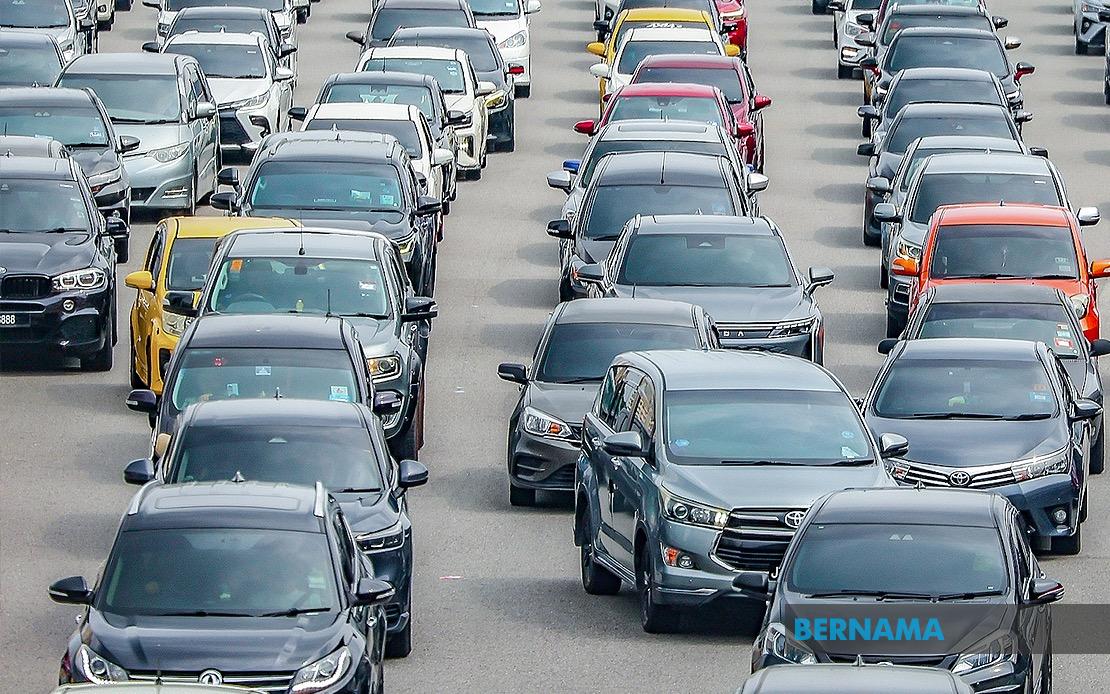
Penang police have committed to maintaining robust security and traffic management protocols for the HAWANA 2026 National Journalists' Day summit at PICCA Convention Centre @ Butterworth, while ensuring that major arterial roads remain accessible to the general public. Police Chief Datuk Azizee Ismail made the assurance following concerns about potential disruptions to daily commuter patterns, indicating that lessons learned from the Malaysia Day 2025 celebration at the same venue last year informed the current operational strategy.
The three-day event, which opens on June 20 under the official patronage of Prime Minister Datuk Seri Anwar Ibrahim, is projected to attract approximately 1,000 media professionals from Malaysia and abroad. The summit carries significant weight within the nation's media landscape as it serves as the primary recognition platform for the industry, celebrating the dedication and professionalism of journalists across the country. This year's thematic focus—"Media Integrity Strengthens Credibility"—underscores the growing importance of trustworthy journalism amid an increasingly complex information environment affecting the region.
Rather than implementing the blunt instrument of total road closures, Penang police have opted for a more nuanced approach centred on strategic traffic diversions and targeted personnel deployment. According to Azizee, traffic officers will establish diversions at key junctures surrounding the convention centre to facilitate smooth vehicular movement while channelling event-related traffic away from residential neighbourhoods. This methodology reflects evolving best practices in large event management that attempt to balance security imperatives with the legitimate interests of ordinary citizens whose daily routines depend on unimpeded road access.
The personnel allocation assigned to security and traffic control will match the scale mobilised during last year's Malaysia Day celebration, a metric that presumably already proved effective in handling comparable attendance volumes. This consistency in resource deployment suggests the police have confidence in their existing operational framework and see no need for significant escalation. The decision to maintain comparable staffing levels also provides a degree of predictability for traffic planners and transport authorities coordinating parallel activities across the metropolitan area.
For commuters and residents in the Butterworth vicinity, Azizee issued a pointed advisory to remain cognisant of traffic personnel instructions and to plan journeys with additional time buffers to accommodate potential minor delays. This preventive messaging aims to reduce congestion caused by drivers unfamiliar with temporary routing changes and to cultivate public cooperation in implementing traffic controls. The police communication strategy suggests an awareness that public compliance often hinges as much on advance notice and clear explanation as on enforcement mechanisms.
The HAWANA 2026 programme extends well beyond the formal summit itself. Concurrent with the media professionals' gathering, organisers will operate the Riuh Pi HAWANA Carnival across the three-day period, a cultural and commercial showcase explicitly designed to engage the broader public. The carnival component is projected to draw approximately 30,000 visitors, meaning the overall foot and vehicular traffic around PICCA will significantly exceed normal levels. This parallel activation transforms what might otherwise be an industry-confined event into a substantial public gathering with implications for regional transport infrastructure.
The carnival features more than 24 local creative product brands, 20 food and beverage vendors, and 16 stage performances showcasing established local artists including Exists, Bunkfac, Masdo, Sakura Band, Budak Nakal Hujung Simpang, and Chelsea Ng. Admission is free, a deliberate choice designed to maximise public participation and democratise access to the event experience. This programmatic breadth indicates that HAWANA 2026 functions partly as a festival celebrating contemporary Malaysian creative industries, not merely as a professional conference.
The National Journalists' Day celebration itself carries symbolic weight beyond the immediate event confines. Organised by the Ministry of Communications with the Malaysian National News Agency (Bernama) as implementing agency, HAWANA provides the state apparatus with a formal occasion to acknowledge the role of journalism in the national project. For journalists themselves, the gathering offers rare opportunity to convene collectively, share professional experiences, and engage with policymakers and industry stakeholders in dialogue about the evolving media landscape.
The emphasis on "media integrity" as this year's central theme reflects contemporary preoccupations within Southeast Asia concerning misinformation, disinformation, and the credibility challenges facing traditional news organisations in the digital age. Malaysia, like most regional nations, has grappled with the proliferation of false and misleading information affecting public discourse around elections, public health, and social cohesion. By making integrity the summit's focal point, organisers signal institutional commitment to strengthening the foundational principles underpinning professional journalism practice.
For Penang specifically, hosting this event underscores the state's continued importance as a commercial and cultural hub capable of accommodating large-scale national gatherings. The repeat deployment of security and traffic protocols at the same venue indicates confidence in PICCA's infrastructure and logistical capacities. The successful management of both the formal summit and the companion carnival will offer data points for assessing how Malaysian event management authorities coordinate security, public access, and traffic flow when hosting simultaneous large gatherings.
The assurance that main roads will remain open throughout carries particular significance for a state where infrastructure capacity around major convention venues remains periodically contested. Penang's geographic constraints and the density of the northern corridor mean that event-related traffic can quickly create bottlenecks affecting regional commerce and commuting. Police willingness to maintain arterial access suggests either confidence in their diversionary systems or awareness that political and public pressure against major disruptions would be substantial.
As the event approaches, transport authorities and police will likely release more detailed information about specific diversions, recommended alternative routes, and peak congestion periods. Commuters and residents are advised to monitor official Penang police communications and traffic management announcements to stay apprised of any developments. The next fortnight will test whether the accumulated experience from Malaysia Day 2025 translates into genuinely smooth operations or whether the significantly larger carnival component creates unanticipated pressures on the implemented traffic control framework.

%22%2F%3E%3C%2Fpattern%3E%3C%2Fdefs%3E%3Crect%20width%3D%22100%25%22%20height%3D%22100%25%22%20fill%3D%22url(%23ph21o2sg)%22%2F%3E%3Crect%20width%3D%22100%25%22%20height%3D%22100%25%22%20fill%3D%22url(%23ph21o2sp)%22%2F%3E%3Ctext%20x%3D%2250%25%22%20y%3D%2250%25%22%20text-anchor%3D%22middle%22%20dominant-baseline%3D%22central%22%20fill%3D%22rgba(255%2C255%2C255%2C0.95)%22%20font-family%3D%22Georgia%2C%20'Times%20New%20Roman'%2C%20serif%22%20font-weight%3D%22700%22%20font-size%3D%22170%22%20letter-spacing%3D%22-0.02em%22%3EGabungan%3C%2Ftext%3E%3C%2Fsvg%3E)