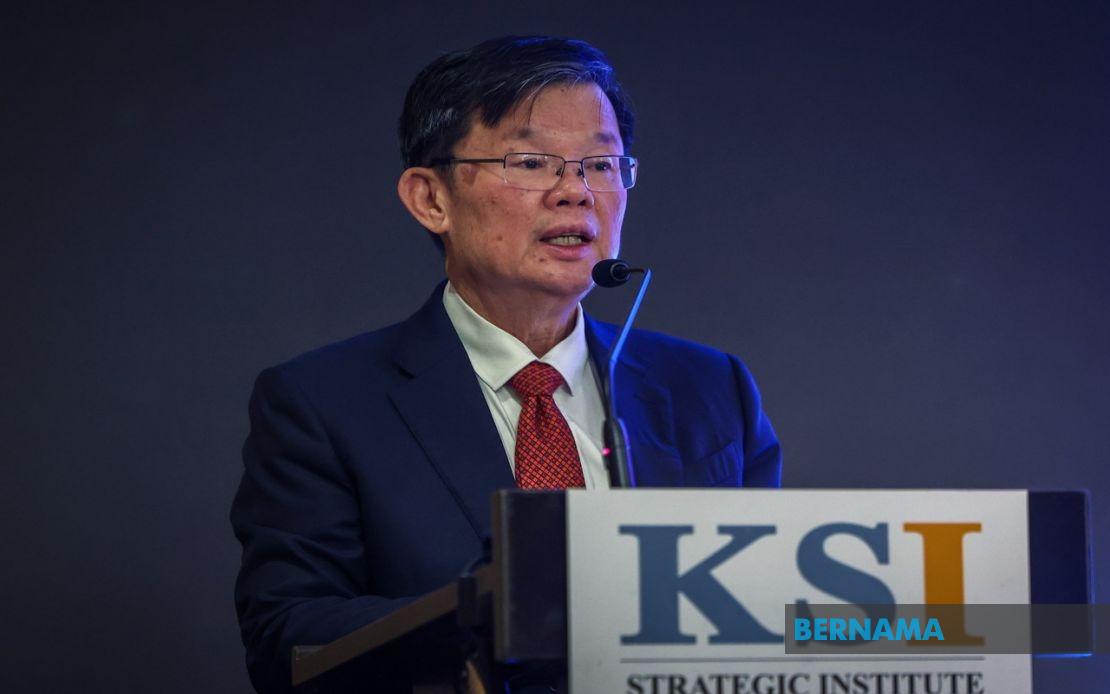
Penang Pakatan Harapan intends to nominate a greater number of women candidates when the state heads to the polls next, though the coalition continues wrestling with the practical difficulty of identifying candidates who are both qualified and prepared to contest, according to the group's chairman Chow Kon Yeow. The Penang Chief Minister disclosed this aspiration while addressing attendees at the World Women Economic and Business Summit 2026 in George Town on June 15, emphasising that despite the coalition's commitment to gender representation in politics, the real obstacle lies not in intention but in execution.
The 30 per cent women's participation target in politics and decision-making remains a cornerstone objective for Penang PH, yet the coalition faces recurrent difficulties translating this ambition into electoral reality. Rather than a shortage of capable women in society, Chow acknowledged that the bottleneck occurs when potential candidates must decide whether to enter the political arena. The Chief Minister framed this distinction carefully: aspiring to field more women candidates differs fundamentally from possessing a sufficient pool of women actively willing to pursue candidacy. This tension between ideological commitment and practical constraints represents a recurring challenge across Malaysian politics at both state and federal levels.
Chow's remarks underscore a broader regional pattern whereby female participation in decision-making remains concentrated in professional sectors where advancement follows more conventional meritocratic pathways. Women have achieved substantial representation in education, business, engineering, and government administration throughout Malaysia and the region, yet their entry into electoral politics confronts distinct barriers unrelated to capability or qualification. The political process demands public visibility, exposure to criticism, community engagement under intense scrutiny, and personal sacrifices that may deter otherwise accomplished individuals, particularly those with existing professional commitments and family responsibilities.
Nationally, Malaysia established the 30 per cent women's representation target in 2009, yet progress toward this goal has proven sluggish across more than a decade and a half. Current figures illustrate the persistent gap: women comprise only 13.5 per cent of Members of Parliament and account for merely 12 per cent of state assemblypersons throughout the country. These numbers suggest that Malaysian political structures remain substantially male-dominated despite economic advancement and educational parity between genders. The stagnation of these figures despite numerous initiatives and commitments from various parties indicates that surface-level pledges without systemic reform produce limited meaningful change.
Chow advocated for political parties to move beyond rhetorical support by institutionalising the 30 per cent target directly into their candidate selection mechanisms. Rather than treating gender parity as a desirable outcome dependent upon voluntary participation, embedding the target within formal party procedures would create enforceable obligations throughout the nomination process. This institutionalisation approach reflects recommendations from gender equality advocates who argue that aspirational targets without institutional backing frequently remain unachieved. By making the target a structural requirement rather than a discretionary goal, parties could ensure consistent progress regardless of fluctuations in willing candidates.
Beyond nomination mechanics, Chow recommended that political organisations strengthen several supporting infrastructure elements necessary for women's effective participation. Equal representation within party decision-making committees would grant women meaningful influence over party direction and policy formulation rather than relegating them to candidate roles without strategic authority. Simultaneously, providing emerging women leaders with structured access to mentoring programmes and financial resources addresses practical barriers that deter participation. These measures recognise that increasing women's political involvement requires investment in capacity-building and institutional support, not merely opening candidacy opportunities.
The Penang Chief Minister's candid acknowledgment that finding willing candidates remains challenging represents refreshing honesty compared to political rhetoric elsewhere that glosses over implementation difficulties. This acknowledgment implicitly recognises that political participation imposes costs—personal security concerns, family disruption, relentless public scrutiny, and demands on time and energy—that may exceed benefits for individuals with secure alternative professional pathways. Addressing these barriers requires not just policy statements but genuine structural change within political parties and broader society regarding how political work is valued and supported.
For Southeast Asian democracies grappling with similar gender representation gaps, Penang PH's experience offers instructive lessons about the distinction between setting targets and achieving them. The region includes several nations with comparable challenges: Thailand, Indonesia, and the Philippines all struggle with women's underrepresentation in legislative bodies despite demographic majorities and economic contributions. Malaysia's 13.5 per cent female parliamentary representation falls below regional averages in some cases, suggesting that Malaysian political structures particularly resistant to female participation or that Malaysian women face heightened barriers compared to counterparts elsewhere.
The World Women Economic and Business Summit 2026 venue for Chow's remarks proved symbolically significant, highlighting the paradox of female achievement across professional domains contrasted against political exclusion. Women demonstrating excellence in complex sectors—engineering, medicine, finance, corporate management—simultaneously experience barriers when seeking electoral office. This discrepancy suggests that gender disparities in politics reflect structural features of political systems and party cultures rather than capability differences. Malaysian political reform aimed at genuine gender parity would require examining and restructuring these institutional barriers rather than simply encouraging individual women to enter hostile environments.
Moving forward, Penang PH's success in increasing women candidates will depend on whether the coalition moves beyond Chow's stated aspirations toward concrete institutional changes. The next state election will provide a measurable test of commitment: does the coalition nominate substantially more women candidates than previously, or does the practical recruitment challenge cited by Chow persist? The answer will reveal whether gender representation represents genuine strategic priority or merely another political talking point deployed at summits and press conferences without corresponding action. For Malaysian voters concerned about democratic representation and political legitimacy, this distinction carries real implications about the seriousness with which major political coalitions pursue inclusive governance.

%22%2F%3E%3C%2Fpattern%3E%3C%2Fdefs%3E%3Crect%20width%3D%22100%25%22%20height%3D%22100%25%22%20fill%3D%22url(%23ph21o2sg)%22%2F%3E%3Crect%20width%3D%22100%25%22%20height%3D%22100%25%22%20fill%3D%22url(%23ph21o2sp)%22%2F%3E%3Ctext%20x%3D%2250%25%22%20y%3D%2250%25%22%20text-anchor%3D%22middle%22%20dominant-baseline%3D%22central%22%20fill%3D%22rgba(255%2C255%2C255%2C0.95)%22%20font-family%3D%22Georgia%2C%20'Times%20New%20Roman'%2C%20serif%22%20font-weight%3D%22700%22%20font-size%3D%22170%22%20letter-spacing%3D%22-0.02em%22%3EGabungan%3C%2Ftext%3E%3C%2Fsvg%3E)