%22%2F%3E%3C%2Fpattern%3E%3C%2Fdefs%3E%3Crect%20width%3D%22100%25%22%20height%3D%22100%25%22%20fill%3D%22url(%23ph11nxfg)%22%2F%3E%3Crect%20width%3D%22100%25%22%20height%3D%22100%25%22%20fill%3D%22url(%23ph11nxfp)%22%2F%3E%3Ctext%20x%3D%2250%25%22%20y%3D%2250%25%22%20text-anchor%3D%22middle%22%20dominant-baseline%3D%22central%22%20fill%3D%22rgba(255%2C255%2C255%2C0.95)%22%20font-family%3D%22Georgia%2C%20'Times%20New%20Roman'%2C%20serif%22%20font-weight%3D%22700%22%20font-size%3D%22226%22%20letter-spacing%3D%22-0.02em%22%3EPenang%3C%2Ftext%3E%3C%2Fsvg%3E)
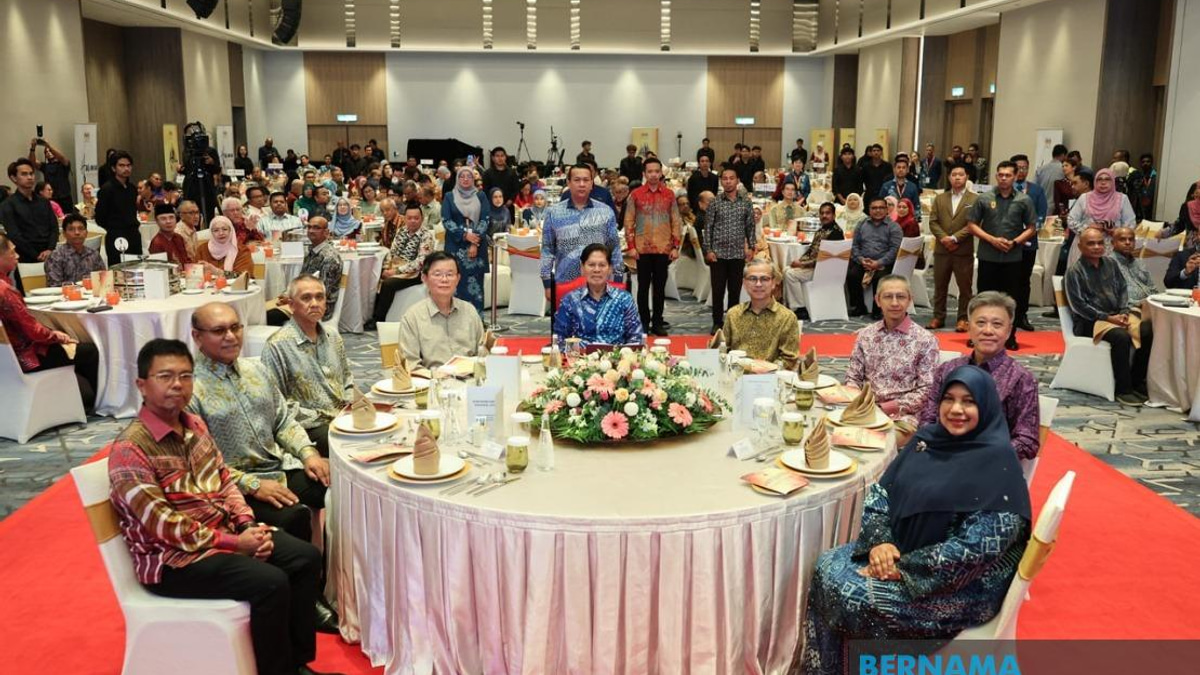
The Penang Future Foundation, a scholarship initiative established by the Penang state government in 2015, has committed roughly RM47.7 million to support 863 Malaysian students pursuing higher education in strategic fields. Now entering its 11th year of operation, the foundation represents a significant investment by Penang authorities in developing a skilled workforce capable of driving the state's economic ambitions across the coming decades.
Chief Minister Chow Kon Yeow explained that the foundation's existence reflects a fundamental strategic reality: Penang's capacity to remain competitive and attractive to international investors depends directly on the availability of qualified professionals. As industries across the state evolve and demand more sophisticated technical expertise, the educational pipeline must expand accordingly. The foundation operates through a hybrid funding model that combines public resources with private sector contributions, creating a partnership between government and industry stakeholders united by mutual interest in regional talent development.
Last year proved particularly productive for the initiative, with 58 additional scholars receiving awards across multiple disciplines. These recipients came from varied socioeconomic and educational backgrounds, demonstrating the foundation's commitment to identifying potential beyond conventional measures of privilege or circumstance. The scholarship recipients concentrated on priority fields including Science, Technology, Engineering, Mathematics (STEM), Accountancy and Finance—sectors where Malaysia faces persistent skill shortages and where Penang specifically anticipates significant growth and employment opportunities.
The foundation's strategic focus on these particular disciplines reflects broader Malaysian economic realities. STEM fields remain undersupplied relative to industry demand, while accountancy and finance professions continue expanding as both multinational corporations and domestic enterprises establish larger operations in the state. By directing resources toward these areas, Penang authorities are essentially investing in fields where scholarship recipients are most likely to secure employment within the region, reducing the brain drain phenomenon that affects many Malaysian states.
Access to the foundation's support extends beyond Penang residents to Malaysian students nationwide, a deliberate policy choice reflecting the state government's confidence in its ability to attract and retain talent from other regions. This approach acknowledges that human capital mobility represents a competitive advantage rather than a threat—scholars educated in Penang often choose to establish their careers there, effectively increasing the state's professional workforce without requiring local recruitment at the secondary education level.
The foundation operates two distinct scholarship streams tailored to different academic achievement levels. The PFF Penang Scholar programme targets high-achieving students with a cumulative grade point average of 3.67 or above, representing roughly the top academic tier of university entrants. This tier emphasises excellence and targets students demonstrating exceptional ability, presumed to offer the greatest potential for professional contribution and leadership roles. Complementing this stream, the PFF Mutiara Scholar programme serves students with CGPA between 3.00 and 3.66, widening the net to capture capable performers who might otherwise lack resources for quality tertiary education.
This tiered approach acknowledges a practical reality: raw academic excellence alone does not guarantee economic outcomes or social contribution. Many students with solid but not exceptional school records develop into highly successful professionals when provided appropriate educational opportunities. The two-track system therefore balances the aspiration to identify and nurture top talent with the recognition that sustainable economic growth requires broadly distributed skill development across a wider population segment.
For the forthcoming year, the foundation has announced its application window for PFF Scholarship 2026, running from July 15 to August 5. This timing places the opportunity directly before many Malaysian students finalizing their higher education decisions for intake later in 2026. The relatively concentrated application window—roughly three weeks—suggests a deliberate strategy to concentrate recruitment efforts and manage administrative processing efficiently, though it may also inadvertently create challenges for students in remote areas or with limited digital access.
Prospective applicants can access detailed information through the foundation's dedicated website at www.penangfuturefoundation.my, where the organisation has committed to periodic announcements regarding scholarship opportunities and requirements. This digital-first communication strategy reflects contemporary expectations but also highlights the divide between connected urban applicants and those in less digitally developed communities. Students from schools with limited career guidance resources may face particular barriers in identifying and pursuing such opportunities, a challenge that remains relevant across Malaysia despite increasing internet penetration.
The foundation's expansion across eleven years represents an evolving commitment to human capital development at the state level. Unlike federal scholarship schemes that must serve all 13 states and three federal territories with finite resources, state-level initiatives can concentrate investment in specific geographic regions where outcomes can be more directly observed and leveraged for local economic development. Penang's approach suggests confidence that educational investment yields measurable returns in terms of business establishment, economic productivity, and entrepreneurial activity concentrated within the state.
For Malaysian students beyond Penang, the foundation's openness to nationwide applications presents a genuine opportunity for talent development, particularly for those from lower-income households or states with limited scholarship provision. However, questions remain regarding how effectively information about such opportunities diffuses through secondary schools across Malaysia, particularly in peninsular and eastern Malaysian regions distant from Penang's administrative and communication centres. The foundation might consider partnership with schools and education agencies nationwide to ensure equitable awareness.
Chow Kon Yeow's emphasis on retaining talent reflects a regional competition dynamic increasingly evident across Southeast Asia. Thailand's Board of Investment, Singapore's efforts to attract regional talent, and Vietnam's education reforms all represent competing claims on the region's ambitious young people. Penang's strategy positions the state not merely as a destination for external talent recruitment but as a quality educator capable of retaining its own scholarship recipients within the local economy—a critical distinction that affects long-term developmental outcomes.