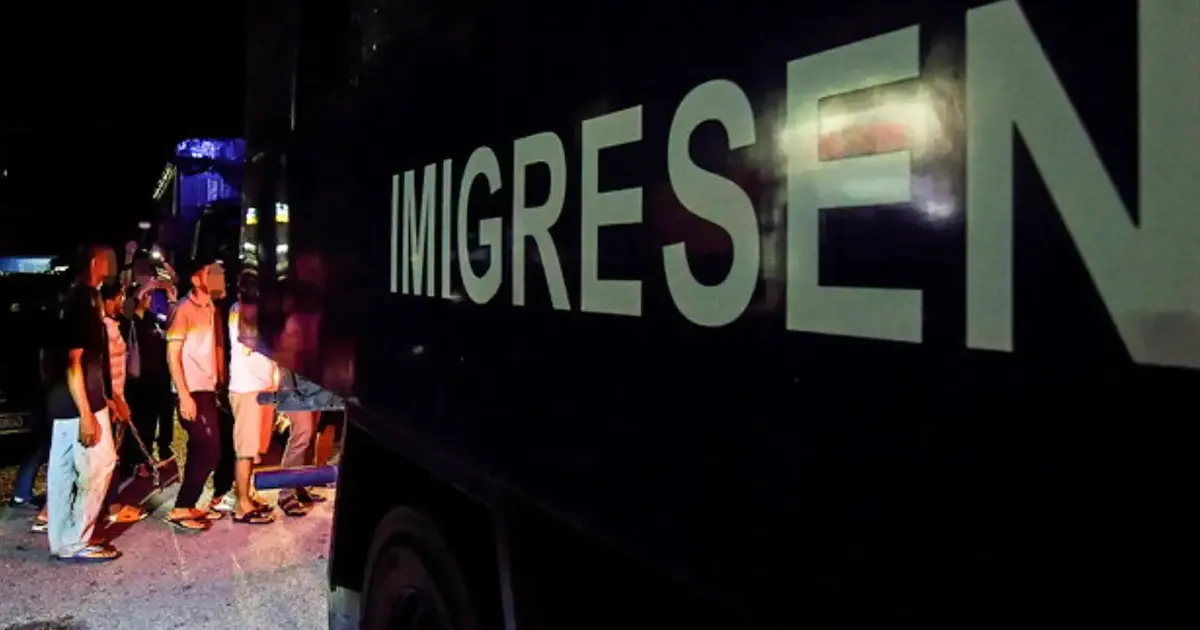
A large-scale immigration enforcement operation targeting undocumented migrants took place during the early hours in Pudu, a central Kuala Lumpur district known for its dense migrant population and commercial activity. The midnight raid resulted in the detention of 186 individuals suspected of immigration violations, marking a significant operation in the authorities' ongoing effort to manage irregular migration within the federal capital.
Immigration officials conducted the coordinated sweep with the primary objective of apprehending foreign nationals believed to be residing in Malaysia without valid documentation or whose permitted stay had expired. Those detained face investigation on suspicion of overstaying their permitted duration and failing to maintain necessary travel documents—violations that constitute serious breaches of Malaysia's immigration legislation.
Pudu, situated in the heart of Kuala Lumpur's commercial district, has historically served as a hub for migrant communities seeking employment and temporary residence. The area's mixture of residential buildings, commercial premises, and its proximity to transportation networks has made it a focal point for both legitimate migrant settlement and irregular migration activities. Immigration enforcement operations targeting the district are not uncommon, reflecting the authorities' prioritisation of immigration compliance in high-density urban areas.
The detention of such a substantial number of individuals in a single operation underscores the scale of irregular migration challenges facing Malaysia's immigration authorities. The federal capital, as the nation's largest economic centre, naturally attracts migrant workers seeking employment opportunities across various sectors including construction, domestic work, manufacturing, and service industries. However, many enter without proper documentation or remain after their visas expire, creating significant compliance and security concerns for authorities.
The operational success reflects coordination between multiple immigration enforcement units and demonstrates the agency's capacity to mobilise resources for large-scale compliance operations. Such raids typically involve weeks of surveillance and intelligence-gathering before execution, suggesting that the Pudu operation was part of a planned enforcement strategy rather than a routine patrol discovery.
For Malaysian readers, these enforcement operations highlight ongoing tension between labour market demands and immigration law enforcement. Southeast Asia's most developed economy relies substantially on migrant workers, yet the formal channels for employment-based migration remain limited compared to actual labour demand across sectors. This mismatch creates conditions where irregular migration persists despite enforcement efforts.
The detained individuals will undergo processing according to Malaysian immigration procedures, which typically include formal investigation, determination of immigration status, and processing for removal or repatriation to their home countries. Those unable to establish legal status face deportation, though the process involves bureaucratic coordination with their respective embassies and home governments. The detention itself creates administrative burden on immigration holding facilities, which have periodically faced overcrowding issues during periods of intensive enforcement activity.
From a regional perspective, Malaysia's migration challenges reflect broader Southeast Asian patterns where labour mobility and irregular migration coexist. The Association of Southeast Asian Nations lacks a coordinated approach to irregular migration management, meaning individual countries like Malaysia must develop bilateral relationships with migrant-source countries to facilitate repatriation and border management. The Pudu raid exemplifies Malaysia's ongoing struggle to balance economic reliance on migrant labour with immigration law enforcement.
The operation also raises questions about migrant worker vulnerability and exploitation patterns in Malaysia. Many undocumented migrants end up working in exploitative conditions with suppressed wages and unsafe environments precisely because their irregular status prevents them from accessing legal protections or reporting workplace abuse. Immigration enforcement operations, while necessary for law compliance, do not address underlying structural factors driving irregular migration.
Authorities have increasingly emphasised intelligence-driven enforcement as opposed to random sweeps, allowing resources to target suspected violation hotspots rather than conducting blanket operations. The concentration of 186 detentions in Pudu suggests immigration intelligence indicated significant undocumented populations in specific locations within the district, pointing toward more sophisticated enforcement methodology.
Looking forward, the Pudu operation reflects Malaysia's commitment to immigration compliance during a period of heightened focus on border security and labour market regulation. Similar operations are likely to continue across Kuala Lumpur and other major urban centres, particularly in districts historically associated with migrant settlement. The effectiveness of such enforcement remains debated among policymakers, who grapple with questions about whether detention and deportation cycles effectively deter irregular migration or simply create cyclical patterns as deported migrants attempt re-entry.
For Malaysian employers and the broader business community, these enforcement actions serve as reminders of legal obligations to verify employee documentation and maintain immigration compliance. The responsibility extends beyond immigrant individuals to employers and residential operators who knowingly hire or house undocumented workers. Going forward, sustained enforcement combined with clearer legal pathways for migrant employment would likely yield more effective immigration management outcomes across Malaysia's urban centres.
%22%2F%3E%3C%2Fpattern%3E%3C%2Fdefs%3E%3Crect%20width%3D%22100%25%22%20height%3D%22100%25%22%20fill%3D%22url(%23ph3e4fag)%22%2F%3E%3Crect%20width%3D%22100%25%22%20height%3D%22100%25%22%20fill%3D%22url(%23ph3e4fap)%22%2F%3E%3Ctext%20x%3D%2250%25%22%20y%3D%2250%25%22%20text-anchor%3D%22middle%22%20dominant-baseline%3D%22central%22%20fill%3D%22rgba(255%2C255%2C255%2C0.95)%22%20font-family%3D%22Georgia%2C%20'Times%20New%20Roman'%2C%20serif%22%20font-weight%3D%22700%22%20font-size%3D%22320%22%20letter-spacing%3D%22-0.02em%22%3ENew%3C%2Ftext%3E%3C%2Fsvg%3E)