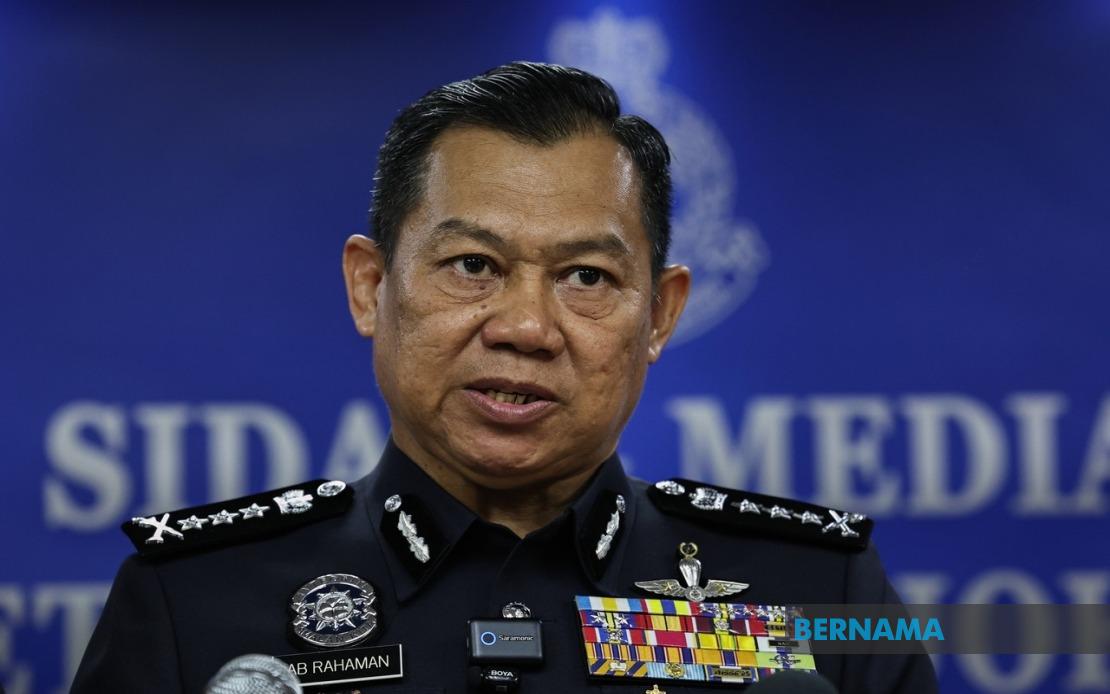
The Royal Malaysia Police (PDRM) has announced a comprehensive security deployment involving nearly 12,000 officers and personnel to oversee the Johor State Election, reflecting the scale of resources required to manage the electoral process across the southern state. The phased operational plan will unfold throughout the election period, with force levels adjusted based on real-time security assessments and the different demands of each election stage, from the nomination period through to polling day and results announcement.
Johor Police Chief Datuk Ab Rahaman Arsad disclosed the deployment strategy during a briefing at the Johor Police Contingent Headquarters, emphasising that the police presence would remain flexible and responsive to evolving circumstances. The five-phase approach allows law enforcement to concentrate resources where they are needed most, whether managing large public gatherings, maintaining order at polling stations, or preventing election-related disturbances. This structured deployment reflects lessons learnt from previous electoral exercises and represents standard practice for major state-level polls in Malaysia.
Beyond the PDRM's core contingent, the police have secured reinforcement from the Internal Security and Public Order Department (KDNKA), drawing personnel from specialised units with experience in crowd control and public safety management. A total of 54 officers and 701 personnel from the General Operations Force, Federal Reserve Unit, PDRM Air Unit, and Marine Police Force will provide supplementary capacity, bringing the total security footprint to well over 12,600 individuals. This multi-layered approach ensures that Johor's diverse geography—encompassing urban centres, industrial zones, and coastal areas—receives appropriate coverage.
The inclusion of the General Operations Force signals that police planners anticipate the need for units trained in tactical responses and rapid deployment capabilities. The Federal Reserve Unit similarly provides a reserve force that can be mobilised quickly to any flashpoint, while the air and marine units enable surveillance and rapid movement across Johor's extensive terrain and waterways. Such comprehensive coordination demonstrates how state elections in Malaysia now routinely trigger coordinated responses across multiple law enforcement agencies.
For Malaysian citizens and election observers, the visible police presence during electoral processes serves multiple purposes beyond basic law enforcement. It reassures voters that the election environment is secure, deters potential troublemakers or organised disruption, and provides a professional framework within which candidates and political parties can conduct their campaigns. The scale of deployment also signals that authorities take the maintenance of electoral integrity seriously, though observers from civil society organisations often scrutinise whether such deployments remain impartial across competing political interests.
Johor, as Malaysia's southernmost peninsula state and home to significant economic activity centred on Johor Bahru, presents distinct security challenges compared to other regions. The state's position near the Johor Strait border with Singapore, coupled with its role as a commercial and transportation hub, means that electoral operations must account for high population mobility and the constant flow of cross-border traffic. Police deployment calculations therefore incorporate not only the resident population but also the transient workforce and visitors present during the election period.
The announcement of detailed security arrangements weeks ahead of the election serves an important public communication function, signalling that planning is underway and that authorities are taking the electoral process seriously. It also provides time for political parties and candidates to factor police coordination points into their campaign schedules, reducing the likelihood of unexpected confrontations or logistical conflicts during the actual election period. In the Malaysian context, such advance notification has become standard practice and is generally welcomed by election stakeholders.
From a regional perspective, Malaysia's approach to electoral security—combining substantial but distributed police presence with specialised unit support—represents a middle path between minimal police visibility and overt militarisation of the electoral environment. Neighbouring countries in Southeast Asia employ varying models, from light-touch approaches to heavily militarised polls, and Malaysia's methodology reflects its particular political and social context. The involvement of multiple police units also demonstrates institutional capacity that smaller regional nations lack.
The five-phase deployment structure merits attention because it recognises that different stages of an election pose different security demands. Early phases might focus on candidate nomination and campaign preparation, requiring police liaison with party organisers and monitoring of potential flash points. Mid-phase operations would intensify around campaign events and public gatherings. Later phases concentrate on polling day operations—securing voting centres, managing voter flows, and preventing intimidation. Post-election phases address potential disputes over results and any associated public order challenges that may emerge.
For businesses operating in Johor, particularly those in the Johor Bahru metropolitan area, the police deployment notice allows for contingency planning around potential traffic disruptions and the need to secure commercial premises during high-activity periods. The state's role as a major logistics hub means that electoral security measures can have flow-on effects for trade and commerce, making advance notification valuable for economic operators.
The deployment announcement also underscores the financial and organisational commitment that Malaysian electoral processes demand at the state level. Sustaining nearly 12,000 officers in active duty across five phases, combined with allowances, logistics, and coordination costs, represents a significant government expenditure. This investment reflects the political importance of state elections in Malaysia's federal system and the commitment to ensuring that electoral processes function with professional oversight and security.
Moving forward, the success of this deployment will be measured not only by the absence of security incidents but also by whether voters felt they could cast their ballots freely and that the electoral process was conducted fairly under professional police stewardship. The effectiveness of the phased approach will likely inform planning for future state elections, creating a precedent that other state electoral commissions may reference when determining their own security frameworks.

%22%2F%3E%3C%2Fpattern%3E%3C%2Fdefs%3E%3Crect%20width%3D%22100%25%22%20height%3D%22100%25%22%20fill%3D%22url(%23ph21o2sg)%22%2F%3E%3Crect%20width%3D%22100%25%22%20height%3D%22100%25%22%20fill%3D%22url(%23ph21o2sp)%22%2F%3E%3Ctext%20x%3D%2250%25%22%20y%3D%2250%25%22%20text-anchor%3D%22middle%22%20dominant-baseline%3D%22central%22%20fill%3D%22rgba(255%2C255%2C255%2C0.95)%22%20font-family%3D%22Georgia%2C%20'Times%20New%20Roman'%2C%20serif%22%20font-weight%3D%22700%22%20font-size%3D%22170%22%20letter-spacing%3D%22-0.02em%22%3EGabungan%3C%2Ftext%3E%3C%2Fsvg%3E)