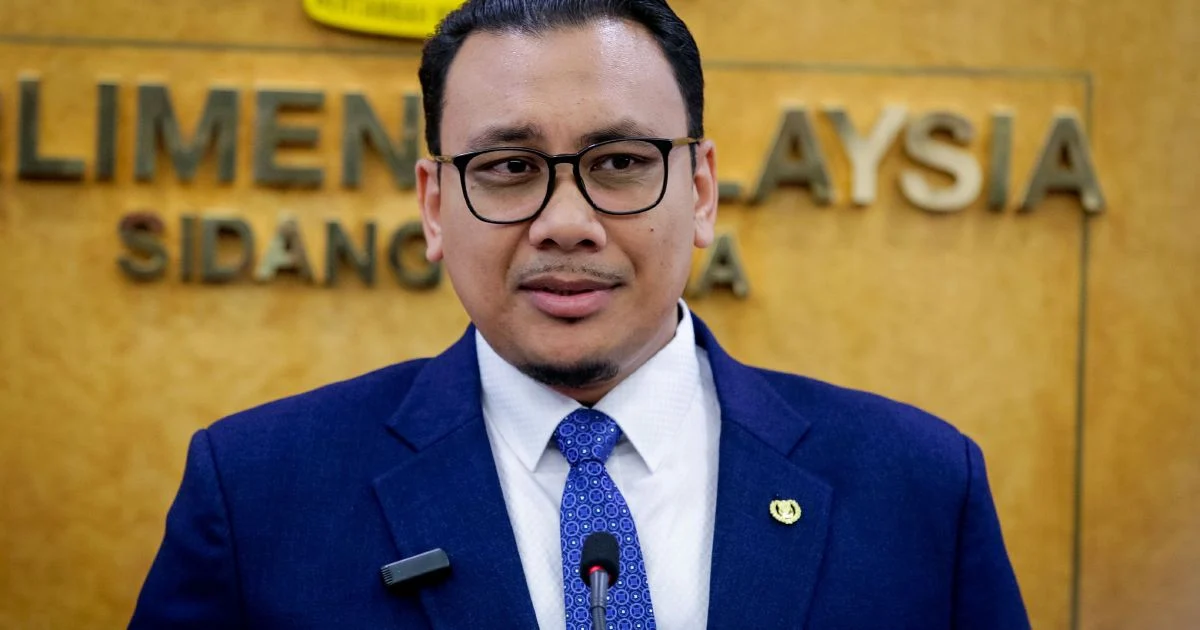
The youth wing chief of PAS has moved to pursue legal remedies after instructing his legal representatives to take action in response to a social media post that he contends contains defamatory material against his family. Afnan Hamimi Taib Azamudden's decision to escalate the matter through the courts comes after a Facebook post attributed to a prominent figure within the Bersatu party allegedly contained language designed to demean his father and immediate family members.
The incident underscores growing friction within Malaysia's coalition government, where party leaders are increasingly resorting to personal attacks and inflammatory social media commentary to settle political disputes. What might have been handled through back-channel negotiations in previous administrations has evolved into public confrontations aired across digital platforms, signalling a shift in the norms governing inter-party relations among Putrajaya's governing alliance members.
Such developments carry implications beyond immediate personal grievances between individual politicians. The willingness of party officials to engage in family-focused attacks reflects deeper ideological and strategic tensions within the coalition, where PAS and Bersatu maintain fundamentally different approaches to governance, religious affairs, and constitutional matters. These fundamental divisions have repeatedly surfaced in recent months, creating an unstable governing environment that affects Malaysia's policy direction.
For Malaysian observers accustomed to more restrained political discourse, the escalation to legal action signals that conventional diplomatic channels within the coalition may be fracturing. When political disagreements transition from parliamentary debate or closed-door reconciliation into courtroom battles fought in the public eye, the implications extend beyond the immediate parties involved. The broader coalition's cohesion becomes questionable, raising concerns about the government's capacity to function effectively on major legislative and policy initiatives.
The role of social media in amplifying political conflict deserves particular attention. Facebook and other platforms have democratized political communication in Malaysia, allowing grassroots supporters and mid-level politicians to broadcast messages without filtering from party machinery or media editors. This direct-to-public approach has empowered individual voices but has simultaneously created an environment where unguarded or deliberately provocative statements can instantly damage reputations and inflame tensions that might otherwise have remained contained.
Bersatu's organizational standing has been complicated in recent years, with the party experiencing significant internal divisions and leadership disputes that have occasionally spilled into public view. These internal challenges sometimes manifest as aggressive posturing toward coalition partners, potentially reflecting efforts by competing factions within the party to establish dominance or appeal to particular constituencies. The Facebook post in question may represent such internal positioning rather than official party stance, though the distinction offers little comfort to those targeted by the allegations.
PAS, as the largest Islamist party in Malaysia and a key coalition component, maintains its own complex relationship with Bersatu. The two parties share government but compete for influence within the coalition structure and pursue divergent agendas on several crucial matters. The personal dispute involving Afnan Hamimi Taib Azamudden thus carries factional implications that extend beyond the individuals directly involved, potentially impacting broader coalition dynamics and resource allocation.
Legal action represents a formal, documented escalation that differs from social media exchanges or rhetorical salvos. By involving the courts, Afnan Hamimi Taib Azamudden has transformed the matter into a matter of record that will require evidence presentation, witness testimony, and judicial determination. This approach may provide personal vindication if successful, but simultaneously risks further inflaming coalition relationships and creating additional grievances that complicate future cooperation.
The timing of such disputes matters considerably within Malaysia's political calendar. Coalition stability becomes more critical during sensitive legislative periods when crucial bills require passage or when economic challenges demand unified government response. Internal feuds playing out through legal channels inevitably distract leadership attention and generate negative publicity that undermines public confidence in institutional governance.
Regional observers may view such internal disputes as evidence of weakness within Malaysia's government. Southeast Asian capitals monitoring Malaysian political stability recognize that a coalition visibly torn by personal rivalries appears less capable of managing regional challenges or maintaining consistent foreign policy positions. The perception of governmental discord carries tangible consequences for diplomatic relationships and economic confidence.
The broader question concerning Malaysian political observers involves institutional mechanisms for managing inter-party disputes within coalitions. Unlike mature party systems with established protocols for internal conflict resolution, Malaysia's coalition framework relies heavily on personal relationships between top leadership and informal negotiation channels. When those personal relationships deteriorate, few institutional safeguards exist to prevent public escalation.
Moving forward, the coalition will need to address not only the immediate dispute but also the underlying pattern of increasingly contentious interactions between member parties. Without structural reform to coalition governance mechanisms, similar incidents appear likely to recur, progressively weakening governmental effectiveness and public trust in democratic institutions.

%22%2F%3E%3C%2Fpattern%3E%3C%2Fdefs%3E%3Crect%20width%3D%22100%25%22%20height%3D%22100%25%22%20fill%3D%22url(%23ph21o2sg)%22%2F%3E%3Crect%20width%3D%22100%25%22%20height%3D%22100%25%22%20fill%3D%22url(%23ph21o2sp)%22%2F%3E%3Ctext%20x%3D%2250%25%22%20y%3D%2250%25%22%20text-anchor%3D%22middle%22%20dominant-baseline%3D%22central%22%20fill%3D%22rgba(255%2C255%2C255%2C0.95)%22%20font-family%3D%22Georgia%2C%20'Times%20New%20Roman'%2C%20serif%22%20font-weight%3D%22700%22%20font-size%3D%22170%22%20letter-spacing%3D%22-0.02em%22%3EGabungan%3C%2Ftext%3E%3C%2Fsvg%3E)