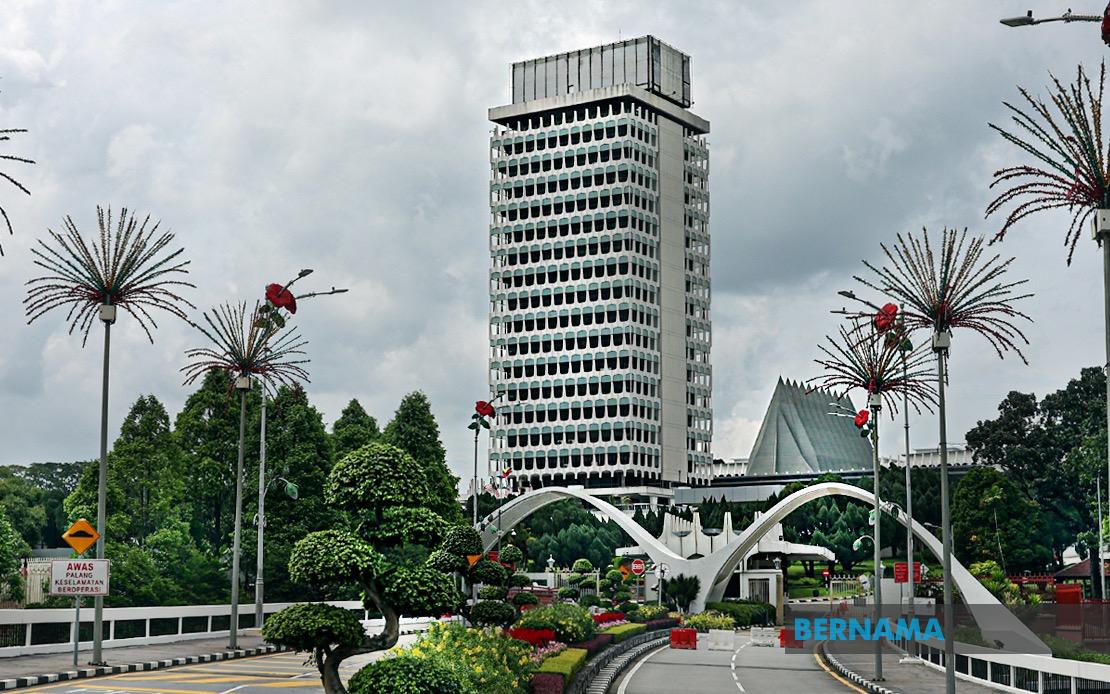
The Dewan Rakyat is zeroing in on two pressing governance and economic matters as it begins its 16-day sitting through mid-July: proposed reforms to strengthen the Human Rights Commission's financial autonomy and the troubling gap between reported inflation and what Malaysian families actually experience at the supermarket checkout. These concerns, raised through parliamentary questions scheduled for the session's opening days, highlight mounting frustrations with how adequately current economic metrics capture ordinary Malaysians' financial stress.
Teresa Kok Suh Sim, the Seputeh representative from Pakatan Harapan, will probe whether the government intends to overhaul the Human Rights Commission of Malaysia Act 1999 to enable SUHAKAM to diversify its revenue streams through professional training and educational programmes. Her question strikes at a fundamental structural weakness: the commission's near-total reliance on annual government budgetary allocations, which can fluctuate based on political priorities and fiscal constraints. By allowing SUHAKAM to generate its own income through fee-paying courses and specialist training, the body could theoretically operate with greater independence and stability, insulating its human rights work from budget cuts or political pressure.
This proposed shift reflects international best practice among independent institutions mandated to protect citizen rights. Many human rights commissions in other democracies generate supplementary revenue through research services, educational programmes, and specialized training that both fund operations and establish the organization as a knowledge centre. For Malaysia, where civil society scrutiny of governance has intensified, strengthening SUHAKAM's financial footing could enhance its credibility and reduce perceptions of government influence over its investigative priorities.
Equally significant is the question from Perikatan Nasional's Mohd Syahir Che Sulaiman to the Economy Minister regarding the persistent mismatch between headline inflation data and actual living costs experienced by households. This divergence has become a flashpoint in Malaysia's economic debate, with many citizens observing that their expenses—especially food, transport, and utilities—have risen far more sharply than official statistics suggest. The formal inflation rate, typically measured through a basket of goods and services, may not adequately reflect how price increases cluster in essential categories that dominate household budgets.
Che Sulaiman's inquiry probes whether government economists have formally assessed this gap and what policy indicators are being deployed to ensure that economic growth statistics genuinely translate into improved purchasing power for ordinary families. This distinction matters enormously: GDP growth and low headline inflation look positive on paper, but if households feel financially squeezed, public confidence in economic management erodes regardless of macro-level data. For Malaysia, where income inequality remains substantial and lower-income groups spend a higher proportion of earnings on necessities vulnerable to price shocks, the divergence between official and perceived inflation carries both political and social dimensions.
Other parliamentary questions reveal additional governance preoccupations. V. Ganabatirau from Klang will ask the Prime Minister about the progress of a comprehensive review into land transfers and alterations affecting flood retention ponds, particularly in Kuala Lumpur. This issue has assumed urgency following severe monsoon flooding episodes that exposed how inadequate water retention infrastructure contributes to urban inundation, sometimes linked to development pressures that encroach upon critical environmental buffers. Understanding the scope and pace of this review signals government seriousness about integrating climate resilience into urban planning.
Meanwhile, Kubang Pasu's Ku Abd Rahman Ku Ismail will push the Higher Education Minister for concrete data on the current ratio of STEM versus non-STEM enrolments in Malaysian universities, alongside specific numerical targets for training engineers across disciplines. This question underscores persistent national concerns about whether the education system is adequately preparing the workforce for technological industries, or whether graduates are concentrated in fields with oversupply. For a nation targeting advanced manufacturing and technology-driven growth, the balance between theoretical science training and market-relevant engineering expertise remains pivotal.
The session will also see tabling of the Cybercrime Bill 2026 for its second reading, marking a significant advancement in Malaysia's approach to digital security legislation. This bill carries implications for data protection, online fraud prevention, and the state's capacity to investigate complex technology-enabled crimes—matters of escalating importance as Malaysia's digital economy expands and cybersecurity threats multiply.
The confluence of these agenda items—institutional independence for rights bodies, economic metric accuracy, infrastructure resilience, workforce alignment, and digital security—reflects Parliament's engagement with multifaceted national challenges. For Malaysian observers, the quality of responses from government ministers will indicate whether the administration grasps the interconnected nature of these pressures and is prepared with coherent, evidence-based solutions rather than rhetorical assurances.

