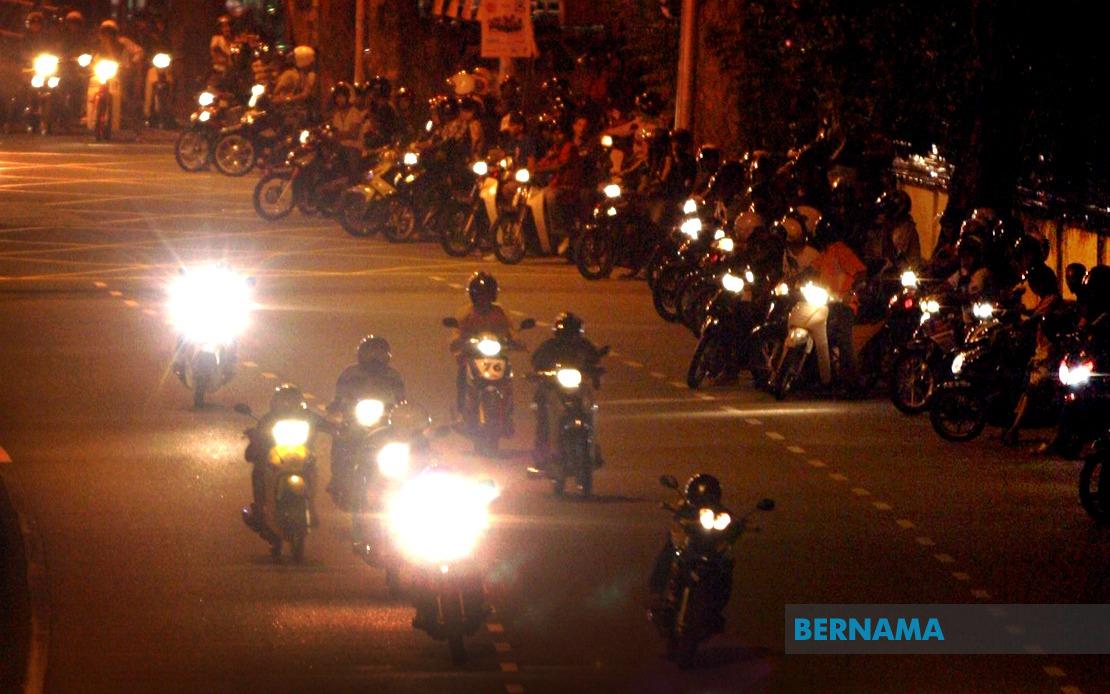
Parliament has signalled a hardline approach to curtailing illegal racing across Malaysia, with multiple legislators putting forward a comprehensive package of deterrents and preventive measures during debate on the Road Transport (Amendment) Act 2026 in the Dewan Rakyat. The legislative push reflects growing concern about the scale and severity of street racing incidents, particularly following fatal crashes involving modified vehicles. The proposals, tabled by lawmakers from both government and opposition benches, range from enhanced criminal penalties to community-based interventions designed to reshape offender behaviour and prevent future participation in dangerous illegal activities.
One of the most substantial proposals to emerge from the parliamentary discussion is the introduction of permanent revocation of driving licences as a mandatory penalty for illegal street racers. Datuk Willie Mongin from Puncak Borneo suggested that the minimum punishment should escalate to RM300,000 in fines coupled with a five-year custodial sentence, with permanent licence withdrawal forming an additional and irreversible consequence. This represents a fundamental shift in enforcement philosophy, moving beyond financial penalties toward creating lasting barriers that prevent repeat offending. The proposal underscores frustration among legislators that current provisions may insufficient to deter entrenched offenders or adequately reflect the public safety risks created by reckless racing behaviour on roads shared with ordinary motorists and families.
The Jerantut MP Khairil Nizam Khirudin has advocated for a complementary approach centred on rehabilitation rather than punishment alone. He proposed establishing a specialised programme combining disciplinary training with compulsory community service, designed to educate offenders about the consequences of their actions and foster behavioural change. This reflects recognition that incarceration alone may not address underlying attitudes or the social factors driving participation in racing subcultures. The rehabilitation pathway could potentially reduce recidivism by channelling offenders' energy and mechanical interests into constructive community contributions, while simultaneously building public awareness about traffic safety risks.
Parliamentarians have also flagged the need to disrupt the supply chain enabling illegal racing activities. Khairil Nizam suggested that the Ministry of Transport collaborate with the Ministry of Domestic Trade and Cost of Living to leverage Section 66 of the Road Transport Act 1987 for developing new regulatory frameworks targeting workshops engaged in illegal motorcycle modifications. By sanctioning modification facilities that cater to racing clientele, authorities could effectively eliminate a critical enabler of street racing culture. Such enforcement would require sustained coordination between transport and trade regulators, as well as intelligence gathering to identify workshops operating in the grey zone between legitimate motorcycle servicing and equipment customisation for racing purposes.
A particularly novel proposal concerns holding parents legally accountable for their children's participation in illegal racing activities. This approach aims to reinvigorate family-level accountability and parental oversight, recognising that teenage and young adult racers often operate within family units. By creating legal consequences for parents of offenders, legislators hope to incentivise closer supervision and intervention within households, potentially disrupting the social environments that normalise dangerous racing behaviour. The proposal touches on broader questions about shared responsibility for youth behaviour and family capacity to exercise preventive discipline.
The scope of enforcement attention has expanded beyond motorcycles to encompass all high-powered vehicles following a tragic incident in Simpang Renggam, Johor on June 1 that claimed multiple lives and involved luxury cars. Wan Razali Wan Nor argued persuasively that Section 42A provisions should apply uniformly across all vehicle categories, not merely motorcycles, since expensive sports cars and modified sedans pose equally severe or even greater risks when driven recklessly at high speeds. This tragic crash demonstrated that illegal racing hazards extend well beyond two-wheeler communities and affect road safety across all demographics and socioeconomic groups, necessitating comprehensive legislative coverage rather than targeted restrictions.
Another punitive measure gaining traction among MPs is the confiscation and destruction of excessively modified motorcycles used in illegal racing activities. Shaharizukirnain Abd Kadir proposed that vehicles configured for street racing purposes should face mandatory disposal rather than being returned to owners or seized for vehicle auctions. Destroying purpose-built racing machines removes tangible evidence of engineering modifications while simultaneously eliminating the physical assets that enable future illegal activities by the same individuals. This approach treats modified racing motorcycles as inherently dangerous public nuisances rather than recoverable property, though implementation would require careful legal drafting to distinguish between legitimate modifications and those specifically intended for racing.
Parliamentary attention has also extended to related road safety concerns involving driving under the influence of alcohol and drugs. Jeli MP Zahari Kechik recommended strengthening Sections 44 and 45A to 45C of the Road Transport Act 1987 by establishing compensation mechanisms ensuring that impaired drivers bear full financial responsibility for victim medical costs and ongoing welfare support. This victim-centred approach reframes drink-and-drug driving as creating financial liabilities beyond criminal penalties, with compensation serving both as restitution for injured parties and as an additional deterrent for potential offenders contemplating impaired driving. Such mechanisms would require coordination with health and social welfare systems to calculate appropriate compensation levels and administer payments reliably.
The breadth of proposals advanced during parliamentary debate reflects mounting concern that existing enforcement tools and penalties inadequately address illegal racing's public health dimensions. Twenty-four MPs from government and opposition parties participated in the debate, indicating cross-party consensus that legislative action is both necessary and urgent. The diversity of proposed measures—spanning criminal penalties, rehabilitation, supply-chain enforcement, vehicle destruction, family accountability, and victim compensation—suggests recognition that single-faceted approaches have proven insufficient. Malaysian legislators are crafting a multi-layered enforcement strategy addressing offenders, enablers, victims, and underlying social conditions simultaneously.
The proposals carry implications extending beyond Malaysia's borders, as regional neighbours including Singapore, Thailand, and Indonesia grapple with similar illegal racing phenomena. Parliamentary deliberation and legislative innovation in Malaysia may influence enforcement approaches elsewhere in Southeast Asia, particularly regarding victim compensation mechanisms and rehabilitation programming. Furthermore, the emphasis on targeting modification workshops reflects regional organised crime concerns, since some modification networks operate across national boundaries and serve markets throughout the region. Malaysia's legislative approach may establish benchmarks for automotive regulation and street racing deterrence applicable across the broader Southeast Asian regulatory landscape.
Implementation of these measures will present considerable practical challenges for enforcement agencies. Permanently revoking driving licences creates administrative burdens around record-keeping and enforcement at vehicle registration points, while rehabilitation programmes require trained personnel and institutional capacity that may require substantial investment. Workshop surveillance and modification regulations demand technical expertise and sustained inter-agency coordination. Confiscating and destroying vehicles raises constitutional questions about property rights, while victim compensation systems require actuarial and administrative infrastructure. These implementation complexities suggest that parliamentary passage of legislative amendments must be accompanied by substantial budgetary allocations and institutional development supporting enforcement agencies tasked with operationalising these provisions.
The parliamentary debate also highlighted evolving understanding of illegal racing as a multifaceted social problem rather than a simple law-and-order issue. Recognition that family structures, mechanical subcultures, vehicle supply chains, and substance abuse interconnect with street racing behaviour indicates sophisticated policy thinking. However, translating this comprehensive legislative framework into coordinated enforcement action will require sustained political commitment and resource allocation extending well beyond the legislative session. The effectiveness of these proposed measures ultimately depends upon implementation rigour, inter-agency cooperation quality, and whether enforcement agencies receive adequate funding and training to execute these complex new responsibilities.