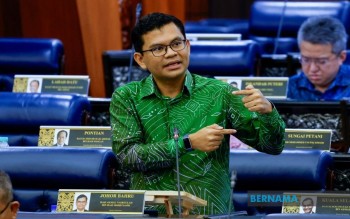
The government's Small and Medium Enterprise Stabilisation Relief Facility continues to offer substantial financial lifelines to struggling businesses, with more than RM4 billion of its RM5 billion allocation still unclaimed. Economy Minister Akmal Nasrullah Mohd Nasir disclosed the figure during parliamentary questioning this week, underscoring the facility's role in helping Malaysia's MSME sector navigate persistent cash flow pressures and operational challenges stemming from global supply disruptions and broader economic uncertainty.
As of June 18, 2026, the BNM-administered facility has approved financing exceeding RM700 million across more than 1,000 enterprises, demonstrating meaningful uptake but also indicating significant headroom for additional support. The programme's continued availability is particularly relevant given Malaysia's position as a trade-dependent economy vulnerable to international supply shocks and macroeconomic volatility. For MSMEs already stretched by inventory management and working capital needs, these funds represent a critical buffer against business closure or forced downsizing.
The relief facility operates as part of a broader governmental response to combat rising unemployment and business contractions that have accelerated through 2025 and into 2026. Akmal framed the facility within a multi-layered intervention strategy designed to stabilise both the labour market and the commercial ecosystem upon which many households depend for income. The government's approach acknowledges that supporting business continuity is inseparable from protecting employment, a recognition increasingly important as companies across manufacturing, retail, hospitality and services sectors report margin compression and reduced customer demand.
Beyond the direct financing mechanism, the government has mobilised an additional RM5 billion in financing guarantees through Syarikat Jaminan Pembiayaan Perniagaan Bhd, effectively doubling the available capital backbone for MSME lending across the financial system. This guarantee structure reduces lender risk and theoretically widens access for smaller enterprises with limited collateral or track record. Commercial banks and Islamic financial institutions have committed to processing applications within seven working days, an undertaking designed to accelerate disbursement and reduce the administrative friction that often discourages applicants, particularly those lacking in-house financial expertise.
To access these funds, business owners are instructed to engage directly with their existing financial institutions, a distribution model that leverages existing customer relationships and underwriting infrastructure. For many Malaysian SMEs, however, navigating bank requirements and documentation can remain daunting, particularly for microbusinesses operating in informal or semi-formal capacities. The speed-of-processing commitment suggests the government has pressured financial institutions to streamline approvals, though implementation across different banks and products will likely vary.
The financing initiatives sit within the broader Progressive Acceleration for Capability and Employability (PACE) Economic Resilience Package, a RM710 million comprehensive intervention framework spanning social safety nets, workforce development and sectoral support. This holistic approach recognises that economic resilience requires simultaneous attention to employment security, skills development and business viability. By coordinating interventions across multiple agencies and funding sources, the government aims to create a ecosystem where jobs are protected, workers gain new capabilities and businesses retain operational stability even as external conditions remain volatile.
Within PACE, over RM580 million has been channelled through the Employees Provident Fund Organisation (PERKESO) to strengthen the Employment Insurance System, providing income support to retrenched workers. An additional RM100 million through the Human Resources Development Corporation supports retraining and job placement, complemented by the MYFutureJobs platform to improve labour market matching. These elements acknowledge that rapid reskilling is essential when economic transitions displace workers from declining sectors toward emerging opportunities, a particularly acute challenge in Malaysia where manufacturing employment has contracted and service sector roles demand different competencies.
Supporting gig and informal workers represents another strategic priority, with RM20 million allocated through the Skills Education Fund Corporation for gig worker training and RM10 million through TalentCorp for industrial skills development among SMEs and startups. This reflects growing recognition that Malaysia's economy increasingly relies on non-traditional employment arrangements and early-stage enterprises that lack access to conventional corporate training. Building capabilities among this fragmented workforce requires targeted, accessible interventions that address their particular constraints and learning needs.
The government is simultaneously monitoring supply and pricing dynamics across essential commodities and critical raw materials serving manufacturing, food production, agriculture and services sectors. This surveillance function aims to detect bottlenecks, price volatility and speculative behaviour that could trigger cascading costs through supply chains and ultimately inflate consumer prices or squeeze business margins further. Early warning enables policy responses ranging from import facilitation to strategic stockpiling to price controls on essential items, though such interventions carry their own economic tradeoffs and implementation challenges.
Akmal signalled that the government intends to provide parliament with a detailed ministerial statement on the global supply crisis during the coming parliamentary session, subject to legislative approval for debate. This commitment suggests the situation remains fluid and warrants formal government exposition rather than piecemeal responses. For Malaysian businesses and investors, such clarity matters considerably when assessing whether supply constraints represent temporary cyclical disruptions or structural recalibrations requiring lasting operational adaptation.
The scale of remaining MSME SRF funding suggests either lower-than-expected demand uptake or significant latent demand that has yet to materialise through formal channels. Understanding the gap between available allocation and claimed funds requires investigation into whether awareness among eligible MSMEs is adequate, whether application processes present barriers, or whether businesses remain hesitant to increase debt despite relief facility terms. For policymakers seeking to optimise emergency support programmes, distinguishing between these possibilities determines whether promotional efforts or procedural reforms should be prioritised.
For Malaysian SMEs currently evaluating their resilience options, the combined availability of direct financing, government-guaranteed loans, employment support and skills training provides a substantial policy infrastructure intended to absorb economic shocks without forcing immediate business failure or mass redundancies. However, financial assistance alone cannot address all structural challenges facing the MSME sector, particularly those related to digitisation, supply chain modernisation and capability gaps. The breadth of government intervention suggests awareness of these limitations but also raises questions about coordination effectiveness and whether support measures address root causes or merely cushion symptoms of deeper competitive and structural vulnerabilities.

