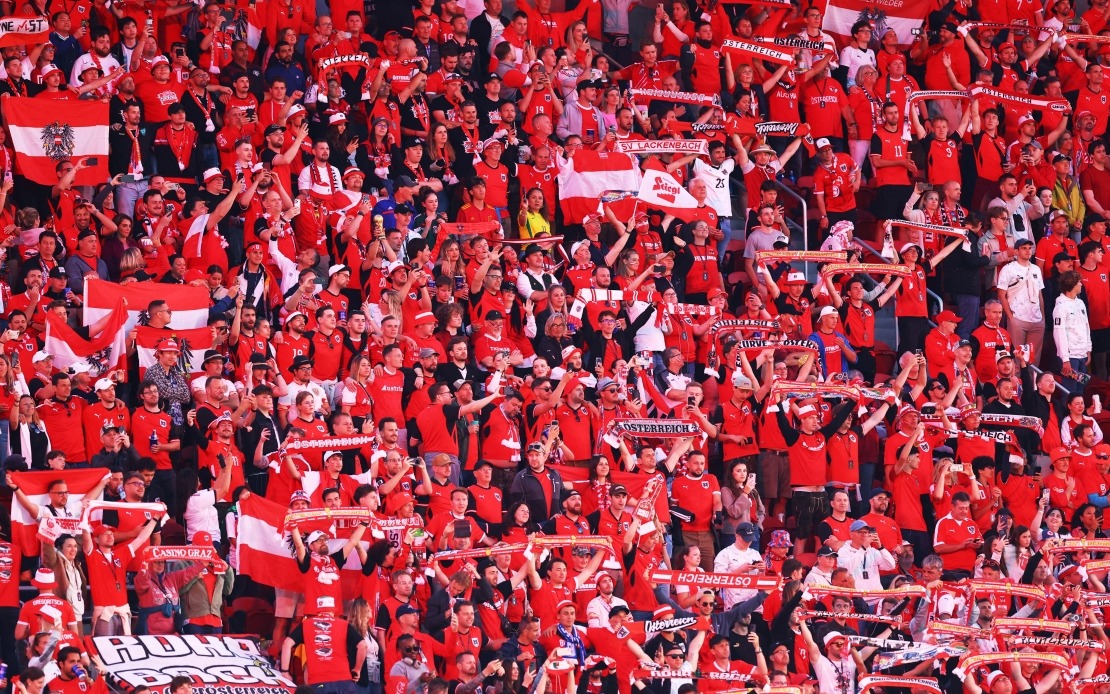
The FIFA World Cup in North America has drawn impressive attendance numbers in its opening fortnight, with the governing body reporting that more than one million supporters had passed through stadium turnstiles by the completion of the sixteenth fixture. The figure of 1,028,429 attendees underscores the tournament's capacity to mobilise football fans across the host region, and represents a validation of the decision to stage the expanded 48-team competition on the continent. For Malaysian fans following the tournament, these attendance metrics reflect broader confidence in the World Cup's viability as a commercial and sporting enterprise, particularly as the tournament seeks to establish itself as a major draw in a traditionally baseball-and-basketball-focused market.
FIFA has emphasised the strength of these numbers by highlighting that venues operated at 99.34 per cent capacity across the opening phase of matches. This metric stands in contrast to widespread concerns raised during the ticket sales period, when industry observers questioned whether pricing structures might deter casual supporters or create barriers to attendance. The standardisation of capacity figures across multiple stadiums and different fixture calendars demonstrates a deliberate effort by tournament organisers to communicate a narrative of sustained enthusiasm and broad public engagement with the competition.
Yet the opening rounds have not been entirely free from complications. Highly visible instances of empty seating were evident during specific fixtures that captured media attention, most notably when South Korea faced the Czech Republic in Guadalajara and during Qatar's encounter with Switzerland in California's Bay Area. These images circulated widely and prompted renewed scrutiny of FIFA's pricing strategy and the effectiveness of its distribution channels. The contrast between localised poor attendance and overall impressive figures suggests that demand varies significantly depending on team matchups, geographic location, and possibly the draw of local interest in participating nations.
FIFA president Gianni Infantino sought to amplify the positive narrative by staging a symbolic encounter with the tournament's millionth recorded attendee, Aaron Bren, subsequently sharing the moment via Instagram to his substantial following. This calculated public relations moment aimed to humanise the aggregate statistics and position the championship as a celebration of collective fandom. Infantino's accompanying statement expressed gratitude to supporters and characterised the tournament as embodying FIFA's vision of an inclusive world cup, language that frames the competition within the organisation's broader strategic objectives regarding global accessibility and participation.
Beyond attendance figures, however, emerging concerns about crowd management and supporter safety have begun to complicate the tournament narrative. Football Supporters Europe, an umbrella organisation representing fan interests across the continent, has raised alarm over what it characterises as insufficient segregation of supporter groups at matches. Ronan Evain, the organisation's executive director, articulated concerns to BBC Sport that the absence of traditional crowd partitioning represents a departure from established protocols for major tournaments and creates genuine risks of inter-group confrontation.
Evain's critique focuses particularly on FIFA's ticketing mechanisms and secondary market operations. The aggressive marketing of tickets for resale, he argues, has created an environment in which the federation lacks comprehensive knowledge regarding ticket distribution and end-user identity. This opacity compounds the challenge of managing supporter populations and maintaining the spatial separation that professional event management typically requires. The concern reflects a tension between FIFA's commercial objectives, which benefit from maximising secondary market activity and resale opportunities, and crowd safety considerations that traditionally demand stricter control over ticket allocation and access.
For Southeast Asian observers, these dynamics carry particular relevance given the region's experience with crowd-related incidents at major sporting events. Malaysia and its neighbours have witnessed the consequences of inadequate crowd management and insufficient segregation during high-stakes football matches, incidents that have occasionally resulted in tragedy. The warnings emanating from European supporter organisations therefore resonate with hard-won lessons about the necessity of prioritising safety protocols over commercial convenience.
FIFA has countered criticism by highlighting its allocation system for core supporter groups, specifically the participant member association framework that rings-fences ticket access for each nation's most dedicated followers. Under this arrangement, established supporter clubs and recognised fan organisations from competing countries receive dedicated ticket allocations within designated stadium zones, thereby ensuring that at least a portion of attendance comprises organised, pre-vetted groups. The federation maintains that this mechanism, combined with overall attendance strength, demonstrates its commitment to both accessibility and appropriate crowd management.
The opening phase of the tournament therefore presents a complex picture for stakeholders monitoring tournament performance. Whilst attendance statistics support FIFA's narrative of successful fan engagement and commercial viability, the simultaneous emergence of safety and management concerns suggests that the quantitative success masks qualitative challenges. For Malaysian and regional commentators, the challenge lies in balancing recognition of the tournament's undeniable drawing power with appropriate scepticism regarding whether all operational systems are functioning optimally. As the competition progresses through its group stages and toward knockout rounds, both the attendance trajectory and the effectiveness of crowd management systems will merit continued scrutiny.

%22%2F%3E%3C%2Fpattern%3E%3C%2Fdefs%3E%3Crect%20width%3D%22100%25%22%20height%3D%22100%25%22%20fill%3D%22url(%23ph21o2sg)%22%2F%3E%3Crect%20width%3D%22100%25%22%20height%3D%22100%25%22%20fill%3D%22url(%23ph21o2sp)%22%2F%3E%3Ctext%20x%3D%2250%25%22%20y%3D%2250%25%22%20text-anchor%3D%22middle%22%20dominant-baseline%3D%22central%22%20fill%3D%22rgba(255%2C255%2C255%2C0.95)%22%20font-family%3D%22Georgia%2C%20'Times%20New%20Roman'%2C%20serif%22%20font-weight%3D%22700%22%20font-size%3D%22170%22%20letter-spacing%3D%22-0.02em%22%3EGabungan%3C%2Ftext%3E%3C%2Fsvg%3E)