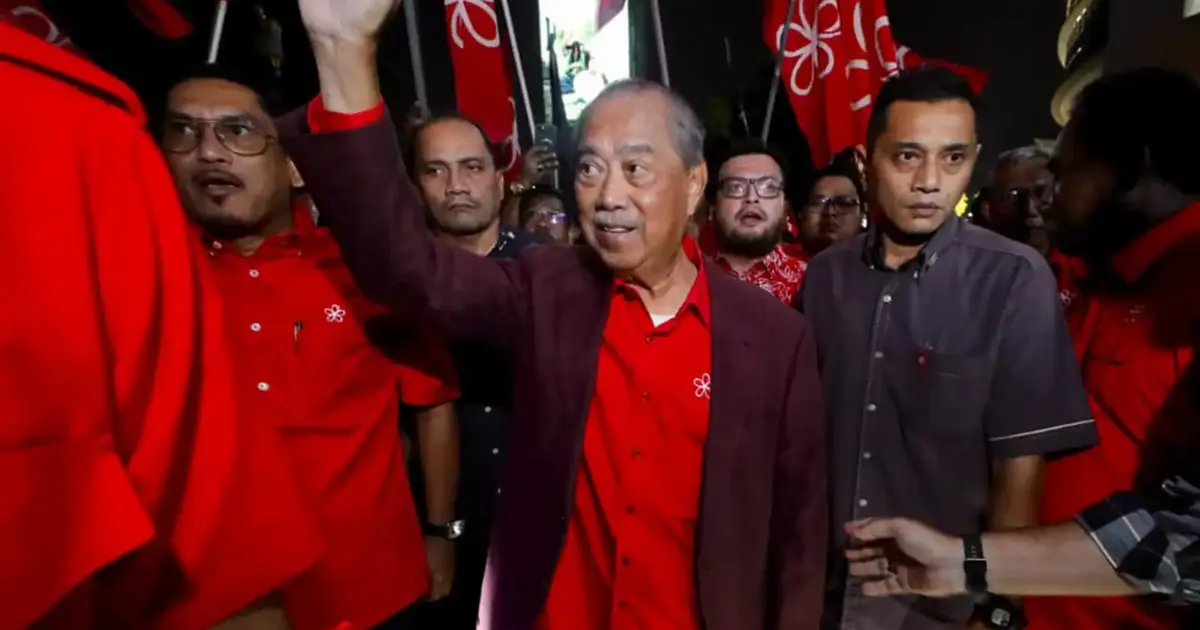
More than 200 supporters of Bersatu converged to express their backing for party chairman Muhyiddin Yassin on the eve of a consequential internal meeting that will shape the coalition's direction on multiple fronts. The show of numbers reflects ongoing tensions within Malaysia's political landscape as parties manoeuvre ahead of anticipated state contests and attempt to stabilise coalition arrangements that have proven unstable in recent years.
The gathering underscored Muhyiddin's continued ability to mobilise grassroots support within Bersatu, despite recent challenges that have tested the party's cohesion. In Malaysian politics, such public displays of solidarity serve both practical and symbolic purposes, signalling to detractors within and outside the party that the leadership retains a strong base of party members willing to stand behind its direction. For a politician who has navigated multiple shifts in Malaysia's volatile political terrain, maintaining visible support becomes essential to forestalling internal challenge.
The subsequent meeting agenda reflects the substantive challenges confronting Bersatu as it seeks to consolidate its position within Malaysia's complex multiparty system. Preparations for state elections in Johor and Negeri Sembilan represent critical opportunities for the party to demonstrate electoral viability and secure seats that would strengthen its bargaining power in future federal negotiations. These two states carry particular significance given their size and political history, and any gains could substantially alter the internal dynamics of Malaysia's governing coalitions.
Johor's electoral landscape remains strategically important as the largest and most populous peninsula state. A strong showing there would bolster Bersatu's profile and validate the party's claim to represent a meaningful political force beyond its association with particular personalities. Similarly, Negeri Sembilan holds symbolic weight in Malaysian politics, and securing representation there would extend Bersatu's geographical footprint across the peninsula's heartland.
Yet the meeting's agenda touching on Bersatu's relationship with PAS illuminates a more fraught dimension of contemporary Malaysian coalition politics. The partnership between these two parties has proven frequently contentious, oscillating between periods of apparent cooperation and open friction. PAS, with its Islamist orientation and independent power base in several northeastern states, brings both assets and complications to any alliance arrangement. For Bersatu, managing this relationship while maintaining distinct political identity presents an ongoing challenge.
The necessity of addressing PAS relations at a formal party meeting suggests recent developments have created sufficient tension to warrant structured discussion. Whether the parties can harmonise their approaches to state elections, coordinate on policy matters, and present a unified front to voters remains uncertain. In Malaysian politics, such partnerships frequently strain under the pressure of competing interests, ego clashes, and divergent electoral calculations between senior figures.
Bersatu itself emerged from the upheaval of 2018-2020 Malaysian politics, born from the Pakatan Harapan government's implosion and subsequent reconfiguration. The party has since positioned itself as a moderate Bumiputera-focused alternative, though its precise role and political identity continue evolving. For supporters like those who gathered to back Muhyiddin, the party represents a vehicle for particular political interests and visions of Malaysia's future governance.
The timing of this rally preceding the formal meeting suggests internal discussions may prove contentious enough to warrant a pre-emptive show of strength. Malaysian political parties frequently engage in such manoeuvres to influence internal debates before crucial votes or decisions. By visibly demonstrating member support beforehand, leadership can shape the tenor of subsequent discussions and strengthen their hand in negotiations over policy direction.
For Malaysian voters observing these developments, the state elections in Johor and Negeri Sembilan will provide concrete tests of whether Bersatu can translate internal cohesion into electoral success. The state contest outcomes will significantly influence the party's standing ahead of any future federal elections and determine its capacity to shape Malaysia's political trajectory. Regional observers across Southeast Asia also watch such dynamics closely, given Malaysia's importance as a major regional economy and democracy.
The broader implications extend beyond Bersatu alone. Coalition stability in Malaysian governance has become increasingly fragile, with frequent ruptures and realignments creating uncertainty for government policy implementation and long-term planning. How Bersatu addresses its internal challenges and external partnerships will contribute to either stabilising or further destabilising Malaysia's political system in coming months and years.
Muhyiddin's ability to retain grassroots support, demonstrated by this gathering, provides a foundation for his continued leadership, but it remains insufficient without electoral vindication. The party's performance in Johor and Negeri Sembilan will ultimately determine whether this show of solidarity translates into sustained political relevance or merely postpones internal reckoning. For Malaysian politics writ large, the unfolding dynamics within Bersatu exemplify the personalised, coalition-dependent character of the country's current political terrain.

%22%2F%3E%3C%2Fpattern%3E%3C%2Fdefs%3E%3Crect%20width%3D%22100%25%22%20height%3D%22100%25%22%20fill%3D%22url(%23ph21o2sg)%22%2F%3E%3Crect%20width%3D%22100%25%22%20height%3D%22100%25%22%20fill%3D%22url(%23ph21o2sp)%22%2F%3E%3Ctext%20x%3D%2250%25%22%20y%3D%2250%25%22%20text-anchor%3D%22middle%22%20dominant-baseline%3D%22central%22%20fill%3D%22rgba(255%2C255%2C255%2C0.95)%22%20font-family%3D%22Georgia%2C%20'Times%20New%20Roman'%2C%20serif%22%20font-weight%3D%22700%22%20font-size%3D%22170%22%20letter-spacing%3D%22-0.02em%22%3EGabungan%3C%2Ftext%3E%3C%2Fsvg%3E)