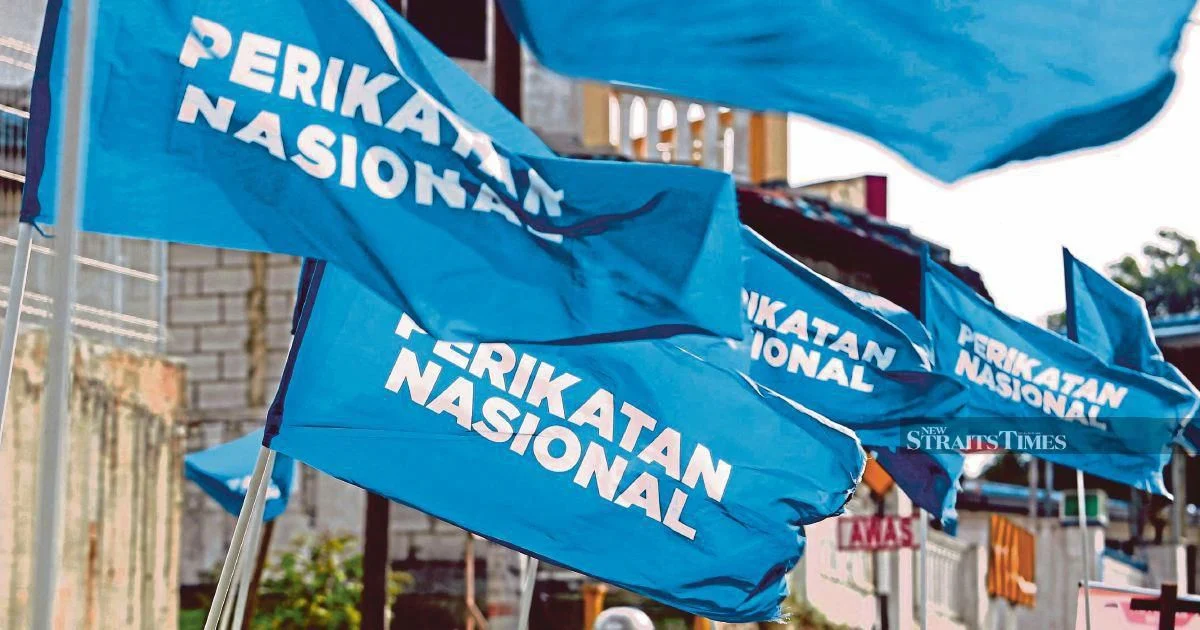
Fissures within the Perikatan Nasional alliance have widened markedly as Pas leadership challenged Bersatu's authority to deploy the coalition's official logo in forthcoming electoral contests across Johor and Negri Sembilan. The dispute, which surfaced prominently in Kota Baru, represents another flashpoint in what has become an increasingly strained partnership between the two principal components of the right-wing political bloc that formed government in several states and at federal level in recent years.
Pas leaders took the position that only the chairman of the Perikatan Nasional coalition possesses the legitimate power to authorise the use of the PN logo for electoral purposes. This assertion carries significant weight because such symbols and branding materials are typically guarded closely by alliances; their deployment signals official endorsement and membership status. By asserting exclusive control at the chairman level, Pas appeared to be establishing a gatekeeping mechanism that could constrain how other members present themselves to voters in crucial contests.
The timing of this confrontation matters considerably for Malaysian electoral dynamics. Both Johor and Negri Sembilan represent strategically important states where control of the legislative assembly carries implications for state government formation and resource allocation. Johor in particular remains economically influential and politically pivotal; elections there attract national attention and set precedents for how coalitions operate during campaign periods. The fact that such a fundamental question about coalition branding remains unresolved heading into these elections underscores the shallow institutional foundations underpinning the Perikatan Nasional structure.
Pas's intervention suggests the party harbours concerns about how Bersatu might present itself independently versus as a coalition member. This distinction matters because it affects the collective identity that voters encounter. If Bersatu campaigns primarily under PN branding, it presents an image of unity and coordinated action; if instead Bersatu emphasises its distinct organisational identity, voters receive a more fragmented message. For Pas, controlling which entities may use the PN logo constitutes a form of influence over the entire coalition's public presentation and perceived strength.
The dispute also hints at deeper anxieties within the coalition about relative power and influence. Bersatu, the political vehicle of former Prime Minister Muhyiddin Yassin, brings considerable organisational capacity and former federal government legitimacy to the partnership. Pas, by contrast, has deep roots in three states—Kelantan, Terengganu, and Kedah—where it governs independently. The question of logo usage thus becomes a proxy for broader negotiations about which party drives coalition direction and messaging. By restricting logo authorisation to the chairman level, Pas essentially preserves its influence over strategic decisions that all partners must navigate.
For Malaysian politics more broadly, this friction reveals the precarious nature of coalition governance in the contemporary landscape. Unlike formal mergers or registered alliances with transparent decision-making structures, the Perikatan Nasional operates as something closer to a gentleman's agreement between parties with distinct identities, interests, and power bases. Without clear constitutional provisions governing logo usage, branding standards, or campaign coordination, disagreements such as this one inevitably arise. Each party interprets the coalition framework differently based on its particular interests and assumptions about how power should be distributed.
The implications extend to voter behaviour and electoral outcomes. Malaysian voters increasingly calculate their preferences based on how they perceive coalition stability and coherence. When disputes about fundamental matters like logo usage become public, it signals instability that may persuade voters to support competitors offering clearer organisational messages. The opposition coalitions—comprising Pakatan Harapan variants and other groupings—can potentially capitalise on perceptions that Perikatan Nasional lacks the institutional maturity to resolve internal disagreements discreetly before they reach public view.
Pas's assertion of chairman-level authority also reflects the party's determination to prevent any single component from dominating the coalition's direction. In Malaysian multiethnic politics, where coalitions must balance Malay-Muslim concerns with broader national unity objectives, Pas views its role as custodian of Islamic and Malay interests within the broader right-wing framework. Logo usage therefore touches on questions of representation and voice; restricting such authority ensures that no single party can unilaterally shape how the coalition presents itself to the religiously and ethnically diverse electorate.
The Bersatu-Pas friction also reflects the broader realignment of Malaysian politics following the collapse of the Muhyiddin government in 2021 and subsequent power transfers. These parties remained in coalition even as circumstances shifted repeatedly, creating situations where their strategic interests diverged. Bersatu sought to maintain federal relevance through coalition participation; Pas prioritised state-level governance and avoiding entanglement in unstable federal arrangements. These different strategic calculi periodically produce tensions that surface in exactly such disputes over procedural authority.
Moving forward, the resolution of this particular logo question will set precedent for how the Perikatan Nasional addresses future disagreements. If the chairman's authority proves enforceable and accepted, it establishes a governance model that other coalitions might eventually adopt. Alternatively, if disputes escalate or no resolution emerges before the Johor and Negri Sembilan campaigns commence, voters will witness a coalition effectively incapable of coordinating its basic operations during critical electoral moments. For Southeast Asian political observers, the outcome carries lessons about how loose coalitions function under electoral pressure in competitive democratic environments.

%22%2F%3E%3C%2Fpattern%3E%3C%2Fdefs%3E%3Crect%20width%3D%22100%25%22%20height%3D%22100%25%22%20fill%3D%22url(%23ph21o2sg)%22%2F%3E%3Crect%20width%3D%22100%25%22%20height%3D%22100%25%22%20fill%3D%22url(%23ph21o2sp)%22%2F%3E%3Ctext%20x%3D%2250%25%22%20y%3D%2250%25%22%20text-anchor%3D%22middle%22%20dominant-baseline%3D%22central%22%20fill%3D%22rgba(255%2C255%2C255%2C0.95)%22%20font-family%3D%22Georgia%2C%20'Times%20New%20Roman'%2C%20serif%22%20font-weight%3D%22700%22%20font-size%3D%22170%22%20letter-spacing%3D%22-0.02em%22%3EGabungan%3C%2Ftext%3E%3C%2Fsvg%3E)