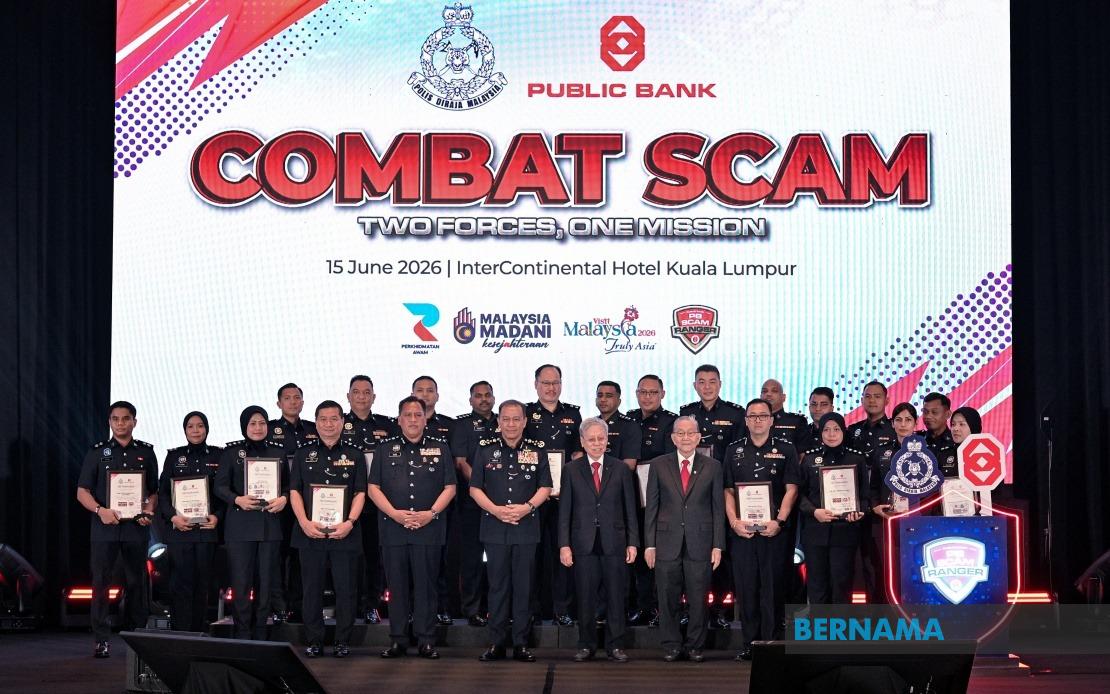
Malaysia's battle against online fraud has entered a critical phase, with losses ballooning to RM2.97 billion in 2025—a staggering increase that underscores the growing sophistication of scam operations targeting the nation's digital-savvy population. Inspector-General of Police Tan Sri Mohd Khalid Ismail revealed the troubling figures during the launch of the 'Combat Scam: Two Teams, One Goal' campaign, drawing attention to what has become one of the most pressing threats to financial security in the region. The figure represents a jump of RM1.40 billion compared to RM1.57 billion recorded in 2024, signalling an acceleration in criminal activity despite heightened public awareness campaigns.
The explosion in case numbers accompanying these losses paints an even starker picture of the challenge ahead. Police recorded 66,204 online fraud cases in 2025, an 87 percent increase from 35,368 cases the previous year. This dramatic rise indicates that scammers are not only targeting victims more successfully but also operating with greater frequency and reach. The sheer volume of cases stretches law enforcement resources and highlights the distributed nature of cybercrime networks that operate across borders, making investigation and prosecution increasingly complex for Malaysian authorities.
Among the various fraud categories, investment scams emerged as the primary driver of financial losses, accounting for RM1.47 billion of the total. This concentration of losses in investment fraud reflects a troubling pattern where victims are lured with promises of exceptional returns, often through fake cryptocurrency schemes, Ponzi structures, or fraudulent forex platforms. The substantial sums involved suggest that perpetrators are deliberately targeting individuals with deeper pockets—retirees seeking income, middle-class professionals looking to grow wealth, and high-net-worth individuals. These sophisticated schemes frequently employ polished marketing materials, fabricated testimonials, and pressure tactics that exploit fundamental human desires for financial security.
Phone-based scams remain the primary vector through which criminals deceive Malaysians, with 28,388 cases reported throughout 2025. These cases encompass a diverse range of tactics, from impersonation of government officials demanding payment of supposed outstanding taxes, to fraudulent banking alerts claiming unauthorised transactions, to elaborate romance schemes that gradually manipulate victims into transferring funds. The prevalence of phone scams reflects how personal communication channels remain vulnerable despite technological advances, as human psychology remains the easiest system to exploit. Scammers continuously refine their techniques, using spoofing technology to mask caller IDs and employing scripts refined through repeated use against multiple targets.
Inspector-General Mohd Khalid emphasised that these figures transcend mere statistics, representing thousands of individuals whose lives have been fundamentally disrupted through financial deception. Many victims lose their life savings, retirement funds, or borrowed capital, triggering cascading consequences including depression, family breakdown, and even suicide. The psychological toll extends beyond direct victims to their families and communities, creating ripple effects that undermine confidence in digital financial services and legitimate investment platforms. This human dimension underscores why the police response must encompass not only investigation and prosecution but also victim support and societal resilience-building.
The rapid evolution of cybercrime tactics reflects how fraud syndicates have adapted to exploit the expanding digital ecosystem. As Malaysians increasingly embrace online banking, e-commerce, digital wallets, and investment apps, criminal networks continuously identify vulnerabilities within these systems and user behaviours. Artificial intelligence and machine learning now enable scammers to personalise their approach, analysing victim data obtained through data breaches to craft more convincing narratives. Social engineering has reached unprecedented sophistication, with criminals creating entire fake online identities complete with social media histories, professional credentials, and community engagement to establish trust before the financial exploitation begins.
Recognising that enforcement alone cannot address this epidemic, authorities have pivoted toward preventive education and public awareness. The Inspector-General highlighted the urgency of cultivating digital security consciousness across Malaysian society, particularly among vulnerable populations including the elderly, new internet users, and individuals with limited financial literacy. This educational imperative extends beyond simple warnings about not sharing passwords; it requires teaching critical thinking about extraordinary financial claims, understanding how legitimate institutions operate, and recognising psychological manipulation techniques employed by scammers. Building societal resilience represents a long-term investment that complements immediate law enforcement efforts.
A significant development in this prevention-focused approach emerged through the announcement of the PB Scam Rangers Programme, representing a strategic partnership between the Commercial Crime Investigation Department and Public Bank Berhad. This collaboration symbolises an important evolution in anti-scam strategy, where financial institutions directly engage communities in financial literacy and cybersecurity education rather than operating purely as transaction processors. The programme aims to create an informed public capable of recognising and resisting fraud attempts before they materialise into financial losses. By leveraging banking sector expertise alongside police investigative capabilities, the initiative represents a model that could be replicated across other institutions and agencies seeking to address cybercrime comprehensively.
For Malaysian readers and businesses, these developments carry immediate implications for personal financial security and institutional trust. The surge in online fraud necessitates elevated personal vigilance, including verification of unexpected communications through independent channels, scepticism toward unsolicited investment opportunities regardless of presentation quality, and regular monitoring of financial accounts for unauthorised activity. Employers should consider implementing cybersecurity awareness training for staff, recognising that individual victimisation can occur to educated professionals when social engineering tactics prove sufficiently sophisticated. Financial institutions meanwhile face mounting pressure to implement advanced detection systems identifying suspicious transactions and communication patterns indicative of fraud schemes.
The regional context amplifies these concerns, as Malaysian criminal networks often coordinate with counterparts across Southeast Asia, utilising call centres and money laundering operations distributed across Thailand, Cambodia, and the Philippines. Combating this transnational dimension requires cross-border cooperation, intelligence sharing, and coordinated regulatory frameworks that currently remain fragmented. The high profitability of online fraud—generating billions in losses that translate to millions in criminal profits—ensures that enforcement agencies will face well-resourced, motivated adversaries capable of rapidly adapting to counter-measures. Sustained commitment to building societal awareness and institutional cooperation thus represents not merely a preferred approach but rather an essential complement to traditional law enforcement in addressing this escalating threat.

%22%2F%3E%3C%2Fpattern%3E%3C%2Fdefs%3E%3Crect%20width%3D%22100%25%22%20height%3D%22100%25%22%20fill%3D%22url(%23ph21o2sg)%22%2F%3E%3Crect%20width%3D%22100%25%22%20height%3D%22100%25%22%20fill%3D%22url(%23ph21o2sp)%22%2F%3E%3Ctext%20x%3D%2250%25%22%20y%3D%2250%25%22%20text-anchor%3D%22middle%22%20dominant-baseline%3D%22central%22%20fill%3D%22rgba(255%2C255%2C255%2C0.95)%22%20font-family%3D%22Georgia%2C%20'Times%20New%20Roman'%2C%20serif%22%20font-weight%3D%22700%22%20font-size%3D%22170%22%20letter-spacing%3D%22-0.02em%22%3EGabungan%3C%2Ftext%3E%3C%2Fsvg%3E)