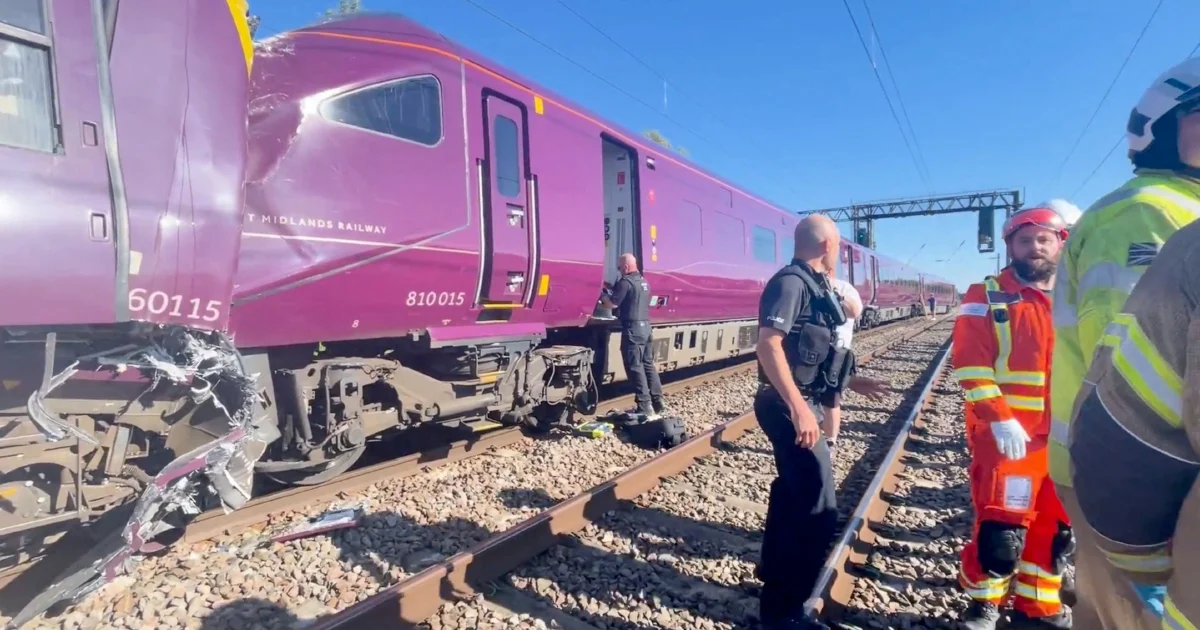
A tragic railway collision unfolded north of London on Friday when two passenger trains came together, resulting in one death and leaving dozens of people injured across a wide spectrum of severity levels. Emergency response teams across the United Kingdom mobilized rapidly to the scene, with 11 individuals sustaining injuries classified as "very serious" by authorities managing the crisis.
The incident underscores persistent vulnerabilities within British railway infrastructure despite decades of modernization efforts. Train collisions, while statistically rare given the volume of daily passenger movements across the UK rail network, carry extraordinary consequences when they occur. The concentration of severe injuries from a single event places enormous strain on local medical facilities, as emergency departments must rapidly triage and treat multiple trauma cases simultaneously.
For Malaysian observers, such incidents provide sobering perspective on rail safety standards internationally. The UK's railway system, considered one of Europe's more established networks, nevertheless experiences these catastrophic events. Malaysia's own rail expansion, including the expansion of commuter networks serving Kuala Lumpur and other urban centers, must contend with similar technological and human factors that contribute to collisions. Signal failures, driver error, track maintenance deficiencies, and inadequate braking systems represent universal hazards requiring constant vigilance across all railway operations.
Emergency response protocols activated following the collision revealed the critical importance of pre-established disaster procedures. Fire services, ambulance teams, and police forces coordinating across jurisdictional boundaries demonstrated how comprehensive preparedness frameworks can minimize casualties during transportation disasters. Yet such coordination remains demanding even for well-resourced systems like the UK's, suggesting that developing rail networks in Southeast Asia must invest equally in emergency infrastructure and personnel training.
The psychological trauma extending beyond those physically injured represents an often-underestimated consequence of transport accidents. Passengers, staff, and first responders all experience lasting effects from witnessing or managing such emergencies. Support services addressing mental health impacts have become recognized as essential components of post-incident response, a lesson relevant across all nations operating expanding transport networks.
Investigations into the collision's root cause will likely focus on multiple contributing factors operating simultaneously. Track conditions, visibility, weather, mechanical systems, human decision-making, and communication protocols all require examination. Such comprehensive accident investigations serve valuable functions beyond accountability, generating evidence-based recommendations that inform industry-wide safety improvements. The UK's established investigation infrastructure, led by specialized agencies, contrasts sharply with resources available in some developing transport systems, highlighting how institutional capacity affects learning and prevention.
Railway operators internationally face mounting pressure to demonstrate safety competence as passenger volumes surge. Deregulation and privatization have reshaped Britain's rail landscape over recent decades, introducing complexity regarding responsibility distribution across multiple corporate entities. Questions naturally arise regarding whether fragmented ownership structures impede coordinated safety management compared to unified state-operated alternatives, a debate particularly relevant to Malaysia's evolving transport sector composition.
Freight and passenger service integration on shared tracks introduces additional complexity requiring sophisticated signaling and coordination systems. Many collisions historically have involved scheduling failures or signal malfunctions creating dangerous spacing between trains. Modern automated systems promise improvements, yet technical failures and human override capabilities create ongoing tensions between automation and manual control.
For regional aviation and maritime operators watching railway safety developments, international standards dissemination matters considerably. The International Railway Union and similar organizations work to propagate best practices, yet implementation varies dramatically based on regulatory frameworks and enforcement capacity. Malaysia's position as a growing Southeast Asian economic hub demands careful attention to such international safety standards as transport infrastructure expands.
The incident's resolution and subsequent investigation will take months or longer to conclude fully. Authorities will examine every conceivable variable contributing to the collision, with findings likely presented in exhaustive formal reports. However, immediate public concern focuses naturally on whether existing safeguards functioned properly and whether additional protective measures deserve implementation.
Railway safety ultimately depends upon sustained institutional commitment combined with adequate resourcing and workforce expertise. The Friday collision serves as stark reminder that even mature transportation systems must constantly defend against catastrophic failures. For Malaysia and other nations developing contemporary rail networks, the lesson resonates clearly: safety excellence requires uncompromising attention across technical, operational, and human dimensions simultaneously.
%22%2F%3E%3C%2Fpattern%3E%3C%2Fdefs%3E%3Crect%20width%3D%22100%25%22%20height%3D%22100%25%22%20fill%3D%22url(%23ph58ve7g)%22%2F%3E%3Crect%20width%3D%22100%25%22%20height%3D%22100%25%22%20fill%3D%22url(%23ph58ve7p)%22%2F%3E%3Ctext%20x%3D%2250%25%22%20y%3D%2250%25%22%20text-anchor%3D%22middle%22%20dominant-baseline%3D%22central%22%20fill%3D%22rgba(255%2C255%2C255%2C0.95)%22%20font-family%3D%22Georgia%2C%20'Times%20New%20Roman'%2C%20serif%22%20font-weight%3D%22700%22%20font-size%3D%22170%22%20letter-spacing%3D%22-0.02em%22%3EMinistry%3C%2Ftext%3E%3C%2Fsvg%3E)