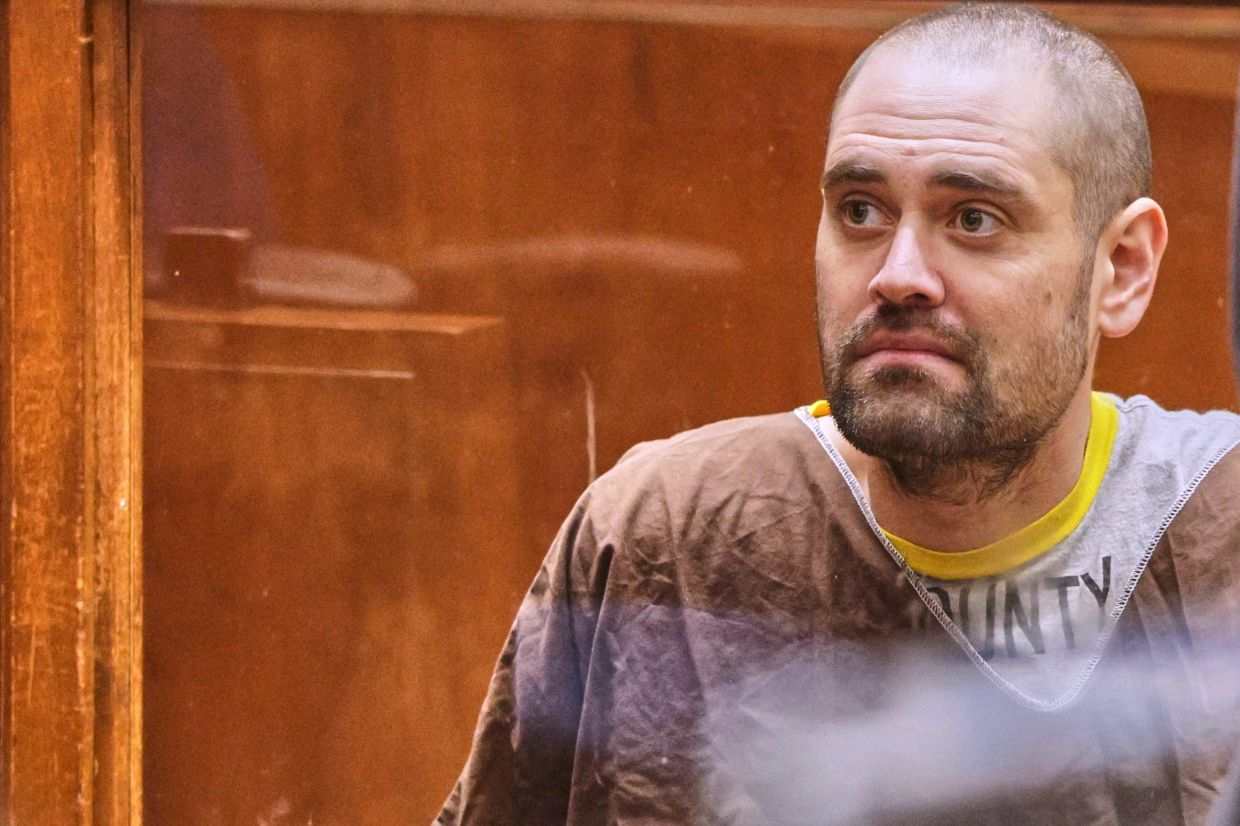
A 32-year-old man accused of killing his filmmaker father and photographer mother has turned to the courts in a bid to unlock family trust funds he says he needs to mount a proper legal defence. Nick Reiner's petition, filed in Los Angeles County court this week, argues that trustees overseeing money left to him by Rob Reiner and Michele Singer Reiner are withholding his inheritance without legal justification at a moment when he faces two counts of murder in connection with their stabbing deaths at their Brentwood home on December 14.
The case highlights an unusual intersection between family inheritance law and criminal defence, with implications that extend beyond the specific circumstances of this high-profile incident. Nick Reiner's legal team contends that he should be entitled to draw upon his own resources to pay for representation, a principle that underpins the right to adequate defence even when family relationships have fractured under extraordinary stress. The petition emphasises that regardless of the charges he faces, the accused remains entitled to the money his parents explicitly set aside for him under established trust terms.
Rob Reiner, an acclaimed Hollywood director known for films including The Princess Bride and This Is Spinal Tap, and his wife Michele established individual trusts for Nick and his siblings separate from the larger Reiner family trust. According to the legal filing, the trust created for Nick in 1993 contained unambiguous instructions that he receive half its assets upon turning 30 and the remainder at age 35. The trust holds at least $1.5 million in assets, though the exact value remains unknown to Nick's legal team as the trustee has declined to disclose complete information.
The immediate crisis emerged when Nick failed to receive the funds due at age 30, with the current trustee, attorney Paul R. Kanin, offering what the petition characterises as shifting justifications for withholding the money. Kanin took over management of the trust in February and has cited concerns about Nick's competence as a basis for denying access, despite the fact that competence assessments would seemingly have no bearing on a mandatory distribution under the trust's explicit terms. The legal argument suggests this represents an overreach of trustee discretion that exceeds the bounds of fiduciary responsibility.
The financial roadblock has created practical complications for Nick Reiner's defence strategy. He initially retained high-profile attorney Alan Jackson to represent him, but Jackson's departure from the case within weeks signalled deeper problems. The latest filing reveals that Nick's siblings Jake and Romy had initially agreed to fund Jackson's legal work but subsequently withdrew their financial support, leaving their brother without counsel. Jackson himself, in a declaration included with the petition, indicated his firm remained ready to resume representation if funds became available, suggesting the split was ultimately financial rather than based on disagreements over strategy or culpability.
The timing of the dispute carries particular weight given the trajectory of the criminal proceedings. Nick Reiner has pleaded not guilty to two counts of murder and faces a pretrial hearing scheduled for September, with prosecutors yet to announce whether they will pursue capital punishment. The months ahead will determine the scope and complexity of his defence work, making current access to adequate legal resources strategically crucial. Without funding from the trust, his options narrow considerably, potentially forcing reliance on court-appointed counsel or leaving him without representation.
What makes this case distinctive within the American legal context is its interrogation of how trust law operates when family dynamics become entangled with criminal liability. Trustees occupy a position that demands they balance the settlor's intentions with prudent management, but questions arise when trustees use matters unrelated to the trust itself—such as criminal charges—as implicit grounds for withholding mandatory distributions. The petition argues this represents exactly the kind of overreach courts should scrutinise, particularly when the accused individual has already been presumed innocent under law and the trust documents offer explicit, dated instructions about distributions.
The case also reflects broader tensions within families experiencing unimaginable trauma. Jake Reiner, Nick's brother, described the situation in April as a "living nightmare" that is "too devastating to comprehend," capturing the emotional devastation that extends far beyond any single individual. The decision by Jake and Romy to initially help fund Nick's defence, then reverse course, suggests the family fractured under the weight of the accusations. Their withdrawal of financial support essentially punished their brother through legal mechanisms, raising uncomfortable questions about the appropriate role of family resources in criminal defence.
Authorities investigating the deaths have released virtually no information about possible motives or circumstances beyond the basic facts that Rob Reiner and Michele Singer Reiner were found stabbed to death in their home. A court order has sealed most autopsy details, and the prosecutor's office under Nathan Hochman has remained notably silent about investigative findings or prosecutorial strategy. This information vacuum creates particular challenges for Nick Reiner's defence team, as they prepare arguments without clear understanding of the prosecution's theory of the case or the evidence supporting it.
The petition itself represents a calculated legal manoeuvre that accomplishes multiple objectives simultaneously. First, it creates a court record documenting the trustee's conduct, potentially building a foundation for future allegations of breach of fiduciary duty. Second, it forces the trust issue into public view, applying public and judicial pressure to the withholding. Third, it asserts the defendant's rights under both trust law and constitutional criminal law, framing the dispute not as a family squabble but as a fundamental question about access to defence resources. The language of the petition emphasises that Nick Reiner's entitlement to these funds stems from his parents' own deliberate choices, not from charity or discretionary family assistance.
For Malaysian and Southeast Asian observers, the case underscores how common law jurisdictions handle the intersection of property rights and criminal defence—a tension that operates differently across various legal systems. In many Asian jurisdictions, family assets are managed with greater cultural emphasis on collective responsibility and deference to elder family members' wishes, even when those wishes conflict with individual rights. The American approach, reflected in this petition, prioritises individual entitlement and contractual clarity even in tragic family circumstances. How courts resolve this tension will have implications not just for Nick Reiner but for broader questions about asset protection during criminal proceedings and the limits of trustee discretion.
The court will ultimately decide whether mandatory trust distributions can be suspended based on concerns about a beneficiary's legal troubles, or whether the trust document's explicit terms override such considerations. The decision will establish precedent affecting how trusts operate when beneficiaries face serious criminal charges—a question of increasing relevance as American wealth concentration grows. For Nick Reiner personally, the outcome determines whether he can mount the kind of comprehensive defence that adequate legal resources enable, or whether he faces trial with severely constrained resources.

%22%2F%3E%3C%2Fpattern%3E%3C%2Fdefs%3E%3Crect%20width%3D%22100%25%22%20height%3D%22100%25%22%20fill%3D%22url(%23ph21o2sg)%22%2F%3E%3Crect%20width%3D%22100%25%22%20height%3D%22100%25%22%20fill%3D%22url(%23ph21o2sp)%22%2F%3E%3Ctext%20x%3D%2250%25%22%20y%3D%2250%25%22%20text-anchor%3D%22middle%22%20dominant-baseline%3D%22central%22%20fill%3D%22rgba(255%2C255%2C255%2C0.95)%22%20font-family%3D%22Georgia%2C%20'Times%20New%20Roman'%2C%20serif%22%20font-weight%3D%22700%22%20font-size%3D%22170%22%20letter-spacing%3D%22-0.02em%22%3EGabungan%3C%2Ftext%3E%3C%2Fsvg%3E)