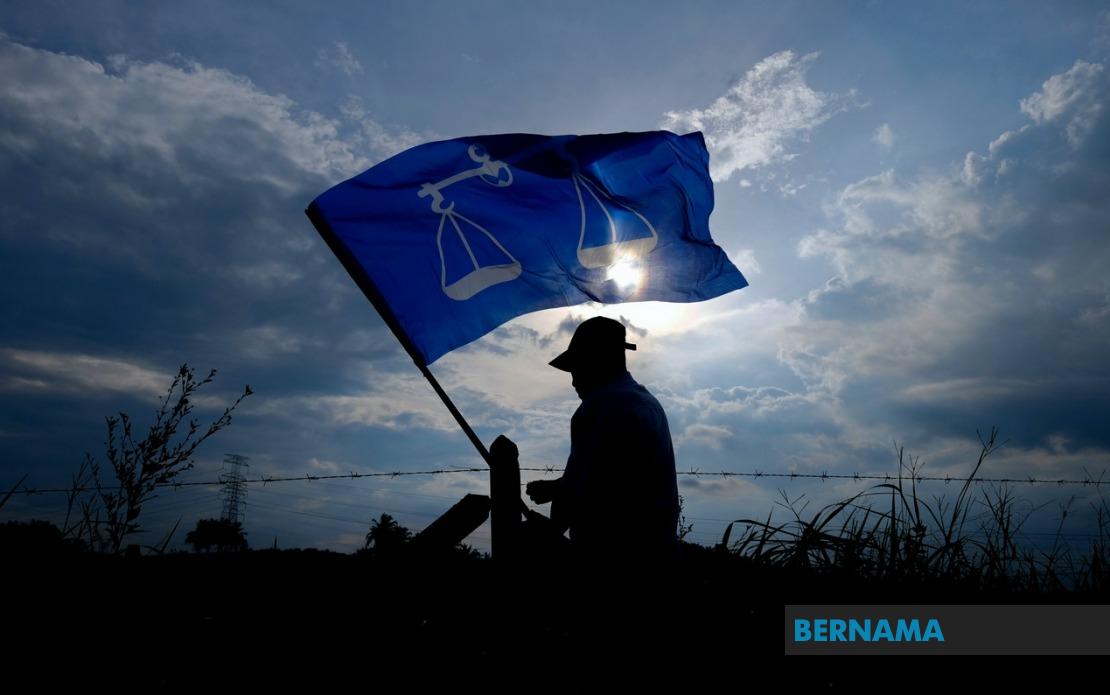
Barisan Nasional remains untroubled by the emergence of new political parties, according to the coalition's secretary-general Datuk Seri Dr Zambry Abd Kadir, who argued that recent registrations will have negligible impact on BN's electoral prospects in the forthcoming Johor and Negeri Sembilan state polls. Speaking in Tanjung Malim, Zambry attributed this confidence to the extensive groundwork and strategic preparations already deployed across constituencies where the ruling coalition intends to contest, suggesting that institutional momentum and organisational depth provide substantial insulation against splinter groups.
The comments from BN's top administrator come amid the recent formation of Parti Wawasan Negara and Parti Bersama Malaysia (BERSAMA), which some observers had flagged as potential challengers in the two crucial peninsular states. Zambry's characterisation of these developments as inconsequential reflects a broader BN stance that treats new entrants to Malaysia's fragmented political landscape as marginal forces unlikely to displace the coalition's established voter coalitions and machinery. His remarks suggest internal confidence that demographic and geographic strongholds remain resilient to recruitment by rival political brands.
Democratic principles permit the formation of new political entities, Zambry acknowledged, yet this acknowledgement served primarily to contextualise BN's determination to maintain its existing strategic direction unaltered. The coalition's approach, he indicated, centres on executing predetermined plans rather than reacting defensively to competitive threats. This posture—one of studied indifference—attempts to project an image of institutional stability and inevitable electoral performance, a messaging choice relevant for maintaining internal party morale and investor confidence in BN's durability as a governing force.
Johor UMNO, the dominant component within BN's Johor machinery, has undertaken comprehensive preparations for the state election scheduled for July 11, according to Zambry's account. Such exhaustive groundwork encompasses candidate selection, campaign infrastructure, and community engagement initiatives designed to consolidate existing support and recapture any slippage from recent electoral cycles. The coalition's focus on intensive local-level activity in target constituencies reflects an understanding that state elections are won through granular organisation rather than national-level positioning, particularly in a state where BN has historically enjoyed structural advantages rooted in rural Malay-Muslim demographics.
The Negeri Sembilan contest, set for August 1, represents a separate challenge with distinct political dynamics. Though Zambry did not elaborate on state-specific preparations, the sequential timing of these two elections affords BN the opportunity to build momentum from a successful Johor outcome, potentially translating any perceived victory into confidence and donations for the Negeri Sembilan campaign. This staggered electoral schedule may benefit the incumbent coalition by concentrating media attention and resources sequentially rather than managing simultaneous campaigns in disparate regions with differing political fault lines.
Zambry's dismissal of new parties warrants scrutiny given Malaysia's recent electoral history, where fragmentation has occasionally benefited opposition coalitions by splitting the anti-BN vote or, conversely, allowed non-traditional actors to capture swing voters fatigued by establishment politics. The emergence of multiple new parties—a phenomenon distinct from the established opposition framework—introduces unpredictability into electoral calculus that may not fully account for protest voting or the mobilisation of previously disengaged demographics. Whether new parties genuinely prove inconsequential or merely appear so in optimistic BN rhetoric may become clearer as campaign season intensifies.
The context for Zambry's remarks included a separate public event in Tanjung Malim where he launched the pilot programme for the National Service Training Programme (PLKN) 3.0 at public universities. This concurrent activity illustrates the coalition's effort to maintain a broader governance narrative alongside electoral positioning, presenting BN as an administration pursuing substantive policy initiatives rather than a purely election-focused entity. Such multi-track activity is designed to suggest that BN's attention and resources extend beyond immediate electoral competition toward longer-term institutional and social objectives.
BN's historical dominance in Johor and Negeri Sembilan rests on deep organisational roots and the coalition's ability to aggregate diverse community interests under its umbrella structure. These two states represent crucial terrain for the coalition's national political standing, particularly given BN's diminished parliamentary presence post-2018 and the need to rebuild credibility through state-level electoral successes. A strong showing in both contests would substantially reinforce claims that the coalition has recovered from earlier democratic setbacks and remains the natural governing force across peninsular Malaysia's heartland.
The timing of Zambry's remarks also reflects the coalition's effort to establish a confident public posture weeks before voting commences, a standard feature of pre-election campaign messaging designed to demoralise opposition efforts and project an air of inevitability around BN outcomes. Such confidence-building rhetoric, directed at both internal party audiences and broader electorates, serves to rally supporters around the incumbent narrative while subtly signalling to uncommitted voters that backing BN represents an alignment with an emerging consensus.
For Malaysian voters observing these developments, the emergence of multiple new political parties signals that the country's political marketplace remains fluid and competitive, even if established players like BN dismiss these entrants as statistically inconsequential. Whether voters in Johor and Negeri Sembilan treat new options as genuinely alternative or regard them as marginal will ultimately determine whether Zambry's confident assessment proves vindicated or underestimates the electorate's appetite for political experimentation and change. The two elections will provide a clearer picture of how Malaysian voters navigate an increasingly crowded political landscape.

%22%2F%3E%3C%2Fpattern%3E%3C%2Fdefs%3E%3Crect%20width%3D%22100%25%22%20height%3D%22100%25%22%20fill%3D%22url(%23ph21o2sg)%22%2F%3E%3Crect%20width%3D%22100%25%22%20height%3D%22100%25%22%20fill%3D%22url(%23ph21o2sp)%22%2F%3E%3Ctext%20x%3D%2250%25%22%20y%3D%2250%25%22%20text-anchor%3D%22middle%22%20dominant-baseline%3D%22central%22%20fill%3D%22rgba(255%2C255%2C255%2C0.95)%22%20font-family%3D%22Georgia%2C%20'Times%20New%20Roman'%2C%20serif%22%20font-weight%3D%22700%22%20font-size%3D%22170%22%20letter-spacing%3D%22-0.02em%22%3EGabungan%3C%2Ftext%3E%3C%2Fsvg%3E)